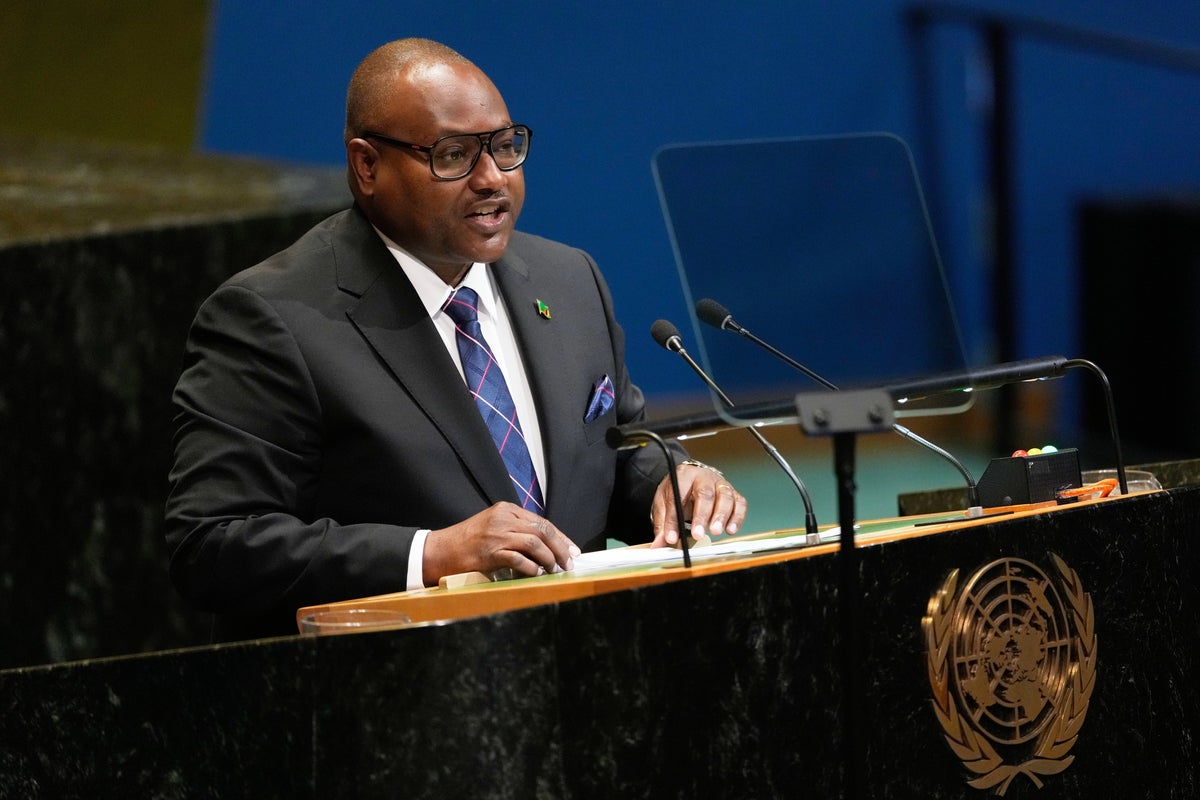
The era of the "unconditional" American aid package is dead. For decades, Washington projected soft power through the checkbook of USAID and the life-saving reach of PEPFAR, treating global health as a humanitarian moral high ground. But in the red dust of the Zambian Copperbelt, a new and far more aggressive doctrine has emerged. The United States is no longer offering help; it is proposing a trade.
At the heart of the current diplomatic firestorm is a $2 billion health deal that the Zambian government has effectively labeled a Trojan horse. Foreign Minister Mulambo Haimbe recently broke months of tight-lipped silence to clarify why Lusaka is digging in its heels. The United States, under a radical restructuring of its foreign assistance framework, has attempted to link the survival of Zambian healthcare systems to the guaranteed extraction of critical minerals like copper, cobalt, and nickel.
It is a high-stakes gamble that has backfired. Zambia has joined a growing list of African nations, including Ghana and Zimbabwe, that are walking away from the table. They aren't just rejecting the money; they are rejecting a new American reality where biological data and mineral rights are the required currency for public health.
The Transactional Pivot
Under the current administration, the old humanitarian landscape has been bulldozed. Programs once managed by NGOs and independent agencies have been brought under a central, transactional command. This "New Deal" approach replaces altruism with a balance sheet. The $2 billion on offer to Zambia over the next five years isn't a grant in the traditional sense. It is a Memorandum of Understanding (MOU) that mandates specific commercial concessions.
The most contentious of these is the demand for preferential treatment for American mining firms. Washington is late to the mineral party in Africa, and it knows it. China has spent two decades embedding itself in the Zambian economy, financing everything from massive hydroelectric dams to the very roads that carry copper to the ports. To catch up, the U.S. is using its strongest remaining leverage: the dependency of the Zambian health sector on American-funded antiretroviral drugs.
By making health funding conditional on mining access, the U.S. is effectively asking Zambia to pick a side in a cold war over the green energy transition. Copper is the "new oil," and Zambia, the continent’s second-largest producer, is the primary battlefield.
The Data Privacy Trap
While minerals are the headline, the fine print contains a secondary, perhaps more insidious, requirement: mass health data sharing. The proposed agreements include clauses that would grant the U.S. broad access to Zambian citizens' sensitive health data and biological samples.
In Lesotho, negotiations revealed demands for up to 25 years of access to such data. In Zambia, Haimbe described these terms as a "violation of our citizens' right to privacy." The U.S. argues that this data is necessary for "disease surveillance" and "pathogen sharing" to prevent the next pandemic. However, to many African leaders, it looks like bioprospecting.
The fear is that African genetic data will be used to develop proprietary medical innovations in the West—innovations that African nations will then have to buy back at prices they cannot afford. Kenya has already seen its $2.5 billion version of this deal frozen by court challenges over these exact privacy concerns.
The Ambassadorial Breakdown
The tension reached a breaking point following public comments by the outgoing U.S. Ambassador, Michael Gonzales. In a departure from traditional diplomatic tact, Gonzales accused Zambian leadership of "abdication of responsibility," suggesting that officials were diverting their own funds while expecting American taxpayers to foot the bill for healthcare.
Haimbe’s response was swift and sharp. He called the ambassador’s allegations "mischievous" and "undiplomatic." This public spat isn't just a personality clash; it’s a symptom of a relationship that has lost its foundation of mutual respect.
Zambia is currently trying to triple its copper production to 3 million tons by 2031. To do that, it needs a diversified portfolio of investors. Lusaka’s strategy is to remain non-aligned, welcoming capital from the UAE, Canada, India, and yes, China. By demanding "preferential treatment," Washington is asking Zambia to dismantle its own diversified economic strategy.
The Lobito Risk
There is more at stake than just hospital budgets. The U.S. has staked much of its regional credibility on the Lobito Corridor, a massive rail project designed to bypass Chinese-controlled ports and link the Zambian Copperbelt to the Atlantic coast of Angola.
If the health-for-minerals standoff persists, the diplomatic capital required to complete the Lobito Corridor could evaporate. Without the minerals to fill the trains, the rail line becomes a multibillion-dollar bridge to nowhere.
Zambia’s refusal to sign suggests that the U.S. has overplayed its hand. The assumption that African nations are so desperate for health aid that they will sign away their sovereignty and their subsoil assets is proving to be a massive miscalculation.
The leverage has shifted. Zambia knows that in a world hungry for electric vehicle batteries and renewable grids, its rocks are worth more than the aid. The U.S. may have to decide whether it wants a partner in Africa or a customer, because the attempt to be both is currently failing.
Washington must now decide if it will uncouple health from hardware, or risk being shut out of the Copperbelt entirely.