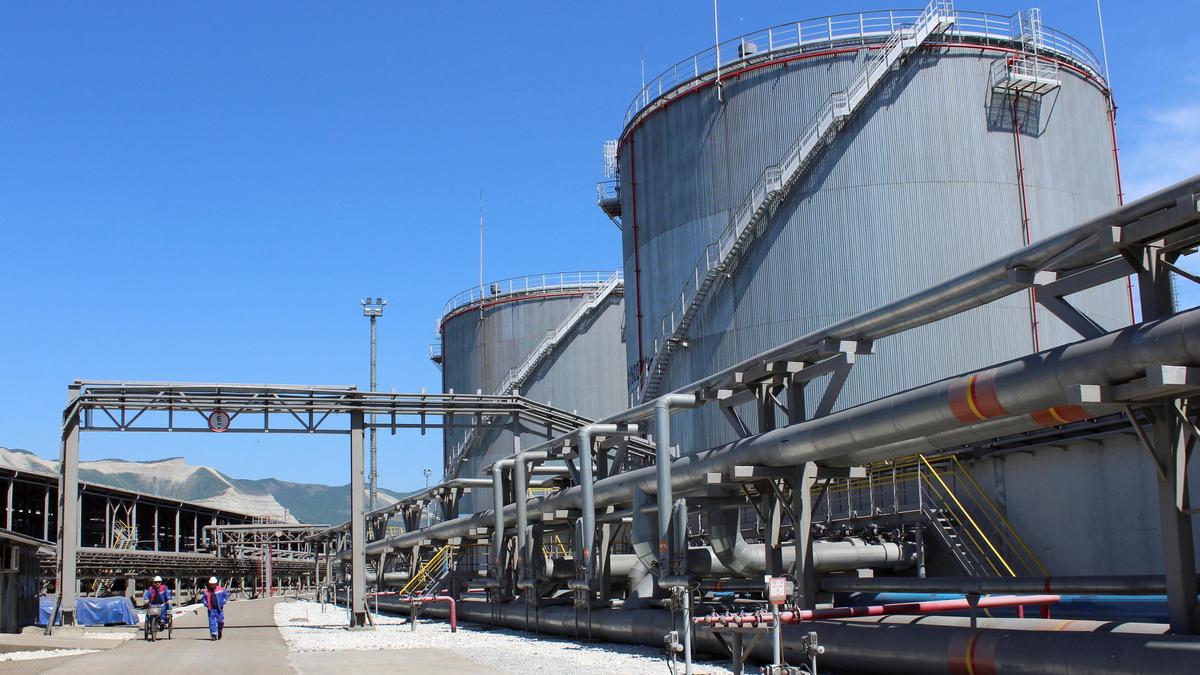
Asymmetric deep-strike operations rely on a fundamental economic and kinetic imbalance: the extreme cost asymmetry between long-range offensive loitering munitions and fixed strategic defense infrastructure (Plichta, 2025). When a Ukrainian long-range one-way attack (OWA) drone penetrates Russian airspace to strike a domestic fuel depot, standard media reporting focuses on localized visible indicators such as open-air fires and immediate municipal emergency responses. This superficial lens obscures the structural bottlenecking of energy supply chains, the math of defensive saturation, and the long-term degradation of downstream military logistics.
To evaluate these operations with systemic precision, the conflict must be viewed not as a series of isolated tactical events, but as a continuous optimization problem where low-cost, mass-produced composite airframes systematically exploit gaps in traditional multi-layered air defense networks (Chaari, 2025).
The Asymmetric Cost Function of Deep Strikes
The operational model of Ukraine's long-range drone campaign, utilizing domestic airframes such as the Liutyi and Bober, is designed to invert the economic burden of defense (Plichta, 2025). This dynamic is governed by three primary variables: the unit cost of the offensive vector, the replacement and opportunity cost of the destroyed target, and the marginal expenditure required for interception.
       [Low-Cost OWA Drone Production]
                      │
                      ▼
        [Russian S-400 / Pantsir Grid]
         /                          \
        ▼                            ▼
[Successful Interception]     [Kinetic Impact]
  - Depletes $1M+ Missile       - Destroys Refraction Unit
  - Limits Radar Capacity       - Disrupts Downstream Supply
- Vector Economics: Long-range Ukrainian OWA drones typically cost between $15,000 and $50,000 to manufacture, relying on fiberglass or molded composite hulls, commercial-grade internal combustion engines, and civilian-class satellite navigation systems supplemented by optical or inertial backup guidance (Chaari, 2025; Plichta, 2025).
- Interception Disparity: For the defender, utilizing state-of-the-art surface-to-air missile (SAM) systems like the Pantsir-S1 or Tor-M2 to down these targets introduces a severe structural deficit. A single interceptor missile from these systems carries a production cost ranging from $100,000 to over $1 million.
- Asset Vulnerability: If the drone bypasses kinetic interception, the impact on a critical node—such as a distillation column, central pumping station, or pressurized storage tank—causes localized infrastructure damage that far outstrips the value of the weapon used (Plichta, 2025; Varadharajan, 2026). Replacing specialized refining or storage infrastructure under international technology sanctions introduces extreme friction, extending repair timelines from weeks to quarters.
This creates an attrition bottleneck. The attacker does not require a 100% penetration rate to achieve strategic success. If nine out of ten drones are intercepted by air defenses, the tenth drone striking a high-value petroleum asset still delivers a positive return on investment for the attacker by forcing the defender to deplete finite ammunition reserves while suffering irreversible capital degradation (Plichta, 2025).
Kinetic Mechanisms of Hydrocarbon Attrition
Media accounts frequently describe oil depot strikes as simple "fires," failing to differentiate between the types of infrastructure targeted and the subsequent operational consequences. The vulnerability of a downstream petroleum asset is determined by its specific position within the supply chain.
Bulk Storage Terminals vs. Refining Infrastructure
Striking a regional bulk storage facility primarily impacts immediate regional distribution and tactical reserves. A localized fuel tank fire is highly visible but represents a relatively low-tech asset that can be isolated via internal bund walls and fire-suppression systems. Conversely, striking processing infrastructure—such as atmospheric distillation towers or catalytic crackers—causes catastrophic disruption to the production of high-octane fuel, aviation kerosene, and diesel.
The Mechanics of Thermal Cascading
The structural objective of a drone strike on an oil depot is to trigger a thermal runaway cascade across adjacent storage clusters. OWA drones carry shaped-charge or fragmentation warheads weighing between 20 and 50 kilograms (Plichta, 2025). The initial kinetic penetration punctures the steel shell of a storage tank, vaporizing a portion of the fuel and igniting the mixture. The resulting thermal radiation threatens adjacent tanks. If cooling systems fail or are rendered inoperable by the initial blast, the internal pressure of nearby vessels climbs until structural failure occurs, expanding the radius of destruction without requiring additional drone impacts.
Technical Defense Degradation
To counter these vulnerabilities, industrial operators have resorted to retrofitting physical mitigation frameworks, such as heavy steel anti-drone netting mounted on metallic scaffolding around critical infrastructure blocks (Plichta, 2025). While these nets can detonate small loitering munitions prematurely or deflect low-mass first-person view (FPV) platforms, they offer limited protection against larger, high-velocity OWA drones carrying heavy warheads designed to defeat structural reinforcement (Chaari, 2025; Plichta, 2025).
Air Defense Saturation and Geometric Gaps
The geographical reality of defending an industrialized nation creates an insurmountable coverage paradox. No military possesses sufficient air defense density to protect every critical civilian and military node simultaneously across thousands of square kilometers of interior territory.
Ukraine's deep strikes exploit this geometric reality by utilizing low-altitude flight paths that run parallel to terrain contours, masking the drones from ground-based radar arrays until they enter visual range. By launching multi-vector salvos, the attacker forces the defender into a difficult resource-allocation dilemma:
- Concentration of Systems: Pulling point-defense systems like the Pantsir-S1 away from the front lines to shield interior industrial hubs creates critical gaps in tactical air cover for forward-deployed military formations (Plichta, 2025).
- Frontline Prioritization: Retaining advanced air defense assets at the front lines leaves deep interior energy infrastructure vulnerable to small, synchronized drone packages (Plichta, 2025).
The systemic strain is further exacerbated by the integration of electronic warfare (EW). While GPS jamming can disrupt the terminal guidance of rudimentary drones, modern long-range platforms frequently employ terrain contour matching (TERCOM) or optical scene matching systems. These systems remain completely unaffected by radio-frequency interference, enabling precise terminal targeting even in heavy EW environments.
Strategic Realities of the Long-Range Drone Campaign
The strategic objective of these deep-strike operations is not the total eradication of the adversary's energy sector, which remains mathematically improbable given the scale of the infrastructure. The true goal is the compounding accumulation of friction. By forcing localized fuel re-routing, damaging specialized storage units, and compelling the adversary to alter domestic fuel export policies to stabilize internal markets, the drone campaign successfully degrades the logistical foundations required to sustain intensive military operations (Plichta, 2025).
The primary limitation of this strategy lies in its inability to deliver a rapid, decisive blow. It is a war of attrition conducted via high-technology manufacturing lines. The long-term efficacy of the campaign is dictated entirely by industrial output: Ukraine's ability to scale the domestic production of low-cost, long-range airframes must consistently outpace Russia's domestic rate of air defense interceptor manufacturing and structural infrastructure repair (Chaari, 2025; Plichta, 2025).
To maximize operational returns under these conditions, forward planning must prioritize the targeting of highly concentrated, non-redundant industrial nodes—such as chemical separation plants and oil-to-gas processing junctions—rather than distributed bulk storage depots. Moving up the supply chain from storage to production maximizes the systemic shock of every successful penetration, ensuring that the economic asymmetry of drone warfare is leveraged to its absolute limit.
References
Chaari, M. Z. (2025). Analysis of the power of drones and limitations of the anti-drone solutions on the Russian-Ukrainian battlefield. Security and Defence Quarterly, 51(2), 1–15. https://doi.org/10.36490/sdq.208347
Cited by: 6
Plichta, M. (2025). Precise Mass in Action: Assessing Ukraine's One-Way Attack Drone Campaign. RUSI Journal, 170(1), 12–24. https://doi.org/10.1080/03071847.2025.2527923
Cited by: 7
Varadharajan, S. (2026). Probabilistic Security Vulnerability Assessment Framework for Drone Attacks: A Case Study of a Petroleum Storage Terminal. ACS Chemical Health & Safety, 33(2), 88–97. https://doi.org/10.1021/acs.chas.5c00210


