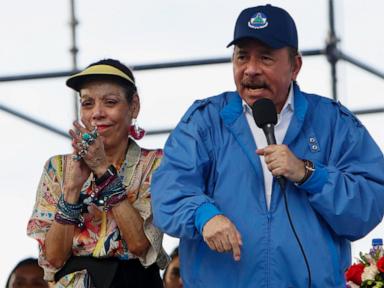
The death of Miskito leader Brooklyn Rivera in Nicaraguan state custody reveals the calculated operational mechanics of authoritarian consolidation under the Ortega-Murillo regime. By converting judicial machinery into an instrument of absolute exclusion, the state systematically eliminates regional opposition while neutralizing international human rights frameworks. The strategic reality of Rivera’s path—moving from an open address at the United Nations in Geneva to absolute isolation and subsequent medical collapse—demonstrates a repeatable pattern of state-enforced disappearance designed to fracture autonomous collective resistance.
To evaluate this dynamic, observers must look past the immediate clinical explanations provided by the Nicaraguan Ministry of Health, which attributed Rivera's death to multi-organ failure and a bacterial infection following a COVID-19 infection. The actual casualty vector is institutional attrition. When a state isolates a political figure for over two years without legal representation, medical oversight, or baseline transparency, the state assumes full causality for the physical degradation of that individual. This mechanism acts as a tool of political liquidation that operates under the cover of natural pathologies.
The Architecture of Territorial and Political Extraction
The conflict between the central government in Managua and the autonomous Indigenous communities of the Caribbean coast rests on a foundational economic friction: the control of high-value natural resources. The northeast coast of Nicaragua contains significant deposits of gold, timber, and silver. Under the current regime, the state has accelerated a policy of internal colonization, enabling state-aligned corporate entities and non-indigenous settlers to encroach upon ancestral territories.
Rivera’s political vehicle, Yatama (Organization of the Peoples of Mother Earth), represented the primary institutional barrier to this resource extraction. By removing Rivera and his second-in-command from the territory, the state achieved a clear tactical objective: the fragmentation of the Miskito leadership structure.
This extraction strategy operates through three distinct vectors:
- Legislative Decapitation: The state utilizes rubber-stamp judicial bodies to strip opposition parties of legal standing, effectively criminalizing regional political organizing.
- Territorial Encroachment: By failing to police—and actively encouraging—violent land invasions by armed settlers, the state reduces the physical footprint of autonomous communities.
- Displacement and Dispersion: The systematic arrest of local leaders forces remaining cadres into exile or deep underground networks, preventing the coordination of continuous resistance.
The historical trajectory of this region underscores the durability of the friction. The Miskito coast maintained a status of separate administration until its formal annexation into the Nicaraguan republic in 1905. The peace negotiations of the late 1980s established a framework of limited regional autonomy, a structural compromise that the current regime has systematically dismantled. Rivera’s long-term strategy focused on leveraging this autonomy framework to block centralized economic exploitation. His arrest in September 2023 on charges of terrorism followed his open denunciation of these state practices on the international stage.
The Operational Mechanics of Enforced Disappearance
The regime's deployment of enforced disappearance serves a precise dual purpose: it maximizes psychological leverage over the domestic population while denying international bodies the specific legal triggers required to launch aggressive diplomatic or economic interventions.
[State Isolation of Dissident] ---> [Total Information Asymmetry] ---> [Denial of External Medical Oversight] ---> [Physical Degradation] ---> [Controlled Disclosure / Death]
The execution of this process relies on deliberate information asymmetry. For more than two years, the state hidden Rivera's location and physical state, refusing to respond to formal inquiries from the United Nations Group of Human Rights Experts. This calculated silence creates a vacuum that disables domestic legal remedies such as habeas corpus petitions, which local courts systematically reject. Without an official acknowledgment of detention, the legal status of the individual is erased, placing them outside the protection of domestic and international law.
This structural isolation directly accelerates physical deterioration. The state-issued medical report revealed that by the time photographs were released, Rivera was suffering from a cirrhotic liver, active lung infections, and multi-organ failure requiring mechanical ventilation and a tracheotomy. This late-stage, controlled disclosure functions as an intentional exercise of state power. By releasing images of an emaciated, intubated leader just days before confirming his death, the regime demonstrates the absolute consequences of resistance to the local population, while attempting to frame the eventual fatality as an unavoidable medical outcome rather than a direct consequence of prolonged, punitive neglect.
The Limits of External Diplomatic Interventions
The international response to Rivera’s detention and subsequent death highlights the systemic limitations of current diplomatic enforcement mechanisms. While organizations like Amnesty International and the Organization of American States issued immediate condemnations, and the United States State Department demanded an unconditional release, these rhetorical interventions lack the structural leverage needed to alter the behavior of a closed authoritarian regime.
The regime has successfully insulated itself from standard diplomatic pressure through several strategic reorientations:
- Geopolitical Realignment: By deepening economic and security ties with non-Western powers, the Ortega-Murillo administration has neutralized the traditional leverage of Western trade sanctions and diplomatic isolation.
- Systemic Judicial Defiance: The refusal to honor Inter-American Commission on Human Rights rulings or UN expert requests demonstrates that the state prioritizes total domestic control over international legal standing.
- Purge-Driven Succession Dynamics: Domestic political survival dictates state behavior. Internal purges designed to secure a smooth dynastic succession between Daniel Ortega and Rosario Murillo require absolute zero-tolerance for any alternative centers of political authority, domestic or regional.
Consequently, standard diplomatic statements function primarily as archival documentation rather than real-time deterrents. The United Nations group of experts has tracked 124 arbitrary detentions of Indigenous individuals since 2018 alongside 46 fatalities linked to territorial violence. Rivera is the sixth high-profile political prisoner to die in custody since 2019 under similar conditions of extreme isolation. These figures indicate that the regime views the diplomatic cost of political liquidation as entirely acceptable when weighed against the benefit of unchallenged domestic hegemony.
Regional Repercussions and Tactical Projections
The removal of Brooklyn Rivera from the political chessboard leaves a critical leadership void on the Atlantic coast. The immediate consequence will be the acceleration of state-sponsored resource extraction across Miskito lands. Without a centralized, high-authority figure capable of commanding international attention and organizing local resistance, the remaining components of Yatama face severe operational bottlenecks.
The tactical reality for the Miskito resistance now shifts from institutional political participation within the National Assembly to decentralized, underground survival. The remaining leadership operates primarily from exile, which severely limits their ability to block physical land clearing and corporate resource concessions on the ground. The state will likely exploit this structural weakness by fast-tracking new mining and timber permits, locking in economic gains before any unified regional counter-strategy can take shape.
For external stakeholders, including international legal bodies and regional security analysts, the primary operational directive must be a shift in focus from demanding transparency to establishing independent documentation mechanisms. Expecting compliance from an administration that uses enforced disappearance as a core policy tool is strategically unviable. Future tracking efforts must focus on identifying the specific corporate and state actors benefiting from the newly vacant territories, linking territorial land theft directly to the broader machinery of state repression.
The structural trajectory of Nicaragua points toward an tightening of this dynastic enforcement model. As long as internal succession dynamics remain the overriding priority for the ruling family, the deployment of total isolation and institutional neglect against high-profile dissidents will remain a standard operational procedure. The international community’s inability to alter this calculation guarantees that other detained figures face a nearly identical operational pipeline of physical degradation and controlled elimination.