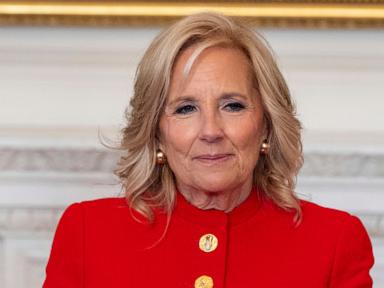
Former First Lady Jill Biden admitted she feared her husband, Joe Biden, was actively suffering a stroke during his catastrophic June 2024 debate performance against Donald Trump. In a newly released interview with CBS News ahead of her memoir publication, she described being consumed by terror while watching from the wings. "I was frightened, because I had never, ever seen Joe like that before or since," she stated. "As I watched it, I thought, 'Oh, my God, he’s having a stroke.' And it scared me to death."
The admission resolves one mystery while exposing a deeper, more troubling institutional reality. For weeks following that debate, the Biden family, their closest campaign advisers, and network surrogates engaged in an aggressive, coordinated effort to convince the American electorate that what they had witnessed with their own eyes was merely a "bad night" or the lingering effects of a cold. We now know that the person closest to the President of the United States believed he was undergoing an acute, life-threatening neurological event on live television, yet she still participated in a multi-week campaign to project normalcy and protect a political operation.
The Stage Management of Decline
The immediate aftermath of the Atlanta debate was a masterclass in political stage management, one that has now been thoroughly hollowed out by the former First Lady’s own words. Moments after the broadcast concluded—a 90-minute display where the sitting president mumbled incoherently, froze, and declared he had "finally beat Medicare"—Jill Biden took the microphone at an after-party.
"Joe, you did such a great job," she told the crowd, steering her husband like a child. "You answered every question. You knew all the facts."
This stark duality highlights the profound disconnect between private terror and public propaganda in modern politics. The political machine demanded compliance. Advisers attacked any Democrat or journalist who questioned the president's cognitive baseline, labeling them bedwetters or traitors to the party.
The strategy was not just about saving face; it was about preserving power. An entire apparatus of staffers, consultants, and donors depended on the fiction that Joe Biden was fully capable of governing for another four years. When insiders and former Obama administration officials sounded the alarm, the inner circle doubled down, demanding absolute loyalty to a narrative they knew to be false.
The Medical Context and Institutional Silence
The revelation that the First Lady suspected a stroke raises serious questions about the transparency of the White House medical unit. In the weeks following the debate, under immense pressure from a panicked press corps, the administration leaked fragmented health data, eventually admitting that a neurologist had visited the White House multiple times. Yet, the official party line remained unyielding: the president was fit, sharp, and merely fatigued from back-to-back European trips.
The subsequent disclosure earlier this year that Joe Biden had been diagnosed with stage 4 prostate cancer casts the entire timeline in a different, grimmer light. While presidents are not legally mandated to publish their medical charts, a long-standing democratic norm dictates a baseline of transparency regarding the health of the commander-in-chief.
The public was denied this transparency. Instead, they were treated to a wall of administrative silence and shifting explanations. If the president’s own wife believed he was experiencing an emergency neurological deficit, the decision to keep him in the race for another month—until the internal rebellion became insurmountable—represents an unprecedented gamble with national security and executive stability.
The Broken Trust of the Electorate
The fallout from this collective denialism extended far beyond the 2024 campaign cycle. It fundamentally damaged the credibility of the institutions tasked with informing the public. When political operations treat obvious physical or cognitive decline as an optical illusion to be spun away, the electorate internalizes a profound sense of gaslighting.
Former Obama speechwriter Jon Favreau noted the immediate backlash to Jill Biden's confession, pointing out that those who pointed out the obvious were systematically vilified by the campaign. Pretending the performance was acceptable was not just a tactical error; it was an insult to the intelligence of the voters.
The sudden pivot to Vice President Kamala Harris with just 107 days left before the general election was the direct result of this prolonged stonewalling. Had the inner circle acknowledged the severity of the situation in June—or months prior, during the primary season—the democratic process could have functioned normally. Instead, the country was forced into an emergency backroom transition because the truth was deemed too politically costly to utter.
History will remember the 2024 debate as the moment the illusion shattered, but Jill Biden's late-stage candor ensures it will also be remembered for the desperate, calculated silence that followed. Political loyalty routinely supersedes public honesty, but rarely has the gap between what a leader’s inner circle knew and what they told the world been so dangerously wide.