When a deadly virus sparks a panic, governments hit the panic button. That button usually triggers border closures and travel bans. It feels like common sense. Lock down the borders, keep the virus out, protect your citizens.
But it doesn’t work that way.
Right now, the Democratic Republic of Congo (DRC) is facing its 17th Ebola outbreak. It’s moving fast. The numbers are grim. Since health authorities declared the outbreak on May 15, 2026, suspected cases have shot past 1,000, with hundreds of probable deaths under investigation across the eastern provinces of Ituri, North Kivu, and South Kivu. Neighboring Uganda has already logged confirmed cases, including infections in its capital, Kampala.
In response, the international community panicked. The United States and Canada swiftly suspended visas and slapped heavy travel restrictions on residents from the DRC, Uganda, and South Sudan. Locally, Rwanda blocked entry for any foreign national who stepped foot in the DRC within the last 30 days.
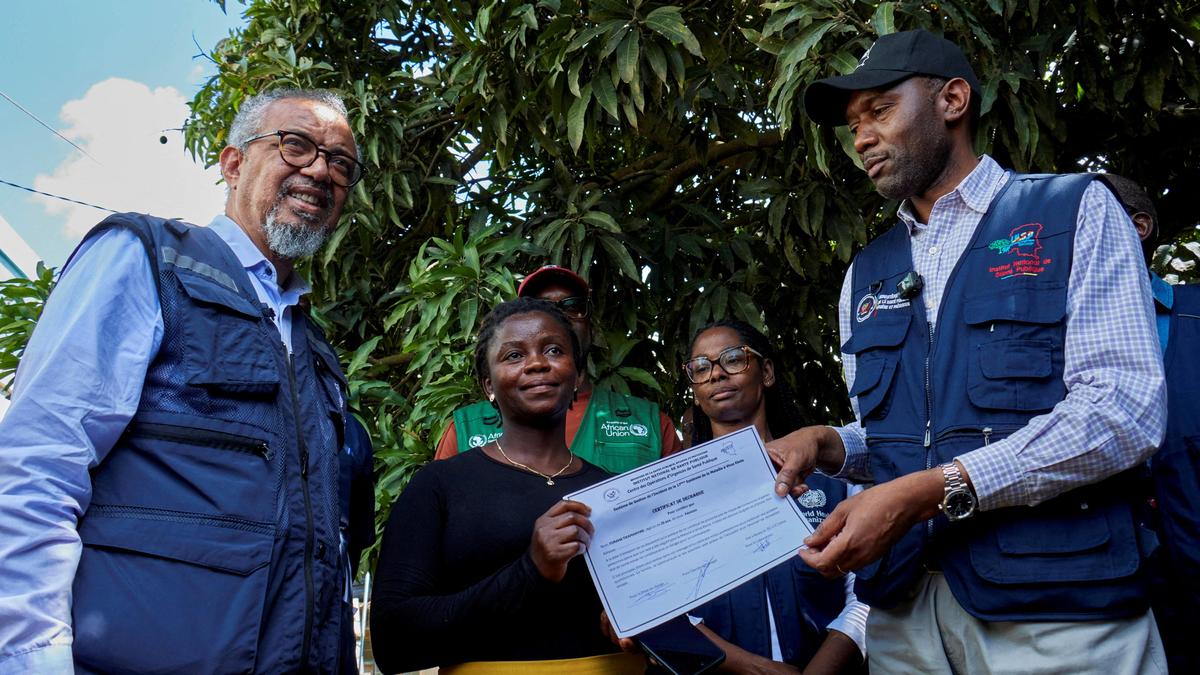
Standing in Bunia, the very epicenter of the crisis in Ituri province, World Health Organization (WHO) Director-General Tedros Adhanom Ghebreyesus delivered a sharp reality check. He called on these nations to reconsider their travel bans immediately. Why? Because locking down borders makes fighting Ebola harder, not easier.
The Paradox of Border Closures
The knee-jerk reaction to isolate an infected nation ignores how public health actually works. When you cut off a country, you don’t stop the virus; you just hide it.
Think about what happens when a country faces a complete economic and travel blockade. Governments lose the incentive to be transparent. If reporting an infection means your economy gets strangled and your citizens get barred from the world, you might hesitate to report the next cluster.
Tedros explicitly warned that these aggressive travel bans destroy transparency and trust. Trust is the only currency that matters in a health crisis. If border towns see that reporting a sick relative leads to military checkpoints and economic isolation, they stop talking to health officials. They hide the sick. They bury the dead in secret. The virus goes underground, where it spreads completely undetected.
Besides, borders in eastern DRC are porous. You can't seal thousands of miles of tropical forest. People will still cross; they'll just bypass official checkpoints where health workers screen for fevers. Instead of tracking travelers safely, health teams end up completely blind.
Fighting a Strain with No Vaccine
The current outbreak is uniquely dangerous. This isn't the Zaire strain of Ebola that we have reliable, licensed vaccines to fight against. This is the Bundibugyo strain.
Right now, there is no approved vaccine and no specific antiviral treatment for the Bundibugyo variant.
That fact alone makes the current panic understandable, but it also makes international cooperation crucial. Aid groups like Doctors Without Borders (MSF) are sounding the alarm, noting that this outbreak is moving at an unprecedented pace. We have never seen this many cases recorded so quickly after an initial declaration.
Alan Gonzalez, MSF's deputy director of operations, made it clear that the global response is dropping the ball. The number of expert medical organizations on the ground is nowhere near what's needed. Worse, Tedros revealed that the WHO has only received about one-third of the funding it needs to manage this crisis.
When rich nations choose to ban flights instead of funding the frontline response, they leave a underfunded system to fight a hyper-aggressive virus alone.
What Actually Works to Contain Ebola
If travel bans are a failure, how do you actually stop Ebola from jumping continents? You fight it at the source.
The DRC knows how to handle Ebola. They've done this 16 times before. DRC Health Minister Roger Kamba expects that the country can contain and end this outbreak within four to six months. They already have the laboratory capacity up and running, eliminating sample backlogs and processing hundreds of tests daily.
But they need a strategy built on science, not isolation.
Early Detection and Symptom Management
Even without a vaccine, Ebola isn't an automatic death sentence. The WHO points out that patients have a strong chance of survival if they get high-quality, supportive medical care early on. This means aggressive rehydration, balancing electrolytes, and treating secondary infections immediately.
Local Community Control
You can’t manage a crisis from a boardroom in Geneva or Washington. Health workers must listen to local communities. In Ituri, local leaders understand the social dynamics, the burial traditions, and the neighborhood movements. When you empower them with resources and factual information, they become the best defense against transmission. When you police them with border closures, they shut down.
Robust Cross-Border Surveillance
Instead of banning travelers, airports and border crossings need rigorous health screening. Check temperatures. Take travel histories. Isolate suspected cases immediately while keeping the trade routes open. This keeps the economy alive and ensures that medical supplies, tracking equipment, and expert personnel can stream into the hot zone without bureaucratic delays.
The Real Next Steps for Global Health
The strategy of isolating central Africa every time a virus emerges is an outdated tactic that inflicts massive economic damage while offering a false sense of security.
If the global community wants to prevent this Bundibugyo outbreak from turning into a global threat, the playbook must change right now.
- Fund the Frontlines Immediately: International donors must bridge the two-thirds funding gap currently crippling the WHO response.
- Lift the Visa Suspensions: The US, Canada, and regional neighbors need to replace blanket travel bans with standardized entry screening.
- Flood the Zones with Supply Chains: Ensure that personal protective equipment (PPE), rehydration fluids, and testing reagents move into North and South Kivu without customs bottlenecks.
The virus thrives on chaos, secrecy, and poverty. Border bans create all three. True security comes from supporting the medical teams in Bunia, not turning your back on them.