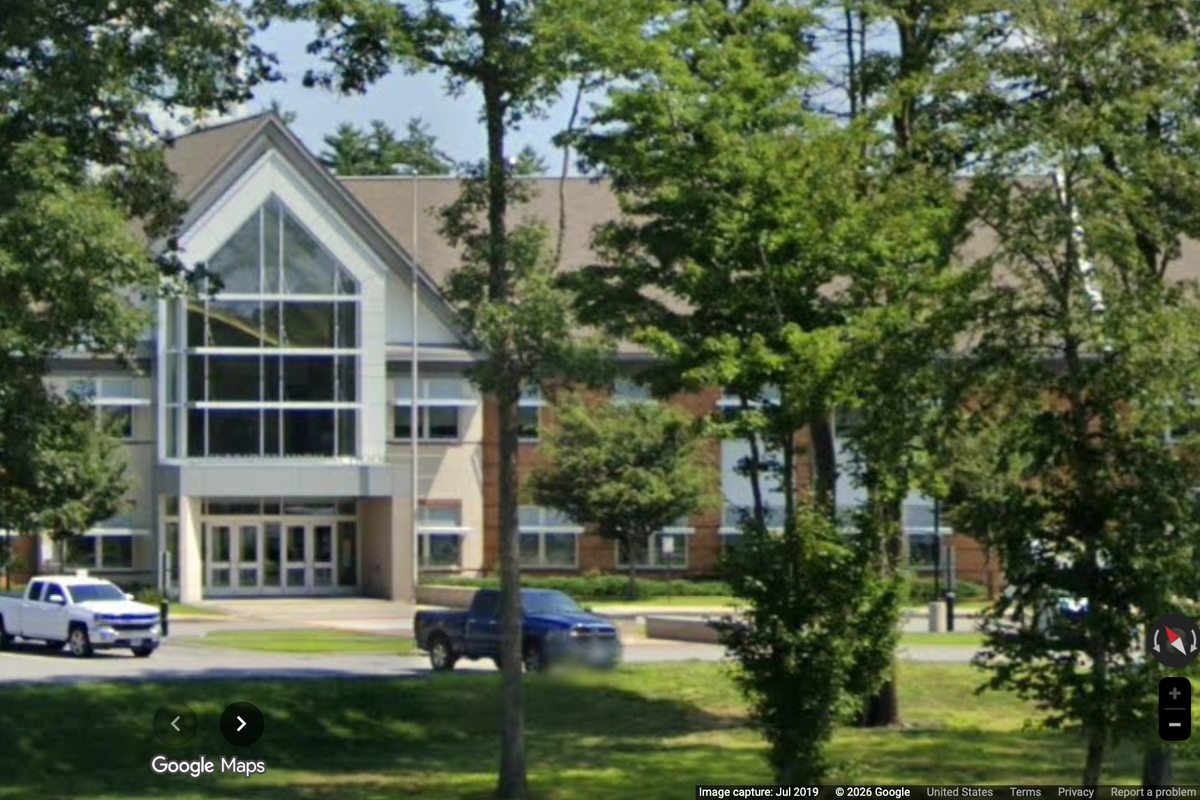
The air in public school classrooms has a distinct, universal memory. It smells of floor wax, dry-erase markers, the faint metallic tang of old radiator heat, and decades of trapped dust. For the people who spend their lives there, this environment becomes as familiar as their own living rooms. They trust it. Parents trust it. But a school building is more than just a place of learning; it is a complex, aging ecosystem of pipes, insulation, tile, and history.
Lately, in one Massachusetts community, that familiar smell has begun to evoke something entirely different. Fear.
It started as the kind of devastating news that usually unites a faculty room in quiet sympathy. A teacher was diagnosed with breast cancer. In any normal workplace, colleagues rally. They organize meal trains, cover shifts, and leave supportive notes on post-it flags. Then, a second teacher received the same diagnosis. Then a third. Soon, the coincidence felt less like a statistical anomaly and more like a pattern.
When multiple people in a specific, shared environment develop the same serious illness over a compressed timeframe, the word begins to circulate in hushed, terrified tones.
Cluster.
Now, state health officials are stepping inside the building, notebooks and testing kits in hand, to determine whether the very walls these educators dedicated their lives to are somehow making them sick.
The Weight of Coincidence
To understand the panic rippling through the community, one has to understand how cancer clusters are perceived versus how they are scientifically proven.
Imagine a blank dartboard. If you blindfold someone and throw ten darts, they will likely scatter across the board. But if three darts land exactly in the bullseye, side by side, you have to ask: was it pure luck, or was the board tilted?
In public health, proving the tilt is notoriously difficult.
The Massachusetts Department of Public Health, alongside local environmental agencies, launched its investigation because the numbers simply refused to be ignored. According to public health protocols, an official cancer cluster investigation requires a specific set of criteria. The cases must be of the same biological type of cancer, they must occur in a clearly defined geographic area or workplace, and the number of cases must be statistically higher than what is expected in a similar demographic group over a specific period.
Breast cancer is, tragically, the most common cancer diagnosed among women in the United States, accounting for roughly 30% of all new female cancer cases each year. Because it is so prevalent, seeing multiple cases in a large workforce—like a school district—is not inherently proof of an environmental hazard.
But when those cases are concentrated down to a single hallway, or a specific wing of an aging building, the math begins to feel heavy.
Consider the reality of a veteran teacher's day. They arrive before dawn. They drink coffee brewed from the faculty room tap. They spend hours breathing the air pushed through ventilation shafts installed during the Eisenhower administration. They handle old materials, teach under fluorescent ballasts, and look out windows sealed with caulking that may have been manufactured before the dangers of certain synthetic compounds were understood.
For these teachers, the school isn't just a workplace. It is an exposure site.
The Phantom in the Infrastructure
When investigators enter a school building looking for carcinogens, they aren't looking for a single smoking gun. They are looking for a cocktail of historical neglect and industrial biology.
The primary suspects in any older public building typically fall into a few notorious categories.
Polychlorinated Biphenyls (PCBs)
Man-made organic chemicals manufactured widely from the late 1920s until they were banned in 1979. PCBs were the ultimate industrial ingredient—highly stable, non-flammable, and excellent for electrical insulation and plasticizers. They were mixed into the caulk used around school windows, the grout between tiles, and the ballasts of old fluorescent light fixtures. Over decades, as these materials degrade, they release PCBs into the air and dust. The human body absorbs them, and they accumulate in fatty tissue. The International Agency for Research on Cancer categorizes them as known human carcinogens, with specific links to malignant melanoma, liver cancer, and breast cancer.
Radons and Volatile Organic Compounds (VOCs)
Radon is a naturally occurring radioactive gas that seeps up through the bedrock into basements and ground-floor classrooms through cracks in the foundation. It is invisible and odorless. VOCs, on the other hand, are introduced daily through industrial-strength cleaning agents, floor strippers, and cheap adhesives used in school maintenance.
Water Quality and Heavy Metals
Older plumbing systems frequently rely on copper pipes joined by lead solder, or even entirely lead-lined service lines. While lead is traditionally associated with neurological damage in children, the presence of other heavy metals and chemical runoff in local water tables can create systemic health risks for long-term consumers.
The terrifying truth about environmental oncology is the latency period. Cancer does not develop overnight. A cell mutated by an environmental toxin today might not manifest as a detectable tumor for ten, fifteen, or twenty years. This makes tracking the source an agonizing exercise in historical detective work. Investigators must look backward, reconstructing what the building looked like, smelled like, and contained two decades ago.
The Human Ledger
Behind every data point in a state health report is a life interrupted.
Let us construct a composite profile of the educator at the center of this crisis. Call her Sarah. She is forty-four years old. She has taught middle school English in the same room for sixteen years. She knows which floorboards creak, which window requires a specific upward jerk to open, and how the radiator clanks like a dying engine every November.
Sarah has spent more waking hours in that room than in her own bedroom. She has decorated it with posters of classic literature, bought books with her own money, and watched hundreds of children grow up and move on.
When Sarah finds a lump during a routine self-examination, her mind goes to her genetics. She reviews her family tree. Clean. She reviews her diet, her exercise habits, her alcohol consumption. She did everything "right."
Then, she goes back to work after her biopsy, her chest sore beneath her cardigan, and she runs into the science teacher from across the hall at the copy machine. They exchange the heavy, knowing look that has become the secret language of the faculty lounge. The science teacher is undergoing radiation. The art teacher upstairs just took an unexplained medical leave.
Suddenly, Sarah isn't just fighting a personal medical battle. She is looking at her classroom walls with a profound sense of betrayal. The room that was her sanctuary now feels like a slow-motion trap.
This is the psychological toll that statistics cannot capture. It transforms a place of community into a place of suspicion. Parents begin to wonder if the air their children breathe for six hours a day is safe. Teachers look at their retirement horizons and wonder if they will live long enough to see them. The school administration is caught in a horrific vise between managing public panic, defending against immense liability, and genuinely wanting to protect their staff.
The Limits of Science and the Need for Answers
The investigation initiated by Massachusetts officials will be exhaustive, but history suggests it may also be frustratingly inconclusive.
Statistically, the vast majority of cancer cluster investigations nationwide end without finding a definitive environmental cause. This is not due to a lack of effort, but rather the sheer complexity of human biology and environmental exposure. We live in a world saturated with synthetic chemicals. A teacher is exposed to toxins at the school, but they are also exposed to chemicals in their cosmetics, microplastics in their food, exhaust fumes on their commute, and pesticides in their suburban lawns.
Isolating the school building as the sole catalyst requires a level of scientific precision that our current diagnostic tools rarely allow.
But "inconclusive" is a luxury that people facing a life-threatening illness cannot afford.
The demand for transparency must override the institutional desire for self-protection. When a state steps in, it sends a message that the lives of public servants matter enough to warrant a halt, a deep breath, and a rigorous forensic scrub of the spaces we ask them to inhabit. Whether the investigation uncovers a specific plume of PCBs or concludes that the cluster was a cruel twist of mathematical probability, the infrastructure must be modernized.
Aging public schools across the country are facing a reckoning. The infrastructure bill is not just about roads and bridges; it is about the air inside the buildings where the future is shaped. If we expect teachers to guide, protect, and inspire, the minimum baseline requirement is that the building itself should not be a biohazard.
The bell rings. The students flood into the hallways, their laughter and heavy backpacks creating a wall of sound that drowns out the quiet anxiety of the adults watching from the classroom doorways. The teachers stand at their posts, smiles fixed on their faces, while beneath their clothes, the scars of surgeries and the invisible ticking of cell mutations remain hidden. They will teach today. They will teach tomorrow. But they will keep looking at the ceiling tiles, waiting for the state to tell them what they are breathing.