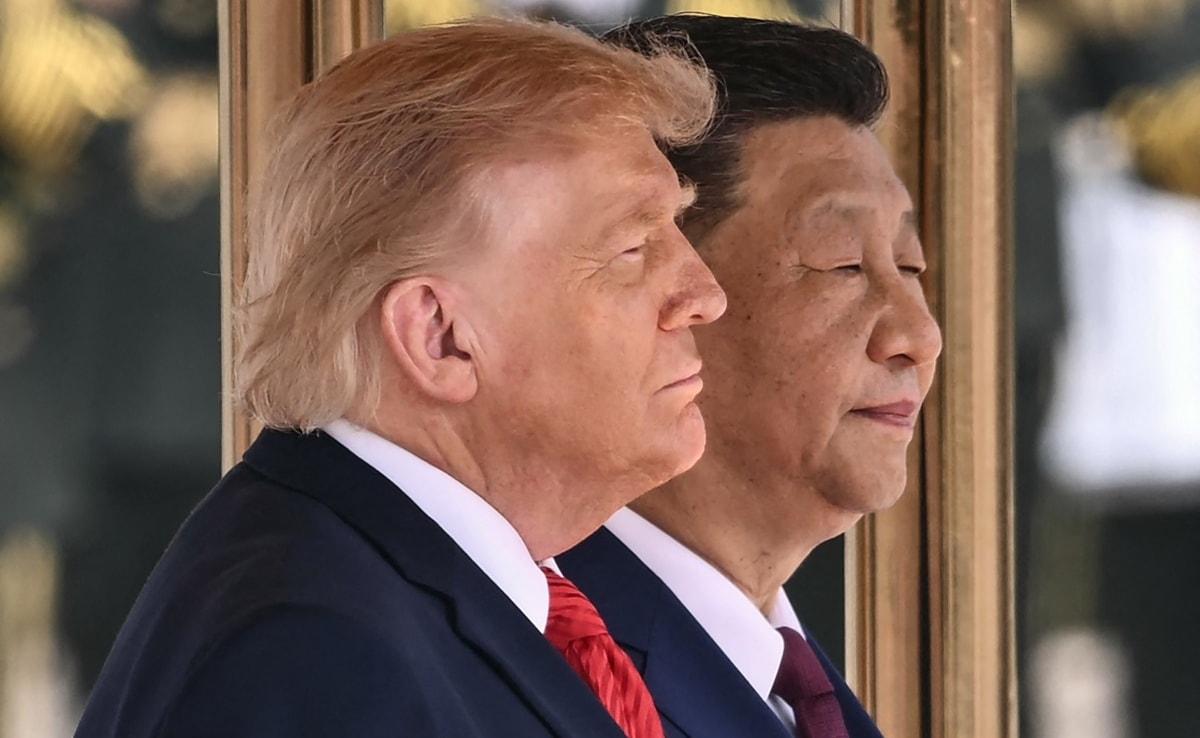
The mainstream media is obsessed with the optics of the "State Visit-Plus." They see the forbidden city tours, the military honor guards, and the gold-trimmed banquet tables as a sign of respect or a softening of geopolitical tensions. They are wrong. Beijing doesn’t do "pomp" for the sake of hospitality. In the high-stakes theater of Chinese diplomacy, pageantry is a weapon used to paralyze Western decision-making.
When the Chinese Communist Party (CCP) rolls out the literal red carpet, they aren't honoring a guest. They are executing a psychological operation designed to signal dominance while the rest of the world looks for "signs of cooperation." While journalists tweet about the menu and the protocol, they miss the structural reality: the hospitality is a distraction from the aggressive decoupling and state-subsidized industrial warfare happening in the background.
The Ritual of Forced Deference
Western observers love to frame these visits through the lens of traditional diplomacy. They talk about "building bridges" or "finding common ground." This is a fundamental misunderstanding of the CCP’s worldview. In their framework, there is no common ground—there is only the Middle Kingdom and its tributaries.
The "State Visit-Plus" isn't an upgrade in friendship; it's an exercise in status management. By creating an atmosphere of overwhelming grandeur, Beijing forces foreign leaders into a role of a supplicant. If you accept the grand tour of the Forbidden City, you are implicitly acknowledging the historical weight of the host. You are playing on their board, by their rules, and within their timeline.
I’ve watched executives and diplomats walk into these environments and immediately lose their edge. The sensory overload—the precision of the guards, the scale of the architecture—is designed to make the individual feel small. It’s hard to bring up intellectual property theft or South China Sea incursions when you’ve just been treated like royalty. That’s the point. The pageantry buys Beijing time. It creates a "halo effect" that obscures the fact that not a single structural trade issue has been resolved.
The Multi-Billion Dollar MOU Mirage
Look at the headlines that follow these visits. They almost always focus on "record-breaking trade deals" and "multi-billion dollar agreements."
Here is the truth: most of those deals are non-binding Memorandums of Understanding (MOUs). They are the diplomatic equivalent of a "maybe." In the corporate world, if I told my board that I secured $250 billion in "intent to purchase," they’d fire me for being a naive amateur. Yet, the media reports these numbers as gospel.
China uses these theatrical signings to pacify the business lobby in the visiting leader's home country. By dangling the carrot of market access during a high-profile visit, they ensure that Western CEOs will go back to Washington or London and lobby against sanctions or tariffs.
- The Boeing Fallacy: Beijing announces a massive aircraft order during a summit.
- The Reality: Those orders were often pre-negotiated months or years prior, or they are simply options that may never be exercised.
- The Result: The visiting leader gets a "win" for the news cycle, while China keeps its domestic aerospace subsidies flowing, aiming to eventually replace Boeing with its own COMAC jets.
This isn't trade. It's an elaborate stalling tactic. While we celebrate the "pomp," they are busy localizing technology and squeezing foreign competitors out of the supply chain.
Understanding the "Face" Trap
The concept of "giving face" is often cited as a reason for these elaborate ceremonies. The lazy consensus is that if we show respect to China, they will be more "reasonable" at the negotiating table.
This is a dangerous delusion.
In Chinese strategic thought, as outlined in the Thirty-Six Stratagems, "befriending a distant state while attacking a neighbor" or "decking the tree with false blossoms" are standard operating procedures. The pageantry is the "false blossoms." It makes something worthless (the diplomatic status quo) look productive and beautiful.
When the West treats China as a traditional superpower that cares about international norms, we fail to see the asymmetric nature of the relationship. They play a 50-year game; we play a 24-hour news cycle. They use the red carpet to ensure that the news cycle remains positive, preventing the "confrontation" they aren't quite ready for yet.
The Cost of the Performance
There is a tangible downside to this obsession with optics. Every time a Western leader participates in these choreographed displays without securing deep, structural concessions on market access or human rights, it validates the CCP’s internal narrative.
It tells the Chinese public—and the global south—that the West is desperate. It shows that despite all the tough talk about "de-risking" or "decoupling," the leaders of the free world will still show up and smile for the cameras if the banquet is expensive enough.
If you want to actually "disrupt" the status quo in China relations, you have to be willing to be the "rude" guest.
- Refuse the Theater: Decline the symbolic tours. Keep the meetings in functional, boring boardrooms.
- Verify the Math: Treat every trade announcement as a zero until the money clears the bank.
- Address the Asymmetry: Stop pretending that a state-controlled economy and a market economy can play by the same "pageantry" rules.
The Illusion of Personal Chemistry
The most exhausting part of these visits is the post-summit analysis of "personal chemistry" between leaders. Journalists look for a handshake that lasts a second too long or a shared laugh as evidence of a breakthrough.
This is ego-driven nonsense.
The General Secretary of the CCP does not make policy based on whether he "likes" a foreign president. The policy is dictated by the survival of the Party, the dominance of the state-owned enterprises, and the long-term goal of regional hegemony. Thinking that a walk through a garden can change the trajectory of the world's most disciplined political organization isn't just optimistic; it’s narcissistic.
We are so desperate for a return to "normalcy" that we mistake a well-produced play for a change in reality. The red carpet isn't a path to peace; it's the velvet lining of a trap.
Stop looking at the dancers. Stop reading the menu. Watch the movement of the subsidies, the deployment of the coast guard, and the tightening of the internal security apparatus. That is where the real story lives. The rest is just glitter on a sinking ship of diplomacy.
The next time you see a leader standing on a red carpet in Beijing, don't ask what they are achieving. Ask what they are being paid to ignore.