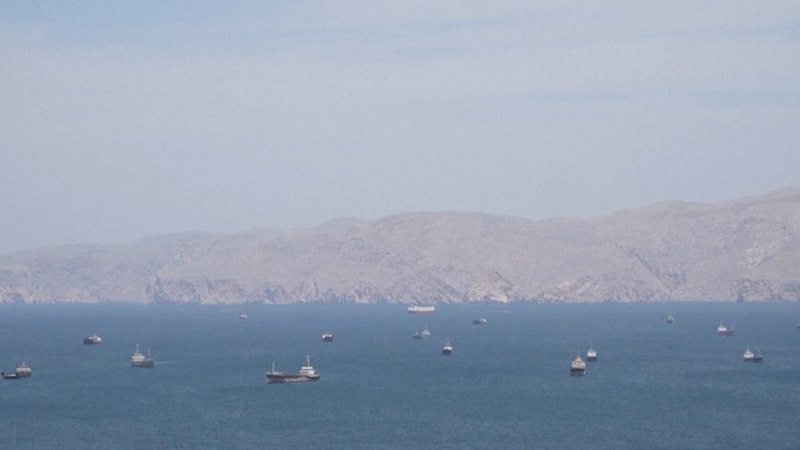
The Strait of Hormuz is currently witnessing a violent shift in the mechanics of global trade that goes far beyond a single hull breach or a panicked distress call. When a merchant vessel is targeted in these waters, the immediate headlines focus on the smoke and the jagged metal. The real story is the math. Every explosion in this narrow corridor triggers a sequence of financial shocks that ripples through London insurance markets, Singaporean refueling hubs, and eventually, the price of every gallon of fuel in the Midwest. We are moving past the era of predictable maritime safety and into a period where the world’s most vital transit lane is being used as a laboratory for asymmetric warfare.
This isn't just about regional friction. It is about the fundamental fragility of a "just-in-time" global economy that relies on a 21-mile-wide stretch of water to stay solvent.
The Mechanics of a Modern Ambush
Modern maritime attacks have evolved from the crude piracy of the last decade into sophisticated, state-sponsored or proxy-led operations. We are no longer seeing simple boarding parties with ladders. Instead, the threat profile now includes one-way attack drones, limpet mines attached by divers under the cover of darkness, and sophisticated electronic jamming that blinds a ship’s navigation systems before the physical strike even occurs.
The goal of these strikes is rarely to sink the ship. Sinking a massive crude carrier creates an environmental catastrophe that can alienate even the most aggressive geopolitical actors. The objective is mission kill. By damaging the propulsion system or the bridge, an attacker forces the vessel to stop. A dead ship in a busy lane is a powerful psychological weapon. It signals to every other shipping conglomerate that their multi-million dollar assets are vulnerable, regardless of the flag they fly.
The Insurance Death Spiral
When a ship is hit, the first phone call isn't to a mechanic; it is to a maritime insurance broker. The Strait of Hormuz is already designated as a "Listed Area" by the Joint War Committee in London. This means any vessel entering the region must notify their underwriters and pay an additional "war risk" premium.
- Premium Spikes: Following a kinetic event, these premiums can jump by 100% or 200% within hours.
- The Surcharge Shift: Shipping lines do not absorb these costs. They pass them to the consumer through "Emergency Risk Surcharges."
- Route Divergence: If the risk becomes too high, companies consider the Cape of Good Hope route. This adds ten days to a journey and burns thousands of tons of extra fuel, effectively shrinking the global fleet's capacity overnight.
This financial pressure is the primary lever of the attackers. They aren't trying to win a naval battle; they are trying to make the existing world order too expensive to maintain.
Why the Current Defense Strategy is Failing
For years, the response to Hormuz instability has been to increase the presence of carrier strike groups and international naval coalitions. This is a 20th-century solution to a 21-century problem. A billion-dollar destroyer is a magnificent piece of engineering, but it is poorly equipped to stop a $20,000 fiberglass drone or a swarm of fast-attack craft that look identical to local fishing boats on radar.
The ocean is too big to guard every square inch. Attackers hold the "first mover" advantage. They choose the time, the target, and the method. The defender must be perfect 100% of the time across thousands of square miles of water. This imbalance is why the maritime industry is quietly pivoting toward private security solutions and onboard electronic countermeasures, though these often operate in a legal gray area regarding international waters.
The Shadow Fleet Complication
A significant factor often ignored by mainstream reporting is the existence of the "Shadow Fleet." These are aging vessels with opaque ownership, often operating without standard Western insurance. They frequently disable their Automatic Identification Systems (AIS) to hide their movements. When an attack happens in the Strait, these ghost ships complicate the tactical picture. They are moving hazards that can be used as shields or decoys. For a naval commander, distinguishing between a legitimate merchant ship in distress and a shadow vessel involved in illicit activity is a nightmare that must be solved in seconds.
Energy Security and the Hydrogen Pipe Dream
The immediate casualty of Hormuz volatility is the global energy market. Roughly 20% of the world’s liquid petroleum passes through this choke point. While the West has attempted to "de-risk" by moving toward renewables and domestic shale, the global price of oil is still set by the marginal barrel. If 18 million barrels a day are threatened, the price of oil in Texas goes up, even if that oil never leaves the American continent.
There is frequent talk about bypassing the Strait with pipelines through Saudi Arabia or Oman. The reality is that these pipelines lack the capacity to handle the sheer volume of the tanker fleet. They are a bandage on a severed artery. Furthermore, pipelines are static targets, even easier to sabotage than a moving ship.
The Technological Arms Race on the Water
We are seeing a rapid deployment of "hard kill" and "soft kill" systems on commercial hulls. Soft kill systems involve sophisticated spoofing technology that makes a ship appear miles away from its actual location on GPS. Hard kill systems, though rare and legally contentious, involve automated point-defense weapons.
The danger here is the escalation of "civilian" ships into quasi-military assets. If a cargo ship starts carrying directed-energy weapons to fry drone electronics, it loses its status as a protected merchant vessel under certain interpretations of maritime law. We are entering a period of "Grey Zone" shipping where the lines between commerce and combat are permanently blurred.
The High Cost of the "Safe" Route
When the Strait becomes a "no-go" zone, the alternative is the long way around Africa. This isn't just a matter of more time. It creates a massive logistical backlog at the world’s major ports. A ship delayed by two weeks in the Middle East is a ship that isn't available to pick up cargo in Shanghai or Los Angeles. This creates a global container shortage, driving up the cost of everything from semiconductors to sneakers.
Investors often look at the stock prices of oil majors during these crises, but the real indicators are the dry bulk indices and the share prices of the major container lines. They are the ones who bear the brunt of the logistical chaos.
Beyond the Immediate Horizon
The instability in the Strait of Hormuz is not a temporary flare-up. It is the new baseline for maritime operations. The era of the "global commons"—where any ship could sail anywhere with a reasonable expectation of safety—is ending. In its place is a fragmented, high-risk environment where safety is a premium service rather than a right.
Companies are now forced to choose between the high cost of the long route and the high risk of the short route. There is no middle ground. As long as the Strait remains a theater for political leverage, the "maritime peace" that built the modern world will continue to erode.
The next time a tanker is struck, do not look at the flames. Look at the shipping rates. Look at the insurance premiums. The real damage isn't to the ship; it is to the illusion of a friction-less global economy. Shipping lanes are the world's nervous system, and right now, the Strait of Hormuz is a persistent, throbbing ache that no amount of naval firepower can soothe.
The move toward regionalized supply chains is no longer a strategic preference; it is a survival tactic for an age where a few thousand dollars worth of explosives can hold a trillion dollars of trade hostage.