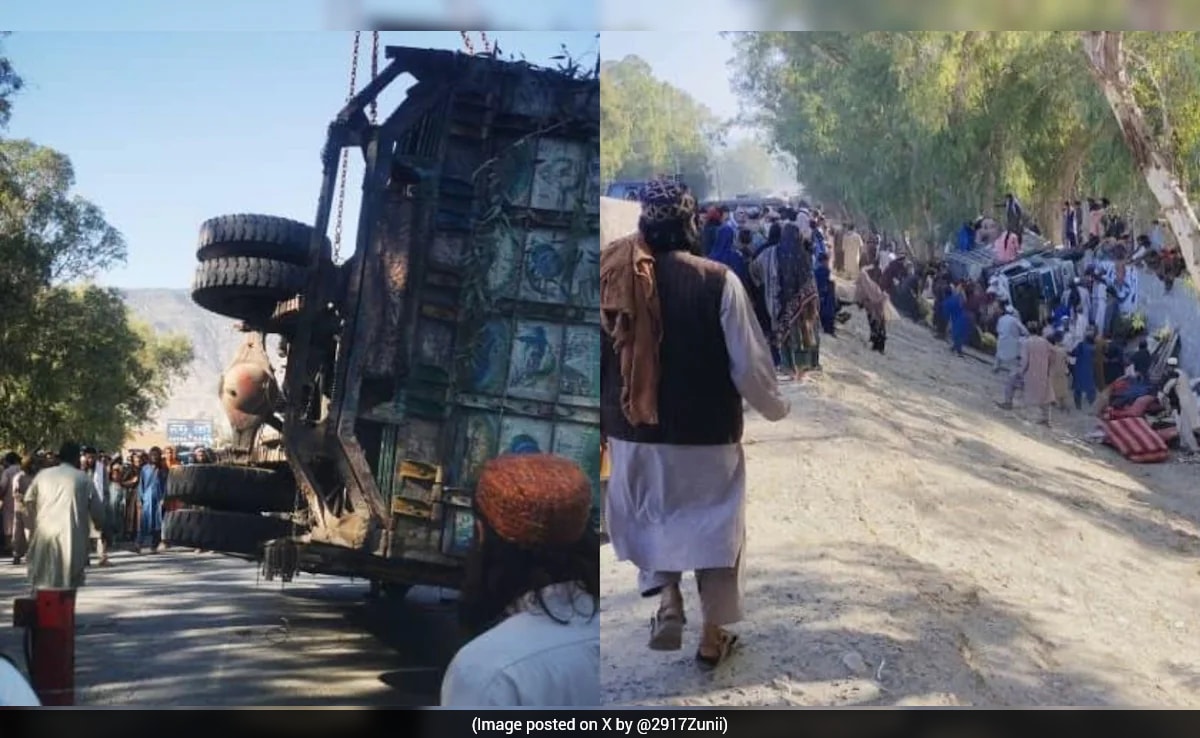
The human body is remarkably fragile, but the things we carry are surprisingly resilient. A plastic comb with three missing teeth. A faded photograph of a wedding in Peshawar, the edges softened by sweat and friction. A single, mismatched child’s sandal, stained with the gray grime of the borderlands.
These objects do not shatter when a wooden-sided cargo truck loses its footing on a mountain pass. They simply scatter. They wait in the dirt long after the sirens have faded, surviving the people who packed them so carefully into bundles at dawn.
We treat migration as a statistic. We read the headlines and our eyes glide over the numbers, registering them the way we register the temperature or the stock market index. Twenty-two dead. It is an even number, neat and clinical. But death in the high passes of Afghanistan is never neat. It is a violent disruption of hope. To understand what happened on the road from Pakistan, you have to look past the police reports and into the suffocating interior of a vehicle never meant to carry living breathing souls.
The Weight of the Cargo
The vehicle was an ordinary cargo truck, the kind used to transport timber, livestock, or sacks of flour across the rugged spine of the Hindu Kush. Its sides were built high with weathered wooden planks. In the logic of the borderlands, space is a commodity too valuable to waste. If you can fit forty people into a space meant for twenty, you do it.
They were refugees. The word itself has been scrubbed of its humanity by decades of geopolitical hand-wringing, but beneath the label are people who simply reached the end of their ability to endure. They were returning from Pakistan, heading into the uncertain landscape of a homeland they either left years ago or had never seen at all.
Consider the mechanics of that journey.
You are crammed into the back of a flatbed. There are no seats. There are no seatbelts. There is only the collective mass of shoulders, knees, and small children tucked into the narrow gaps between adult bodies. The air is a thick soup of diesel exhaust and fine, powdery dust that coats the back of your throat. Every pothole sends a shudder through the spine. Every sharp curve forces the entire crowd to lean together, a single, heavy organism shifting against the wooden walls.
The road winding through Nangarhar province does not forgive mistakes. It clings to the hillsides, a narrow ribbon of asphalt and gravel flanked by sheer drops. When a truck carrying dozens of people flips on a road like this, the physics are merciless.
There is a moment before the crash. A sudden, terrifying lurch as the brakes fail or the gravel gives way beneath a heavy tire. A collective intake of breath. Then, the world turns upside down. The wooden planks shatter under the weight of the falling vehicle, turning into jagged splinters. The heavy iron chassis becomes a crushing weight.
When the dust finally settled in the district of Mohmand Dara, twenty-two people were no longer breathing. Among them were five men, seven women, and ten children.
One.
Two.
Three.
Four.
Five.
Six.
Seven.
Eight.
Nine.
Ten.
Count them slowly. Each one had a name. Each one had a specific reason for being in the back of that truck on a Tuesday morning.
The Economics of Displacement
Why get into the truck?
It is a question asked often by people who have never had to look at their children and realize the ground beneath their feet is no longer safe. They ask it from the comfort of well-paved cities, wondering why anyone would risk an overcrowded vehicle on a treacherous mountain pass.
The answer is found in the quiet, crushing pressure of policy.
For decades, Pakistan has been a sanctuary for millions of Afghans fleeing war, drought, and economic collapse. Peshawar and Quetta became second homes to generations who built lives, opened shops, and raised children in the relative safety of the plains. But hospitality is a finite resource, heavily dependent on the shifting winds of regional politics.
When a government decides it is time for millions of unregistered foreigners to leave, the exit is rarely dignified. Landlords stop renting. Police checkpoints multiply. The daily anxiety of avoiding detention becomes a slow, eroding tax on the psyche.
So, you pack. You sell the refrigerator for a fraction of what it is worth. You bundle the blankets. You find a driver who promises he can get you across the border at Torkham and down into Nangarhar for a price you can actually afford.
Cheap transport is cheap for a reason. It bypasses inspections. It ignores safety standards. It treats human beings like sacks of grain because grain doesn't complain about the lack of suspension. The truck that overturned wasn't an anomaly; it was the standard delivery system for the unwanted.
The local officials in Nangarhar released a statement after the bodies were cleared. They spoke of brake failure. They spoke of reckless driving on a difficult stretch of road. They promised an investigation, as officials always do when the scale of a tragedy demands a public display of competence.
But the brakes did not fail in a vacuum. They failed because the truck was overloaded with the desperation of people who had nowhere else to go and no better way to get there.
The Aftermath on the Asphalt
The survivors—nearly a dozen of them—were taken to the regional hospital. Some had broken limbs; others had internal injuries that would take months to heal in a country where medical supplies are chronically scarce.
But the physical pain is only the first layer of the trauma.
Imagine waking up in a crowded hospital ward, the smell of antiseptic failing to mask the scent of dust and blood. You look around the room for your daughter, your mother, your cousin. You see only strangers. A doctor with tired eyes avoids your gaze because he does not want to be the one to tell you that the child who was sitting on your lap three hours ago is now lying under a white sheet in the courtyard.
This is the hidden cost of the headlines. The news cycle moves on within twenty-four hours. A new explosion, a new political crisis, or a new economic report will push the twenty-two dead of Mohmand Dara to the bottom of the page. The world forgets the names before they are even recorded.
But for the families left behind, the road never really clears.
The journey of a refugee does not end when they cross a border or when they reach a destination. It is a continuous, looping struggle against invisibility. They are people who exist in the margins of international law, moving through landscapes that view them as a burden or a security threat rather than a collection of individuals with stories, fears, and quiet ambitions.
The sun still sets over the mountains of Nangarhar, casting long, dramatic shadows across the gorge where the truck came to rest. The twisted metal will eventually be hauled away by scavengers. The shattered wood will be collected for firewood. The dust will settle back onto the asphalt, covering the dark stains left behind in the dirt.
A few miles down the road, another cargo truck is already moving through the gears. Its engine whines against the steep incline. In the back, tucked beneath a tarpaulin to shield them from the wind, thirty people hold onto the wooden slats and onto each other, watching the cliff edge drop away into the dark.