The wind in northern Mali does not just carry sand. It carries whispers, the smell of charred grain, and the heavy, metallic scent of fear. When the sun sets over the Sahel, the shadows don't just stretch; they swallow.
In the capital of Bamako, politicians speak in terms of sovereignty and tactical gains. On the maps of international analysts, the "offensive" is a series of colored arrows pushing north, reclaiming territory from jihadist insurgents. But if you stand in the dry scrubland of the Mopti or Gao regions, the arrows are not lines on a page. They are the tracks of pickup trucks. They are the boots of soldiers. They are the sound of doors being kicked in at three in the morning.
For the Peul herdsmen and the Touareg traders, the tragedy isn't just the war. It is the suspicion. They are caught in a vise where one side demands their loyalty through terror and the other side assumes their guilt by their bloodline.
Consider a man like Amadou. This is a name common enough to protect a real person, but his story is a composite of a thousand testimonies currently bleeding out of the Malian interior. Amadou is Peul. His life is measured in the health of his cattle and the rhythm of the seasonal rains. He has no interest in global caliphates or the geopolitical maneuvering of the Wagner Group. Yet, when the jihadists move through a village, they look for recruits among the young men who have been ignored by the state for decades. They offer a sense of belonging or, more often, a threat of death.
When the Malian army and their foreign partners arrive to "liberate" that same village, they don't see a victim of circumstance. They see a potential collaborator. They see the wrap of a turban or the lean frame of a nomad and they see an enemy.
The Cost of a Label
The statistics tell a cold story. Human rights organizations have documented hundreds of extrajudicial killings over the last eighteen months. These aren't just casualties of crossfire. These are men pulled from buses because their identity cards show a certain surname. These are elders executed in the presence of their grandchildren because they were suspected of "providing intelligence" to the groups that had occupied their wells by force just weeks prior.
The offensive, launched with the intent of restoring order, has instead fractured the social fabric of the nation. For centuries, the Peul and the Touareg have been the pulse of the Sahel. They are the masters of a harsh geography that kills anyone who doesn't respect its rules. But today, their very presence in the bush is treated as a tactical threat.
The logic of the scorched earth is simple but devastating. To kill the fish, you drain the pond. In this scenario, the "fish" are the insurgents, and the "pond" is the civilian population that happens to share their ethnicity or their geography. When the pond is drained, the life within it dies indiscriminately.
The Invisible Stakes of Identity
The real danger here isn't just the loss of life, as horrific as that is. The danger is the creation of a self-fulfilling prophecy.
When a young Touareg man sees his father humiliated by security forces, or when a Peul community sees their market burned to the ground under the guise of counter-terrorism, where do they turn? The state, which should be their protector, has become their predator. The jihadists wait in the wings, ready to offer the only thing left: a weapon and a target.
This is how a local conflict becomes a generational cycle of vengeance. It’s a mechanism of radicalization that no amount of drone strikes can stop. In fact, the strikes often provide the fuel.
The "standard" reporting on Mali focuses on the departure of French troops or the arrival of Russian mercenaries. These are the macro-movements of a global chess game. But the game is played on a board made of human lives. The "exactions"—the kidnappings, the torture, the summary executions—are not mere side effects of war. They are the war. They are the primary experience of the people living in the center and the north.
To be a nomad in Mali today is to live in a permanent state of apology for your existence. You must apologize to the extremists for not being radical enough. You must apologize to the military for being "suspicious" by default.
A Silence That Screams
There is a specific kind of silence that falls over a village after an "operation." It isn't the peaceful quiet of a rural evening. It is the heavy, suffocating silence of a community that has learned that speaking out brings more boots to the door.
In the refugee camps across the border in Mauritania or Burkina Faso, the stories come out in a flood. They speak of "white soldiers" who don't speak French or the local dialects, moving alongside the Malian army. They speak of drones that hum like giant insects before the world explodes. They speak of the disappearances—the men who are taken for questioning and simply never return. Their names are added to lists that few people in the capital bother to read.
The international community watches through a lens of "stability." As long as the borders appear held and the insurgents are kept at bay, the internal cost is often viewed as a secondary concern. But stability built on the bones of an ethnic minority is a house built on sand. It will shift. It will collapse.
The tragedy of the Peul and Touareg is the tragedy of the marginalized everywhere, amplified by the heat of the Sahel and the desperation of a failing state. They are being erased from the narrative of their own country, reimagined as a monolith of "the enemy" rather than as citizens with rights, histories, and a desperate desire for peace.
The grain stores are empty. The cattle have been seized or killed. The wells are sometimes tainted by the bodies of those who were supposed to guard them. This is the reality of the "offensive" when stripped of its press releases and its patriotic fervor.
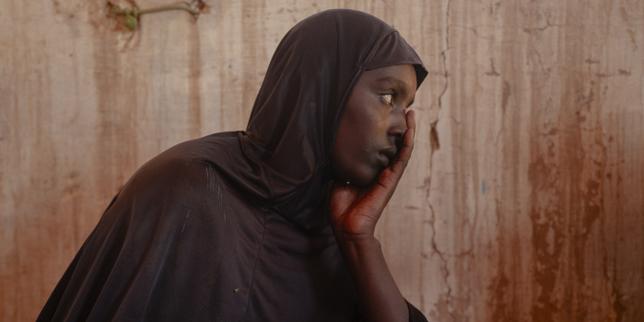
As the moon rises over the dunes of the Azawad, a mother waits. She doesn't know if her son is a prisoner, a recruit, or a ghost. She only knows that the world has decided that his face is the face of a threat. She knows that in the eyes of the men with guns, he is not a person, but a data point in a war of attrition.
The sand will eventually cover the tracks of the trucks. It will cover the ruins of the villages. But it cannot cover the memory of the betrayal. In the Sahel, the dust of many shadows never truly settles; it just waits for the next wind to rise.