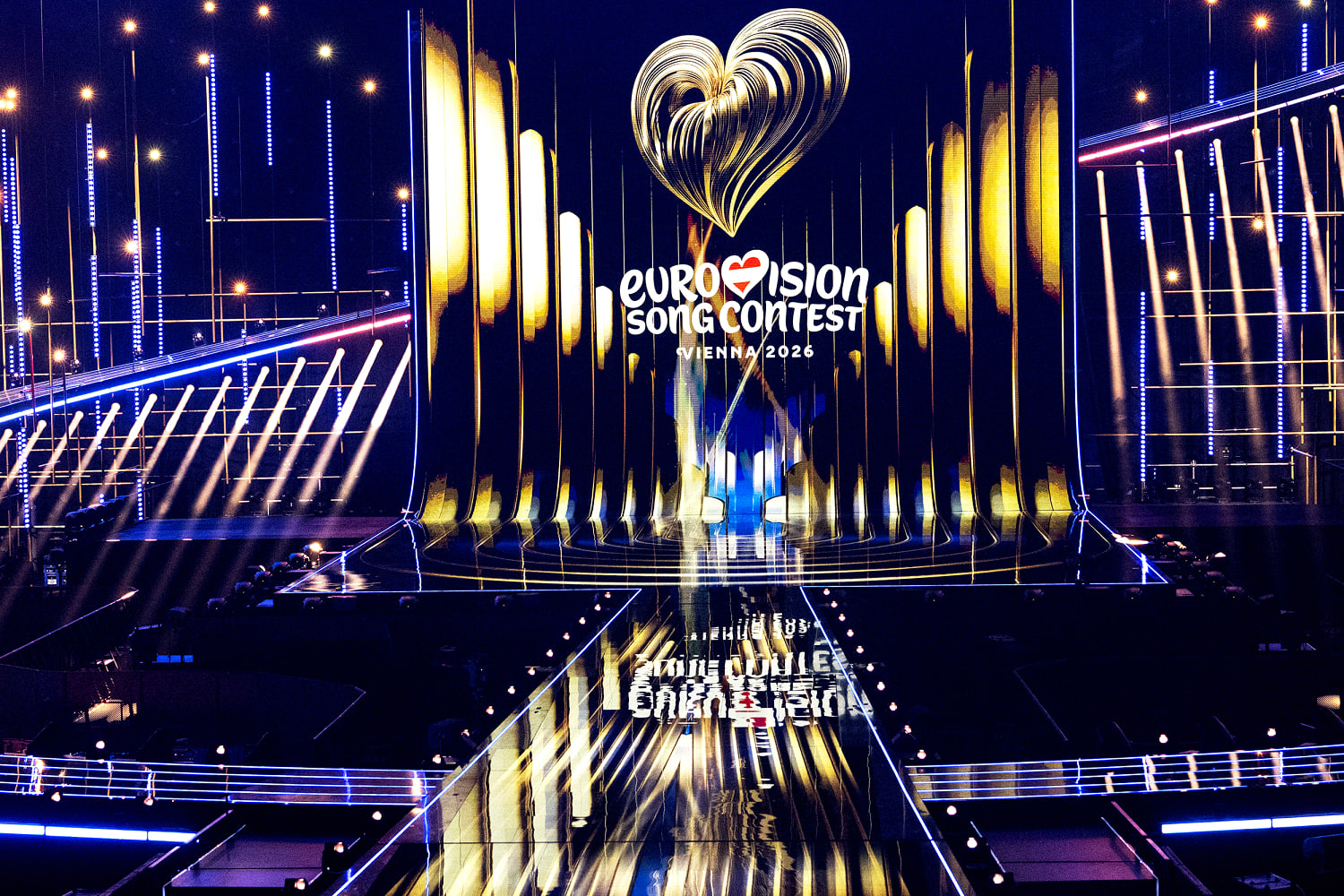
The legacy media loves a redemption arc. They want to tell you that Eurovision is "back" because the glitter is shinier or because Boy George showed up for a cameo. They want to frame the 2024 and 2025 cycles as a triumphant return to form after a year of political bruising and boycott threats.
They are lying to you.
Eurovision didn't "come back" because it never left. More importantly, it isn't a song contest. It hasn't been about music since the EBU realized that geopolitical friction is a better product than a three-minute pop song. If you are watching for the melodies, you are the mark. The real show is the high-stakes management of national identities in a pressure cooker of continental resentment.
The Myth of the Neutral Stage
The most exhausting trope in music journalism is the idea that Eurovision is—or should be—non-political. The European Broadcasting Union (EBU) clings to this "apolitical" mandate like a life raft, yet the very foundation of the event is built on post-war reconstruction and soft power.
When people cry about "politics ruining the show," they fail to understand that politics is the show's engine. Without the voting blocs, the historical grievances, and the subtle shade thrown in the staging, you just have a very expensive version of The Voice with worse catering.
I have watched broadcasters sink millions into entries not to win, but to prove a specific point about their national sovereignty or their alignment with Western values. Winning is actually a logistical nightmare. Hosting costs can bankrupt a mid-sized national broadcaster. The goal for most is "Top 5 and a viral moment."
The "lazy consensus" says that boycotts almost killed the brand last year. In reality, the controversy spiked engagement metrics to levels a "clean" show could never reach. Anger is a more potent marketing tool than harmony.
Why the Music is Intentionally Mediocre
You often hear critics complain that the songs are "trashy" or "dated." This isn't an accident. It is a mathematical necessity.
To win Eurovision, you have to appeal to a massive, heterogeneous audience spanning from Reykjavik to Tbilisi. If you produce something truly "cutting-edge" (to use a term the industry loves but rarely understands), you alienate 60% of the voting block.
The result? The "Eurovision Sound." It is a sonic compromise.
- It must be simple enough to translate across language barriers.
- It must be loud enough to penetrate a noisy living room.
- It must be safe enough to not offend a grandmother in Malta.
When a song like Loreen’s "Tattoo" or Måneskin’s "Zitti e buoni" breaks through, it isn't because the contest suddenly found "taste." It’s because those acts possessed enough raw charisma to override the structural demand for mediocrity. Most years, the winner is simply the entry that offended the fewest people. That isn't art; it's a diplomatic census.
The Boycott Paradox
The competitor article suggests that the 2024 controversies were a hurdle to be cleared. That is a fundamental misunderstanding of how modern attention economies work.
In the digital age, a "boycott" is just another word for "segmented marketing." Every person tweeting a hashtag about why they aren't watching is still interacting with the brand. They are keeping the contest in the algorithmic loop.
I’ve seen internal data from major media conglomerates. They don't fear the protest; they fear the silence. The moment Eurovision becomes truly "back" in the eyes of the critics—polite, polished, and uncontroversial—is the moment it dies.
The Fallacy of the "Professional" Jury
Every year, fans scream about the "robbery" of the public vote by the professional juries. The common argument is that juries are there to ensure "musical quality."
That is nonsense. Juries exist as a throttle. They are the EBU’s way of ensuring the contest doesn't drift too far into the absurd or the politically volatile. If the public decides to vote for a joke act or a protest entry en masse, the juries are the institutional brakes.
If you want a fair reflection of what Europe likes, you look at the televote. If you want to see how the European media establishment wants to project itself, you look at the jury scores. The friction between the two is where the actual drama lives.
Stop Asking if it’s "Good"
People ask: "Is Eurovision getting better?"
It's the wrong question. It’s like asking if a thunderstorm is getting "better."
Eurovision is a weather pattern. It is a reflection of the current atmospheric pressure of the continent. If the show feels chaotic, fractured, and tense, it’s because Europe is chaotic, fractured, and tense.
The idea that Boy George or any other legacy act "saves" the show by bringing back "real music" is a delusion for Gen X-ers who can't handle the fact that the platform has evolved into a meme-factory.
The Brutal Reality of the Business
Here is what the industry insiders won't tell you: The contest is increasingly a struggle for relevance against TikTok.
The EBU isn't fighting for "musical integrity." They are fighting for three minutes of your attention before you scroll. This is why the staging has become more important than the vocals. If a performer hits a flat note but has a giant mechanical spider on stage, the spider wins.
We are moving toward a "Visual-First" era where the audio is merely a soundtrack for the clip. If you're a songwriter, Eurovision is a terrible place to be. If you're a creative director or a pyrotechnics expert, it's the Super Bowl.
The Unconventional Advice for the Viewer
Stop looking for the next ABBA. They aren't coming.
Instead, watch the show as a sociological experiment. Watch how countries vote for their neighbors not out of love, but out of a desperate need for regional stability. Watch how the Big Five (UK, France, Germany, Italy, Spain) buy their way into the final and then wonder why nobody likes their songs.
The downside to my perspective? It strips away the magic. It turns the glitter into plastic and the anthems into propaganda. But it's the only way to watch the show without being disappointed by the "unfairness" of it all.
Eurovision isn't a competition. It's an annual audit of the European psyche. The music is just the noise the audit makes while it's running.
Don't wait for it to "get back" to the music. The music was always the decoy.
Turn off the radio. Watch the scoreboard. That’s where the truth is written.



