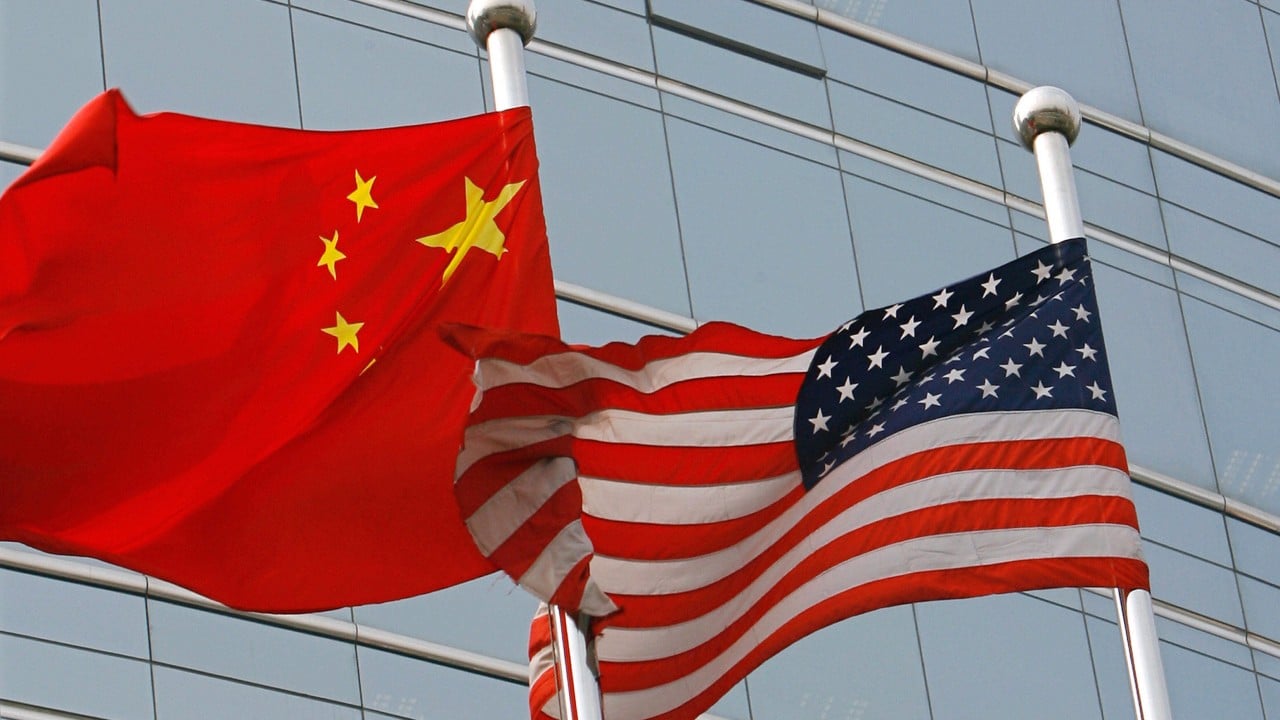
The narrative of a "decoupling" between the United States and China is a convenient fiction maintained by political speechwriters and statistical anomalies. As President Donald Trump prepares to touch down in Beijing this May 14, 2026, for a high-stakes summit with Xi Jinping, the numbers on the page tell a story of separation that the physical reality of global shipping lanes flatly contradicts.
While the official ledger suggests the U.S. is successfully weaning itself off Chinese manufacturing, the truth is far more complex and significantly more dangerous for global stability. We are not watching a divorce; we are watching a massive, expensive exercise in rerouting and relabeling.
The Math of the Missing Imports
On the surface, the hawks have plenty of ammunition. In the first four months of 2026, China’s merchandise exports to the U.S. fell by 10.2% year-on-year. For those looking at a spreadsheet in Washington, this looks like victory. However, these figures represent a shallow understanding of how modern supply chains actually function.
The "missing" Chinese trade has not vanished. It has simply migrated. While direct imports from China have dipped, U.S. trade deficits with Southeast Asia and Mexico have exploded. The trade deficit with ASEAN nations in high-tech categories like networking equipment and laptops has surged by nearly $80 billion, almost perfectly mirroring the decline in direct imports from China.
This is the Great Trade Illusion. Components are manufactured in Shenzhen, shipped to Vietnam or Mexico for "final assembly"—which often amounts to little more than screwing on a casing and printing a new label—and then sent to Los Angeles. The American consumer still gets a Chinese product, but the U.S. Treasury loses out on tariff revenue while the "Made in China" tag is scrubbed clean.
The Tariff Wall and the Legal Pivot
The upcoming summit is overshadowed by a legal crisis that has left the Trump administration's trade policy in a state of frantic repair. In February 2026, the Supreme Court struck down the aggressive use of the International Emergency Economic Powers Act (IEEPA) to impose blanket tariffs. This effectively dismantled the "tariff wall" that had been the administration's primary lever of influence.
Washington is now scrambling to reconstruct this wall using Section 301 and Section 232 investigations. These are slower, more surgical, and legally cumbersome. The effective tariff rate on Chinese goods has fluctuated wildly, creating an environment of extreme unpredictability for U.S. businesses.
For the American CEO, the issue isn't just the cost of the tariff; it is the inability to price a product three months out because the legal foundation of U.S. trade policy is shifting under their feet.
China’s Blocking Statute: The New Weapon
Beijing is no longer playing a purely defensive game. Just days ago, on May 2, China’s Ministry of Commerce (MOFCOM) invoked its "blocking statute" framework against U.S. sanctions on petrochemical companies. This is a significant escalation.
This move forces multinational corporations into an impossible position. Under U.S. law, they must comply with sanctions and export controls. Under Chinese law, complying with those very same U.S. measures is now a punishable offense. We are entering an era where legal neutrality is no longer an option. A company like Apple or Tesla may soon find that following American law in Shanghai is a crime, while ignoring it in Washington is a felony.
Xi Jinping is walking into this summit with more leverage than he had in Busan or Mar-a-Lago. China has spent the last two years aggressively diversifying its own resource suppliers, reducing its dependence on Western markets while the U.S. remains hopelessly tethered to Chinese intermediate goods.
The Soybean Stick and the Tech Carrot
Expect the usual theater regarding agricultural purchases. China has pledged to buy 25 million metric tons of U.S. soybeans annually through 2028. This is the "stick" used to keep the American Midwest quiet. But even here, the leverage is one-sided. Brazil remains China’s largest supplier, providing over 80 million metric tons. Beijing can ramp up or throttle U.S. purchases at will without actually risking its own food security.
The real battlefield remains the High-Tech Corridor. The U.S. has maintained an active "Entity List" of more than 600 Chinese firms, effectively banning the export of advanced chips and dual-use technologies.
China’s response has been a massive internal investment in "legacy" chips—the 28nm and 14nm semiconductors that power everything from cars to washing machines. While the U.S. tries to starve China of the future (AI and quantum computing), China is rapidly monopolizing the present. If Beijing decides to weaponize its dominance of these foundational chips, they could grind American manufacturing to a halt faster than any tariff ever could.
The Mexico Factor
Mexico has officially consolidated its position as the top trading partner to the U.S., accounting for nearly 17% of all imported goods. This is touted as a triumph of "near-shoring."
It is, in reality, a backdoor for Chinese capital.
Foreign Direct Investment (FDI) from China into Mexican manufacturing hubs has reached record levels. Chinese companies are building the factories in Monterrey and Querétaro that "export" goods to the U.S. duty-free under the USMCA. The upcoming 2026 USMCA review, set for July, will be the true test of whether the U.S. is willing to close these loopholes—or if it is too afraid of the inflationary spike that would follow.
The Summit Reality Check
Do not expect a grand bargain in Beijing. The fundamental interests of the two nations have moved beyond the point of simple compromise. The U.S. wants to preserve its technological hegemony and reduce its deficit; China wants to achieve total industrial self-reliance and break the dollar’s grip on global trade.
The most likely outcome of the Xi-Trump summit is a fragile, tactical truce. Both sides need a win for domestic consumption. Trump needs a headline about "massive purchases" to satisfy his base, and Xi needs a pause in export controls to finish stabilizing China’s internal tech supply chain.
But behind the handshakes and the state dinners, the underlying machinery of the two economies remains locked in a high-stakes struggle for dominance. The data doesn't signal a decoupling. It signals a sophisticated, clandestine evolution of the world's most important economic relationship. We are not growing apart; we are simply learning how to hide how much we still need each other.
The era of transparent trade is dead. In its place is a shadow economy of rerouted containers and legal gymnastics that neither side is truly ready to dismantle.