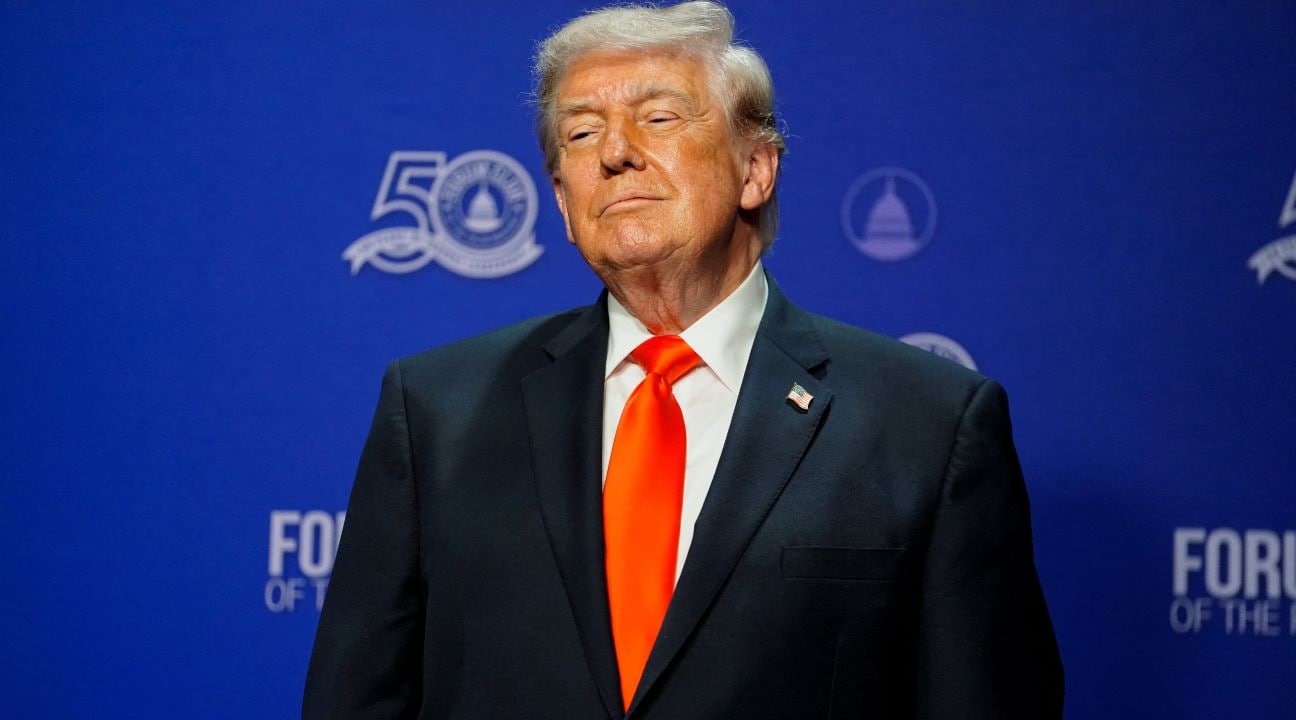
Donald Trump promised India complete American devotion during a surprise virtual address to the US Embassy in New Delhi, declaring that Prime Minister Narendra Modi and his nation can rely on Washington 100 percent. Speaking during a celebration marking the 250th anniversary of the US Declaration of Independence, Trump used his familiar vocabulary of personal affection, calling himself a big fan of Modi and claiming that anything India wants, they will get.
Yet underneath the celebratory rhetoric at the embassy event, which featured Secretary of State Marco Rubio and External Affairs Minister S. Jaishankar, lies a far more volatile transactional reality.
This public display of diplomatic affection follows a punishing year of realpolitik that brought ties close to a breaking point. Behind the 100 percent guarantee is a relationship defined by sudden economic penalties, geopolitical friction over Russian oil, and intense negotiations over an upcoming interim trade deal. The personal bond between the two leaders is real, but it operates under a strict system of reciprocal costs that complicates the public narrative of unconditional support.
The Friction behind the Friendship
The effusive praise broadcast to the New Delhi gathering contrasts sharply with the actual events of the past twelve months. In mid-2025, the relationship hit a wall when the Trump administration doubled tariffs on Indian goods to 50 percent. This massive economic blow served as explicit punishment for New Delhi’s continued procurement of discounted Russian crude oil following the escalation of global energy sanctions.
The economic pressure forced a diplomatic scramble. By October 2025, a tense understanding emerged. India committed to winding down its regular purchases of Russian oil, and in exchange, Washington agreed to lower the tariff rate on Indian exports back down to 18 percent. This sequence of events demonstrated that Washington’s support is never a free pass. It is tied directly to compliance with American economic warfare objectives.
A framework for this interim trade agreement was finally announced in February 2026. While Ambassador Sergio Gor celebrated the fact that the US Embassy in India ranked first globally by drawing $20.5 billion in new investments into the United States, Indian negotiators have had to fight tooth and nail to protect domestic sensitivities.
Red Lines and Reciprocity
The upcoming trade deal, which Rubio noted is nearing completion, remains restricted by rigid boundaries. Indian Commerce Minister Piyush Goyal had to reassure a skeptical parliament that agriculture, dairy, and genetically modified foods remained entirely off the table. New Delhi refused to capitulate to American agricultural lobbies despite the threat of permanent 50 percent tariffs.
This resistance disproves the idea that India can simply get anything it wants from Washington. The relationship is governed by tough, unsentimental bargaining.
- The Pax Silica Commitment: India has joined the US-led Pax Silica initiative, anchoring its artificial intelligence and semiconductor supply chains firmly within the Western orbit to secure technology transfers.
- Defense Purchases as Currency: To maintain goodwill after the 2025 tariff shock, New Delhi fast-tracked a multi-billion-dollar purchase of six additional P-8I Neptune anti-submarine warfare aircraft from American defense contractors.
- The Strategic Autonomy Strain: Washington expects India to abandon its traditional multi-alignment strategy, particularly its pragmatic ties with Iran, at a time when US-Israeli operations have closed the Strait of Hormuz and disrupted global shipping.
The Limits of Virtual Diplomatic Guarantees
Traders and diplomats in New Delhi know that a phone call or a virtual address from Trump is a temporary political instrument, not a binding treaty. The administration’s foreign policy is inherently fluid, often shifting based on domestic economic performance or immediate geopolitical crises.
The phrase 100 percent support sounds absolute, but the historical record proves otherwise. When Trump claimed in 2025 to have unilaterally brokered a ceasefire between India and Pakistan following a brief border flare-up, he deeply irritated New Delhi, which rejects any external third-party mediation on bilateral security matters.
The upcoming Quad Foreign Ministers' Meeting in New Delhi will test the actual strength of these verbal commitments. While Rubio and Jaishankar present a united front to counter regional assertions by Beijing, the underlying mechanics of the alliance remain strictly transactional. Washington views India as an essential counterweight in Asia, but only if New Delhi absorbs the economic and strategic costs that come with American alignment.
Unconditional support does not exist in this era of international relations. Every declaration of friendship carries an invoice, and New Delhi is discovering that the cost of staying in Washington’s good graces requires constant, deliberate calculation.