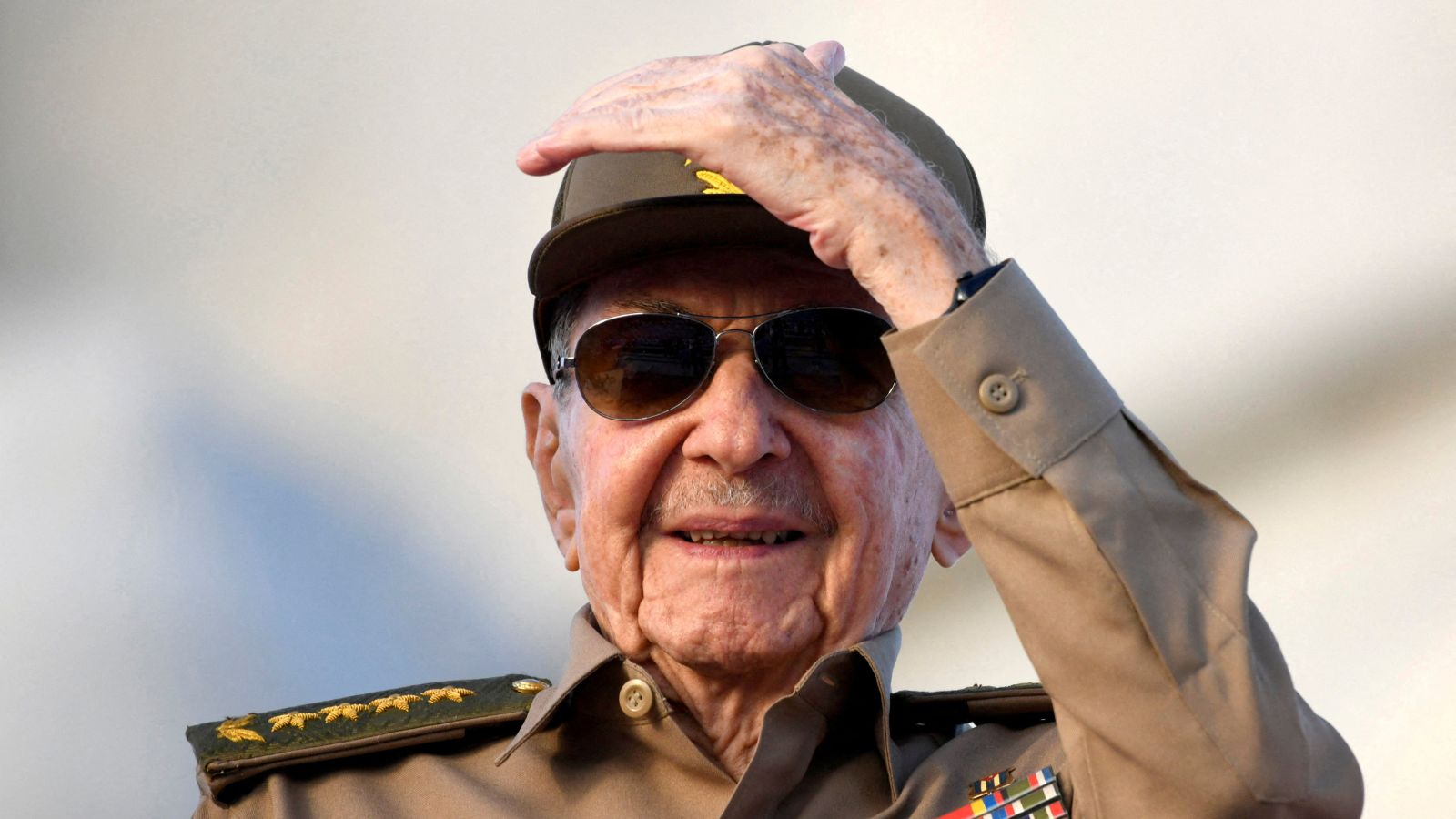
The federal government is finally getting ready to pull the trigger on a three-decade-old grievance. Federal prosecutors in Miami are moving to indict 94-year-old former Cuban President Raúl Castro for his role in the 1996 shootdown of two civilian planes operated by the exile humanitarian group Brothers to the Rescue.
If you think this is just a symbolic legal stunt to appease the Cuban-American electorate in Florida, you're missing the bigger picture. This move isn't happening in a vacuum. It's the tip of a massive geopolitical spear aimed directly at the heart of the Cuban regime at a moment when Havana has never been more vulnerable.
The Department of Justice expects to unseal the grand jury indictment on May 20, strategically timed to coincide with a symbolic event at Miami's Freedom Tower on Cuba's Independence Day. But look past the pageantry. The real action happened the day before the news broke, when CIA Director John Ratcliffe secretly flew to Havana to lay down an ultimatum to Cuban officials.
The message from Washington is simple: change now, or we will finish you off economically.
The Cold Blood of 1996
To understand why this matters today, we have to look at what happened on February 24, 1996. Brothers to the Rescue was a Miami-based volunteer organization that flew small Cessna aircraft over the Florida Straits. Their primary mission was spotting Cuban rafters escaping the island on makeshift vessels and alerting the U.S. Coast Guard to save them from drowning.
On that Saturday afternoon, a Cuban MiG-29 fighter jet scrambled, locked onto the defenseless civilian aircraft, and blew two Cessnas out of the sky.
Four men died instantly: Armando Alejandre, Mario de la Peña, Carlos Costa, and Pablo Morales. Three were U.S. citizens; one was a permanent legal resident. A report by the Organization of American States later confirmed what Washington already knew: the planes were shot down in international airspace, not Cuban territory. The fighter pilots fired without warning.
At the time, Raúl Castro was the head of Cuba’s Revolutionary Armed Forces. The orders went through him. While his late brother Fidel later claimed the military was acting on "general orders," the actual logistical command chain stopped at Raúl's desk. For 30 years, those families in Miami have watched the Castro brothers evade criminal accountability while a lower-level spy network, the Cuban Five, took the fall in U.S. courts.
The Maximum Pressure Playbook
Why indict a 94-year-old retired dictator now? Because Washington is executing a hyper-aggressive regime-change strategy that has completely altered the Caribbean chess board over the last few months.
Earlier this year, the U.S. military pulled off a stunning operation in Venezuela, removing dictator Nicolás Maduro from power and flying him to New York to face federal drug trafficking charges. Venezuela was Cuba’s economic lifeblood, providing heavily subsidized crude oil that kept the lights on in Havana.
With Maduro gone, the Trump administration choked off the remaining supply lines. Washington threatened crushing tariffs on any country exporting oil to the island.
The results have been devastating for the Cuban government. The island is currently experiencing catastrophic fuel shortages and near-total power grid collapses. Protests are boiling over. By introducing a federal indictment against Raúl Castro—who still pulls the strings of the Communist Party behind the scenes—the U.S. is signaling that nobody in the regime is safe from the Maduro treatment.
The Secret CIA Ultimatum
The timing of the legal maneuver tells the real story. Hours before the indictment leaked, CIA Director John Ratcliffe met face-to-face in Havana with top Cuban officials. Significantly, the meeting included Raúl Castro’s grandson and chief gatekeeper, Raúl Guillermo Rodríguez Castro, widely known as "Raulito."
Ratcliffe didn't go to Havana just to talk about old court cases. He went to offer a carrot wrapped in a massive stick.
The U.S. delegation reportedly offered $100 million in immediate humanitarian and economic assistance to help stabilize the island's crumbling infrastructure. The catch? The Cuban government must agree to immediate, fundamental political reforms. Ratcliffe made it explicitly clear that Cuba can no longer serve as a safe haven for American adversaries like Russia or China in the Western Hemisphere.
The looming indictment of the family patriarch is the ultimate leverage. It lets the younger generation of Cuban leaders know that the old immunity shield is completely gone.
What Actually Happens Next
Don't expect U.S. Marshals to storm a beach in Havana to handcuff an aging dictator next week. The indictment itself is a legal tool designed to unlock broader geopolitical mechanisms.
First, it completely isolates the current Cuban leadership from international financial networks. Any country or foreign bank dealing with the Cuban state will now be doing business with an entity controlled by an indicted mass murderer.
Second, it provides a legal framework for expanded U.S. law enforcement operations in the region. National security experts point out that a formal indictment allows federal agencies to target the hidden assets of the Castro family and their inner circle globally, freezing bank accounts and seizing property held through shell companies in Europe and South America.
Florida Governor Ron DeSantis summed up the political mood in the state with a short message on social media: "Let 'er rip, it's been a long time coming."
For the families of the four pilots, it's a validation they've fought for across three decades. For the political class in Washington, it's the final squeeze on a communist regime that is rapidly running out of fuel, running out of money, and running out of time.
The era of diplomatic patience with Havana is officially dead. If the current regime wants to survive the winter without a total economic collapse, the younger tier of apparatchiks will have to betray the legacy of the old guard and cut a deal with Washington.