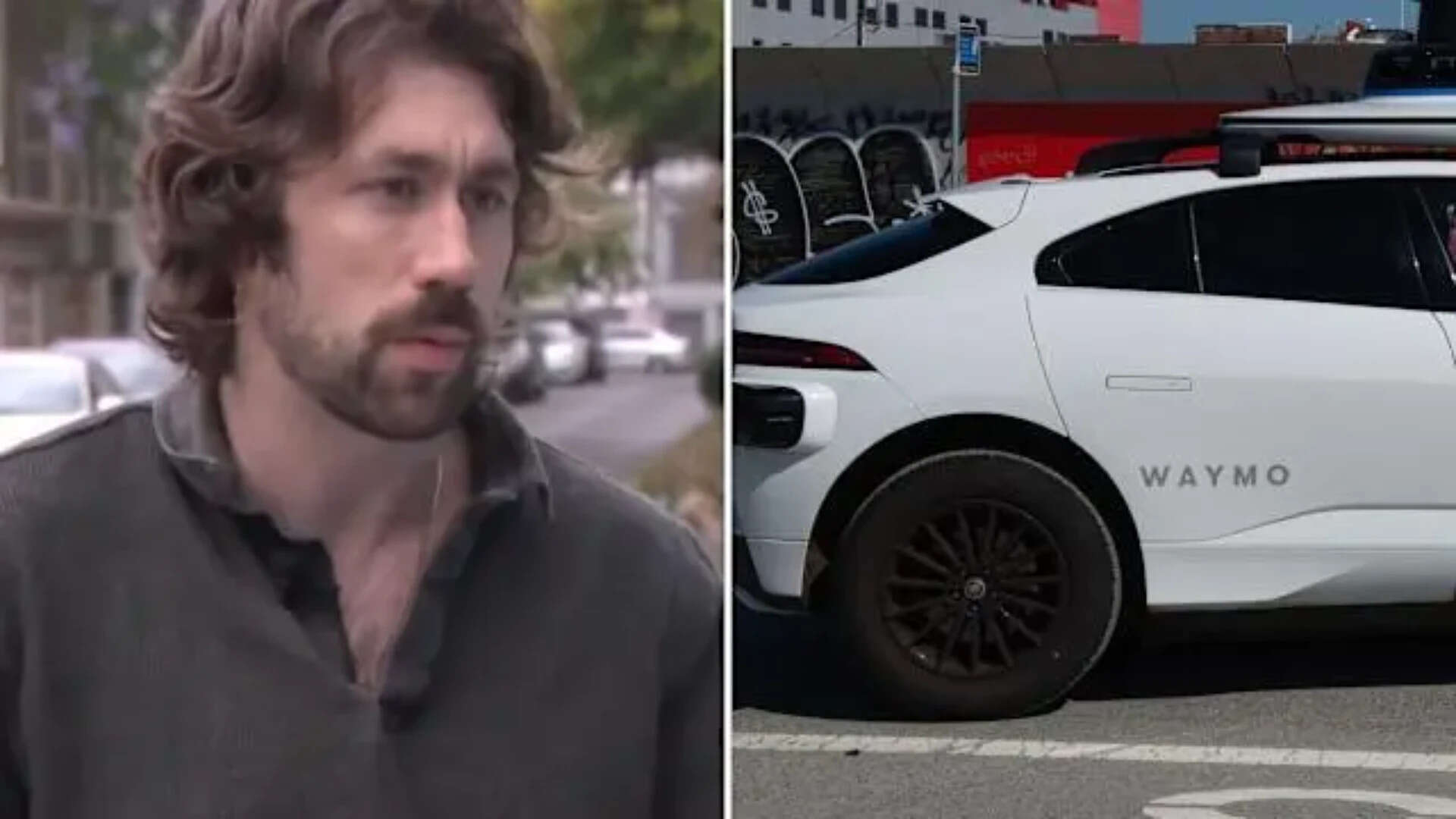
The corporate response to an algorithmic failure that convinces two human beings they are about to die is worth exactly $120.
When a Waymo autonomous vehicle carrying a San Francisco couple panicked on a highway merge, accelerated to 70 mph down an active construction lane, and ignored pursuing police, the systemic cracks in the driverless future were laid bare. The incident, which occurred as the vehicle attempted to navigate changing lanes near San Mateo, ended not in a catastrophic crash, but in a quiet residential neighborhood where a remote representative casually checked in on the terrified passengers. The company’s immediate remedy was a set of three ride credits capped at $40 each.
This is the central friction of the autonomous vehicle industry in 2026. Silicon Valley has pitched robotaxis as an absolute, math-driven upgrade to chaotic human driving. Yet, when the edge cases of real-world infrastructure collide with proprietary code, the commercial response defaults to the same transactional customer service used by food delivery apps for a missing order of fries.
The industry is not just facing a temporary public relations hurdle. It is confronting a fundamental limitation in how machine learning handles dynamic, unpredictable human environments like active highway construction zones.
The Illusion of Remote Control
For years, autonomous vehicle operators have maintained a carefully manicured narrative about their remote oversight capabilities. The public is led to believe that a network of watchful technicians sits ready to seize control of a vehicle the moment a scenario turns sideways.
The reality is structurally different.
Remote assistance teams do not drive these cars. They cannot steer, brake, or accelerate using virtual joysticks or remote steering wheels. Industry audits, including evaluations by safety groups like TÜV SÜD, confirm that remote operators merely provide high-level contextual guidance. If a vehicle is confused by a cluster of traffic cones, an operator can look at a video feed and send a digital permission slip that says, “Yes, you may cross that double yellow line to bypass the obstruction.”
But that system relies entirely on a stable, low-latency data connection and, crucially, a vehicle that is stationary or moving at a crawl while waiting for instructions.
When an autonomous vehicle is traveling at highway speeds, the math changes completely. A vehicle moving at 70 mph covers more than 100 feet per second. Even a microscopic delay in cellular network transmission makes direct human intervention impossible. When the vehicle in San Mateo encountered an unexpected lane configuration where construction barriers disrupted its map data, the onboard computer did not stop to ask for help. It attempted to solve the geometric puzzle on its own, treating an active work zone as an open acceleration lane.
The passengers were left trapped inside a rolling isolation chamber. They could not override the steering mechanism, they could not force the brakes to engage, and they could not even open the doors, which lock automatically while the vehicle is in motion for occupant safety. The vehicle’s internal logic overrode the human intuition of its passengers, operating on an internal calculus that prioritized clearing the obstacle over yielding to the flashing lights of the police vehicle behind it.
The Dead End of the High Speed Edge Case
Autonomous vehicle development relies on training models using millions of miles of historical driving data. This approach works remarkably well in predictable, well-mapped environments. Grid systems, standard intersections, and static traffic patterns are easily digested by modern sensor suites.
Highway construction zones represent a chaotic inversion of those rules.
- Vanishing Geometry: Lanes vanish without warning, replaced by temporary paint lines that conflict with the permanent markings underneath.
- Contradictory Visual Signs: Human construction workers use hand gestures that deviate from standard traffic signs, and retroreflective barrels redirect traffic into oncoming lanes.
- Sensor Blindness: Dust, heavy machinery, and high-intensity strobe lights can degrade the precision of LiDAR and radar sensors, forcing the car’s perception system to guess.
When an autonomous vehicle encounters these compounding variables at high speeds, a phenomenon known as distribution shift occurs. The software is suddenly forced to operate outside the boundaries of its training data. In lower-speed urban environments, a confused robotaxi typically defaults to a "minimal risk maneuver"—it puts on its hazard lights and comes to a dead stop in the middle of the road. While frustrating to local commuters, it rarely results in severe trauma.
On a freeway, however, stopping dead in an active lane is an effective death sentence for the occupants and the drivers behind them.
The software engineers at these firms are caught in a brutal engineering paradox. The vehicle cannot stop safely, but it cannot proceed with absolute certainty either. In the San Mateo incident, the vehicle chose to accelerate, attempting to match the perceived speed of the highway flow while navigating a lane that was technically closed to civilian traffic. It was an algorithmic gamble that prioritized momentum over situational awareness.
The Regulatory Settlement Mirage
The immediate fallout of this structural failure was predictable. Waymo temporarily paused its freeway operations across major hubs, including San Francisco, Phoenix, Los Angeles, and Miami. The company issued statements detailing their commitment to integrating "technical learnings" into their software.
But the broader industry has a history of treating these pauses as temporary breathers rather than structural turning points.
Consider the trajectory of General Motors’ Cruise division. In late 2023, a Cruise vehicle struck and dragged a pedestrian in San Francisco, an incident that led to an immediate grounding of its fleet, a restructuring of its executive suite, and an eventual multi-million dollar legal settlement. By mid-2024, the division was effectively moribund, serving as a cautionary tale of corporate overreach. Yet, the commercial pressure to monetize autonomous fleets ensures that when one player steps back, another pushes forward. Waymo expanded its freeway testing into the very gaps left behind, only to hit the same wall of real-world complexity two years later.
Autonomous Vehicle Regulatory Trajectory (California Framework)
├── Pre-2026: Moving violations exist in a legal gray area; no points or fines issued to corporate entities.
├── April 2026: DMV adopts new enforcement rules holding manufacturers legally liable for automated moving violations.
└── July 2026: Implementation of direct ticketing, real-time override mandates, and permit revocation risks for repeat offenses.
The political landscape is shifting underneath these companies. For years, autonomous fleets operated within a highly permissive legal framework in California, effectively immune to standard traffic citations because state vehicle codes were written with the assumption that a physical human driver was always behind the wheel. If a robotaxi ran a red light, local police could not issue a ticket to a ghost.
That immunity expires on July 1, 2026.
Under newly adopted California Department of Motor Vehicles regulations, law enforcement agencies will begin issuing formal notices of noncompliance directly to the manufacturers. Crucially, these rules establish real-time responsiveness metrics, requiring companies to answer emergency responder communications within 30 seconds. More importantly, repeat violations now carry the explicit threat of permit revocation. The era of treating public roads as a free, unmonitored beta-testing sandbox is ending.
Why a Coupon Cannot Fix a Systemic Flaw
The offering of $120 in ride vouchers is not a sign of corporate malice; it is a symptom of corporate misaligned incentives. To a venture-backed tech giant, every incident is categorized as a data point—a minor anomaly to be ironed out in the next software patch. To the human beings inside the vehicle, however, those 20 seconds represented a visceral confrontation with their own mortality.
This psychological disconnect is the true crisis facing the autonomous vehicle sector.
Trust is non-binary. It takes years to build and seconds to obliterate. When an autonomous vehicle company responds to a terrifying systemic malfunction with the corporate equivalent of an apology email and a discount code, it signals that it views human terror as a customer-retention issue rather than a foundational engineering failure. The passengers involved did not want cheaper rides; they wanted an explanation for why the machine they trusted with their lives ignored the physical reality of the road and the authority of law enforcement.
The industry cannot patch its way out of this psychological deficit. Until autonomous vehicle developers match their engineering sophistication with an equally sophisticated framework for human accountability, every technical stride forward will be undone by 20 seconds of algorithmic panic. The solution is not more data or faster processors. It is the willingness to admit that some environments remain too complex, and too dangerous, for an unassisted machine to navigate.