The global energy transition has a dirty secret that no one in a boardroom wants to admit. We are currently addicted to lithium-ion, a chemistry that is temperamental, prone to spectacular fires, and reliant on supply chains that look more like geopolitical hostage situations than stable trade routes. As we attempt to shove the square peg of intermittent wind and solar into the round hole of a 24/7 industrial power grid, the cracks are widening. This is exactly why a 120-year-old invention by Thomas Edison is currently being hauled out of the history books and into multi-billion dollar factories.
The nickel-iron battery, patented by Edison in 1901, was originally intended to power the early wave of electric vehicles. It failed then because it was bulky and expensive compared to the energy density of gasoline. It is succeeding now because the requirements for a national power grid are the polar opposite of the requirements for a Tesla. The grid doesn't care about weight. The grid cares about longevity, safety, and the ability to sit idle for a week without losing its charge.
The Chemistry of Immortality
The fundamental problem with modern lithium batteries is their suicidal nature. Every time you charge and discharge a lithium-ion cell, the physical structure of the battery degrades. Microscopic spikes called dendrites grow through the electrolyte, eventually causing short circuits or the dreaded "thermal runaway." Most lithium installations are rated for a decade of use before they become expensive bricks of hazardous waste.
Edison’s nickel-iron cells operate on a different plane of existence. They use an alkaline electrolyte—typically potassium hydroxide—and electrodes made of nickel and iron. During the charge cycle, oxygen is transferred from one plate to the other. There is no lead to leak and no heavy metals like cobalt to mine from conflict zones. More importantly, these batteries are nearly indestructible. There are documented cases of nickel-iron batteries from the 1920s that, after being flushed of old sediment and refilled with fresh electrolyte, began holding a charge again.
Why the Market Ignored the Solution
For the last twenty years, the venture capital world has been obsessed with "energy density." This metric measures how much power you can pack into a specific weight or volume. If you are building a smartphone or a long-range sedan, energy density is the only god worth worshipping. This obsession pushed lithium-ion to the front of the line, as it offered the most "bang for the buck" in terms of size.
However, the energy density obsession created a blind spot in stationary storage. When you are stabilizing a wind farm in North Dakota, you have thousands of acres of land. The battery doesn't need to fit in a pocket; it can be the size of a shipping container. In this context, the low energy density of the iron battery is an irrelevant statistic. What matters is the levelized cost of storage (LCOS).
If a lithium battery lasts 10 years and an iron battery lasts 40, the math changes instantly. The iron battery becomes the cheaper option over the lifespan of the infrastructure, even if the upfront capital expenditure is higher. We are seeing a shift from a "consumer electronics" mindset to a "civil engineering" mindset in energy storage.
The Modern Technical Overhaul
While the core chemistry remains rooted in 1901, modern materials science has solved Edison's original headaches. The biggest flaw in the vintage design was low efficiency. A significant portion of the electricity used to charge the battery was lost to "water electrolysis," essentially splitting the water in the electrolyte into hydrogen and oxygen gas. This meant the batteries had to be "watered" frequently, much like a houseplant.
Contemporary startups are now using carbon nanotubes and specialized sintered metal plates to increase the surface area of the electrodes. This creates a more efficient path for electrons, reducing the "gassing" effect and bringing the round-trip efficiency closer to competitive levels. Some firms have even figured out how to capture the vented hydrogen and feed it into fuel cells, turning a waste product into a secondary power source.
Geopolitics of the Iron Belt
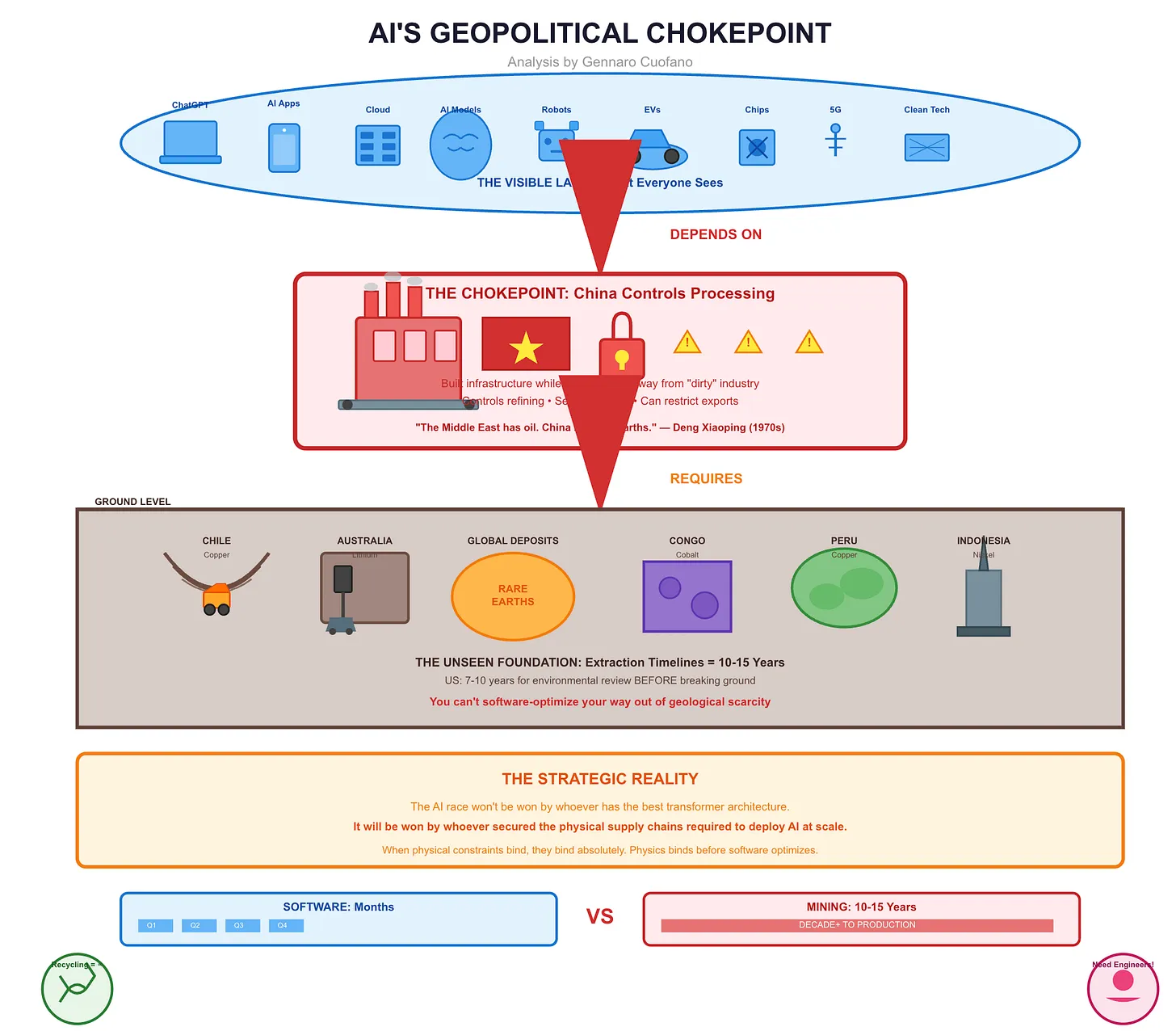
The lithium-ion supply chain is a map of strategic vulnerabilities. Most of the world’s cobalt comes from the Democratic Republic of Congo, and the vast majority of lithium processing is controlled by China. This creates a bottleneck that makes Western energy independence a pipe dream.
Iron and nickel are a different story. These are some of the most abundant materials on the planet. Iron is recycled in every corner of the globe. By pivoting to iron-based storage, a nation can build its energy backbone using domestic mining and existing steel-working infrastructure. It transforms a high-tech chemical challenge into a heavy-industry manufacturing task. This is the "why" behind the sudden surge of Department of Energy grants and private equity interest in "Rust Belt" states. We are seeing the birth of an "Iron Belt" for energy storage.
The Fire Safety Crisis
Insurance companies are starting to realize that giant lithium-ion "Big Batteries" are essentially chemical bombs. When a lithium installation catches fire, it cannot be easily extinguished; it must be allowed to burn itself out, releasing toxic fumes in the process. This has led to increased permit hurdles and soaring insurance premiums for grid-scale projects near urban centers.
Nickel-iron and iron-flow batteries are non-flammable. You can hit them with a sledgehammer or overcharge them until they vent gas, but they will not explode. For municipal utilities looking to place storage units inside city limits or near hospitals, this "safety premium" is becoming the deciding factor.
The Iron Flow Variant
It is important to distinguish between the "static" nickel-iron batteries Edison built and the "iron-flow" systems currently gaining traction. In a flow battery, the energy is stored in liquid electrolytes kept in large external tanks. These liquids are pumped through a central stack where the reaction occurs.
This decoupling of power and energy is the "killer app" for long-duration storage. If you want more power (megawatts), you build a larger central stack. If you want to store more energy for a longer time (megawatt-hours), you simply buy a bigger plastic tank and fill it with more iron salt solution. This allows for "multi-day" storage, something that is economically impossible with lithium-ion.
The Counter-Argument: Is It Too Late?
Critics argue that lithium-ion has gained such a massive head start that "economies of scale" will crush any competitor. They point to the falling prices of LFP (Lithium Iron Phosphate) cells, which are safer than traditional lithium-ion. They argue that by the time iron batteries scale up, lithium will be so cheap that the longevity of iron won't matter.
This argument ignores the reality of material scarcity. As the entire world tries to electrify simultaneously, the demand for lithium is projected to outstrip supply by a staggering margin. We cannot build a global green grid on a single chemistry. We need a hierarchy of batteries: lithium for the things that move, and iron for the things that stay put.
The Invisible Infrastructure
The comeback of the 1901 invention isn't about nostalgia. It’s about the brutal realization that our current path is unsustainable. We have been trying to solve a 50-year infrastructure problem with 3-year consumer electronics logic.
The transition to iron-based storage represents a return to "boring" engineering. It is a move toward systems that are heavy, slow, and last for generations. In an era of planned obsolescence, a battery that lasts longer than the person who installed it is a radical act of defiance against the market status quo.
The next time you see a massive shipping container sitting next to a solar farm, don't assume it’s full of high-tech lithium. It might just be full of rust and salt water, doing the job that Edison knew it could do over a century ago.
Check the local zoning laws in your municipality to see if they distinguish between flammable and non-flammable battery storage, as this will dictate where the next generation of grid-scale iron batteries can be built in your area.