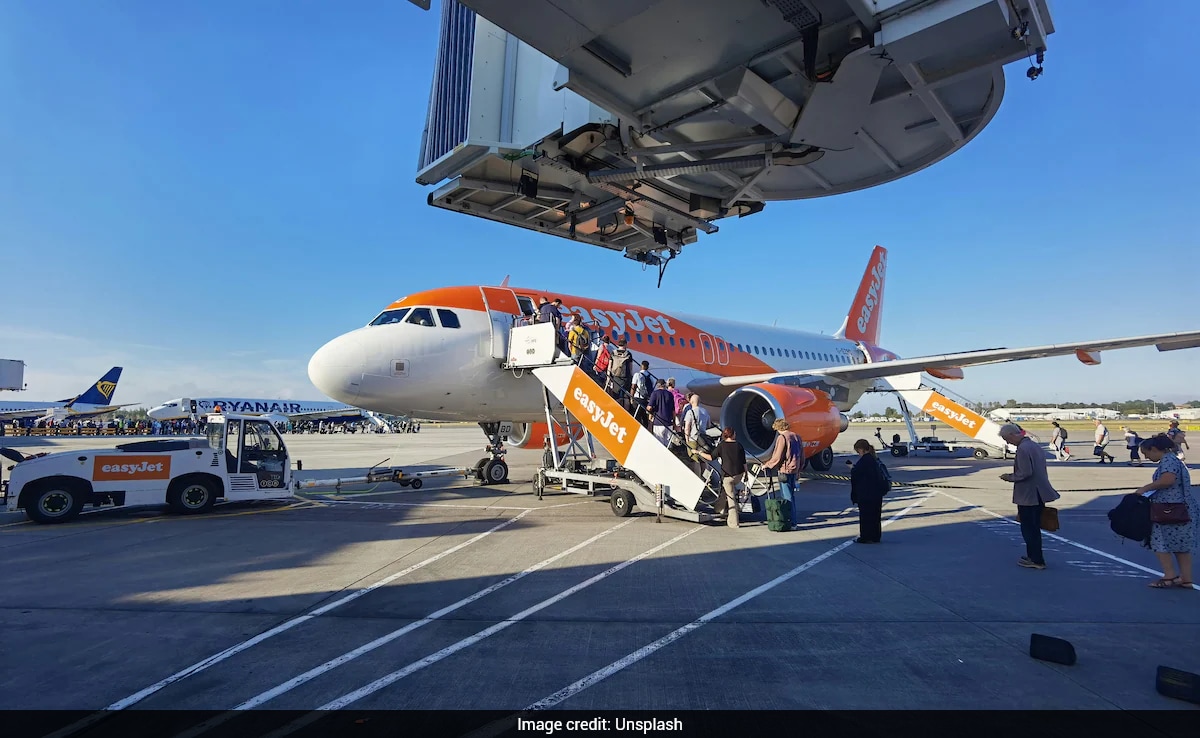
A commercial flight dumps fuel, makes an emergency diversion, and ruins the schedules of hundreds of passengers because someone’s phone was charging in a checked suitcase. The headlines immediately scream about the "hidden dangers" of consumer electronics in the cargo hold. The aviation industry nods in collective agreement, reminding everyone for the ten-thousandth time that lithium-ion batteries are flying fire hazards.
It is a comforting narrative. It places the blame on an irresponsible traveler and suggests that if we just enforce baggage rules a little tighter, the skies will remain safe. Don't miss our earlier post on this related article.
It is also entirely missing the point.
The recent diversion of an EasyJet flight from Egypt to the UK over a charging phone highlights a systemic failure in how we perceive aviation risk. We are obsessing over the tiny, volatile battery in a passenger's suitcase while ignoring the structural, regulatory, and psychological flaws that actually compromise airline safety. If you want more about the history here, Travel + Leisure provides an excellent breakdown.
The False Security of the Cargo Ban
Let us dismantle the foundational myth: that banning lithium-ion batteries from checked luggage solves the problem.
The International Civil Aviation Organization (ICAO) and regulators like the FAA banned loose lithium-ion batteries from checked baggage years ago. The logic seems sound on paper. If a battery goes into thermal runaway in the cabin, the crew can fight it with a Halon extinguisher or submerge it in a specialized containment bag. If it happens in the cargo hold, you are relying on automated suppression systems that might not fully extinguish a metal fire.
But this entire strategy relies on a flawed assumption: absolute passenger compliance.
I have spent years analyzing operational risks in highly regulated industries, and if there is one rule that never fails, it is that humans are lazy, forgetful, or willfully ignorant. Every single day, thousands of flights take off with millions of watt-hours of lithium-ion potential sitting quietly in the cargo hold. Passengers forget their power banks are in the side pocket of their checked duffel. They pack electronic vapes. They leave laptops switched on, suffocating inside layers of clothing.
The EasyJet incident proved that the current system is a illusion of safety. The phone was not just sitting there; it was actively plugged into a power bank, drawing current inside a sealed bag. The fact that this happens regularly without catastrophic failure tells us two things: modern safety margins are incredibly resilient, and our current enforcement mechanism is a farce.
If a rule cannot be realistically enforced, the rule itself is a liability because it creates a false sense of security among operators.
The Chemistry Fearmongering vs. Statistical Reality
The media loves the phrase "thermal runaway" because it sounds terrifying. It describes a state where an internal short-circuit or external heat source causes the temperature of a battery cell to rise rapidly, releasing toxic gases and eventually igniting.
Yes, a lithium-ion fire is violent. Yes, it burns hot. But let us look at the actual math instead of the emotional headlines.
The failure rate of a reputable, certified lithium-ion cell from a tier-one manufacturer is less than one in ten million. You are statistically more likely to be struck by lightning while winning the lottery than to have your properly manufactured smartphone spontaneously combust in your pocket.
The vast majority of battery fires that make the news involve uncertified, cheap, counterfeit electronics—knock-off e-bike batteries, dirt-cheap replacement phone cells, or unregulated vaporizers bought from sketchy online marketplaces.
By treating all lithium-ion batteries as a monolithic threat, aviation authorities are fighting the wrong war. A genuine Apple or Samsung battery sitting in a checked bag is a negligible risk. A third-party, five-dollar power bank bought from an unverified vendor is a flying bomb. Yet, airport security screening treats them exactly the same. We focus on the presence of the object rather than the quality of the object.
The High Cost of Knee-Jerk Diversions
When that EasyJet crew detected a safety concern and decided to divert, nobody blamed them. In aviation, the captain’s word is law, and taking the conservative option is always rewarded. "Safety first" is the corporate mantra.
But we need to talk about the hidden dangers of the diversion itself.
An unscheduled landing is not a risk-free maneuver. It forces an aircraft into a hurried descent, often into an unfamiliar airport, requiring air traffic control to re-route other traffic. It requires dumping fuel or landing heavy, which puts immense stress on the braking systems and landing gear. It introduces human factors—stress, fatigue, and cognitive overload—into the cockpit.
Imagine a scenario where an aircraft diverts to an airport with shorter runways or adverse weather conditions, all to avoid a suspected battery issue that turns out to be a false alarm or a minor localized overheat. By fleeing a statistical ghost in the cargo hold, you are actively embracing the tangible operational risks of an emergency landing.
We have created a culture where pilots are terrified of being the ones who ignored a warning, even if the warning is trivial. The financial cost of a diversion runs into the hundreds of thousands of dollars in fuel, landing fees, passenger accommodation, and crew scheduling disruptions. But the safety cost of unnecessary operational variance is the real price we pay.
The Hypocrisy of the Modern Cabin
Step onto any modern commercial aircraft, and you will find a cabin packed to the gills with lithium-ion batteries. Every passenger has a phone, a tablet, noise-canceling headphones, and a laptop. The overhead bins are stuffed with smart luggage containing built-in tracking batteries.
If these devices are so profoundly dangerous that a single phone can disrupt a transatlantic flight, why are we allowed to sit on top of hundreds of them at 35,000 feet?
The industry answer is that cabin fires can be managed. If a passenger's laptop starts smoking, a flight attendant grabs a fire glove and handles it. But this ignores the reality of human panic. If a device explodes in a cramped economy cabin during turbulence, the resulting chaos, stampede, and toxic smoke inhalation within an enclosed tube can be just as deadly as a fire in a cargo hold equipped with automated suppression systems.
The current approach is completely contradictory:
- We ban a phone from the cargo hold because it might catch fire where we can't see it.
- We allow three hundred phones in the cabin where they are surrounded by highly flammable passenger clothing, carry-on bags, and oxygen masks.
We are not actually mitigating risk; we are just shifting it to where it makes us feel more in control.
Where the Real Aviation Vulnerabilities Hide
If you want to worry about what is going to cause the next major aviation incident, stop looking at the teenager's charging phone. Look at the systemic rot that the industry refuses to address with the same level of panic.
The Maintenance Crisis
Airlines are facing an unprecedented shortage of qualified aircraft maintenance technicians. Legacy carriers and budget operators alike are increasingly outsourcing heavy maintenance to third-party MRO (Maintenance, Repair, and Overhaul) facilities in developing countries where oversight is thin and labor is cheap. A poorly torqued bolt on a cargo door or a miswired avionics bay is infinitely more dangerous than a smartphone in a suitcase.
Global Supply Chain Saturation
The market is flooded with counterfeit aviation parts. From uncertified bolts to bogus engine components with forged safety certificates, the global supply chain is leaking. When a critical component fails mid-flight due to metal fatigue because it was manufactured in a backyard foundry rather than a certified facility, a battery ban will not save you.
Pilot Fatigue and Training Degradation
The post-pandemic travel boom forced airlines to fast-track pilot training and maximize flying hours. Automation dependency is at an all-time high, while manual flying skills are atrophying. When a real emergency happens, the issue is rarely the mechanical failure itself; it is the crew's inability to handle the unexpected due to exhaustion or systemic training gaps.
The Unpopular, Actionable Solution
If the aviation industry actually wanted to solve the lithium-ion issue rather than just cover its tracks with useless baggage announcements, it would take steps that require actual backbone:
Implement Real-Time Cargo Bay Thermal Imaging
Instead of relying on smoke detectors that only trigger after a fire has taken hold, cargo holds should be lined with continuous infrared thermal imaging cameras. If a device begins to warm up in a suitcase, the cockpit should know instantly, long before a thermal runaway event occurs, allowing for targeted automated suppression rather than panicked diversions.Ban Counterfeit Electronics at the Border, Not the Gate
Governments need to crack down on the importation of uncertified, non-UL-listed lithium-ion devices. If a power bank does not meet strict international safety standards, it shouldn't be sold. Regulating the passenger at the airport gate is an admission of failure at the macro level.Redesign Cargo Containers
The containers used to hold checked baggage should be constructed from fire-rated, pressure-resistant composite materials capable of totally isolating a localized explosion or chemical fire. If a battery cooks off inside a suitcase, it should stay contained within that specific aluminum or composite box, allowing the aircraft to continue safely to its destination.
Stop Tolerating the Theater
The diversion of an aircraft over a charging phone is not a triumph of aviation safety protocols. It is an indictment of a system that prefers expensive, reactive panic over proactive, structural engineering.
We have accepted a status quo where passengers are treated like criminal masterminds for forgetting a charging cable in their luggage, while the industry escapes accountability for maintaining an inherently hypocritical regulatory framework.
The next time you hear an flight attendant drone on about lithium-ion batteries during the safety briefing, do not look at your phone with fear. Look at the system that thinks a plastic baggage tag and a stern warning are enough to keep you safe in the sky.