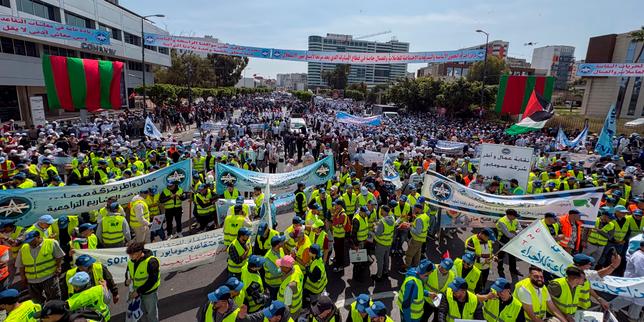
The World Bank just dropped a reality check on Morocco’s economic engine and it isn't pretty. While the country's GDP numbers look decent on paper, the ground reality for the average person tells a different story. You've got a growing population of young, educated people sitting in cafes because the market simply doesn't have a place for them. It's a disconnect that’s becoming harder to ignore.
Morocco’s growth model is hitting a wall. Between 2014 and 2024, the economy showed resilience against droughts and global shocks, but job creation stayed stagnant. Actually, it did worse than stagnant in some sectors. We're looking at a situation where the "trickle-down" effect isn't just slow—it's non-existent.
The growth without jobs trap
Economists call it "jobless growth." It happens when a country's wealth increases but the number of payrolls doesn't follow. In Morocco, this is driven by a heavy reliance on capital-intensive industries. Think big infrastructure, massive port projects like Tanger Med, and high-end manufacturing. These are great for the national balance sheet. They're terrible for absorbing thousands of rural migrants or university grads every year.
Most of the new value in the economy comes from sectors that don't need a lot of hands. Meanwhile, the sectors that do—like agriculture—are getting hammered by climate change. One bad rainfall year doesn't just hurt exports; it wipes out thousands of informal jobs in a single season. The World Bank report highlights that the elasticity of employment to growth is dropping. Basically, for every point of GDP gained, we're seeing fewer and fewer new contracts signed.
Why the private sector is playing it safe
If you talk to business owners in Casablanca or Rabat, you’ll hear the same complaints. It’s too expensive to hire legally, and it’s too hard to fire when things go south. This creates a two-tier system. You have a small group of people with "real" jobs and benefits, and a massive ocean of workers in the informal sector.
The informal economy isn't a choice for most; it’s a survival tactic. It accounts for a huge chunk of Morocco's actual labor, but it offers zero security. Small and medium enterprises (SMEs) are the backbone of any healthy economy, yet in Morocco, they face a mountain of red tape and a lack of access to credit. Big players get the bank loans. The small guy gets left behind. Without a thriving SME layer, you won't get the mass employment the country desperately needs.
The education and skills mismatch
It’s a cliché to say schools don't prepare kids for the real world, but in Morocco, it’s a structural crisis. We're churning out thousands of graduates in humanities and law when the market is screaming for coders, technicians, and specialized managers.
It’s frustrating. You have a generation that did everything right—they stayed in school, got the degree—only to find out their skills are obsolete the day they graduate. This "mismatch" means companies often struggle to find qualified staff despite the high unemployment rate. It's a paradox that kills productivity.
The World Bank points out that female labor force participation is particularly low. We're effectively benching half of our potential talent. When women don't work, the economy loses out on massive growth potential. Cultural barriers exist, sure, but the lack of childcare and safe transport are the practical walls stopping women from entering the workforce.
Climate change is an employment killer
We can't talk about Moroccan jobs without talking about water. Agriculture still employs nearly a third of the country. But with consecutive years of drought, the countryside is emptying out. People are moving to cities that aren't ready for them.
This internal migration puts immense pressure on urban centers. When a farmer loses his crop, he doesn't just lose money; he loses his livelihood and moves to a suburban slum to look for work that isn't there. The transition from a farm-based economy to a service or industrial one is happening too fast and too messy.
Moving beyond big projects
Morocco is amazing at building "mega-projects." The high-speed train, the solar plants in Ouarzazate, the automotive hubs—they're all impressive. But they aren't a silver bullet for the 300,000+ young people entering the job market every year.
The focus needs to shift toward the "boring" stuff. Improving the business climate for tiny companies. Fixing the vocational training centers so they teach what businesses actually need. Reducing the tax burden on low-wage labor to encourage formal hiring.
The government needs to stop picking winners and start making it easier for everyone to compete. That means tackling the monopolies and cronyism that stifle innovation. If a young entrepreneur in Fez has to jump through twenty hoops just to open a shop, he’ll either give up or go "underground." Neither helps the national statistics.
What needs to happen now
Don't wait for a government program to save the day. If you're a business owner, look at apprenticeships as a long-term investment rather than a short-term cost. The skills gap won't fix itself.
For the policy side, the mandate is clear. Support the digital economy. It’s the one area where job creation can outpace traditional industry. Encourage remote work for global firms. Morocco has the time zone and the language skills to be a service hub, but the internet infrastructure and legal frameworks need to catch up.
Stop focusing only on GDP growth. Start measuring success by the number of social security registrations. If the "wealth" doesn't translate into a paycheck for the youth, it’s just numbers on a screen. The social contract depends on people feeling like they have a stake in the future. Right now, a lot of young Moroccans feel like they're watching the party from outside the window. Fix the labor market, or the "Moroccan Exception" might not stay so exceptional for long.


