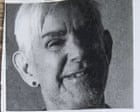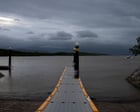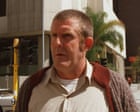
The media is obsessed with a phantom. For decades, the Australian public and the British press have behaved as if Bradley John Murdoch held the keys to some cosmic moral equilibrium. When he died in a Darwin hospital, shouting at the police to "get out" of his room, the headlines didn't report a death; they reported a theft. They acted as if Murdoch had "stolen" the truth by refusing to reveal the location of Peter Falconio’s remains.
This is a fundamental misunderstanding of the criminal mind and a total collapse of investigative logic.
We have spent twenty years chasing a "deathbed confession" that was never going to happen. The idea that a man like Murdoch—a stoic, calculated loner with a lifelong disdain for authority—would suddenly find religion or a conscience in his final hours is a Hallmark movie fantasy. It isn't how psychopathy works. It isn't how power works. By centering the entire Falconio narrative on Murdoch’s "missing" confession, we haven't just failed the victim; we’ve handed the killer a posthumous victory.
The Myth of the Deathbed Reveal
The "deathbed confession" is a trope used by lazy writers to wrap up cold cases. In reality, for a man like Murdoch, silence was his only remaining asset.
In the high-stakes environment of maximum-security prisons, information is currency. Once Murdoch was convicted in 2005 of the 2001 murder, he lost his freedom, his reputation, and his future. The only thing he kept was the secret of where Falconio’s body lay. To give that up would be to surrender the last bit of leverage he had over the Northern Territory Police and the Falconio family.
- Logic Check: Why would a man who maintained his innocence for twenty years suddenly validate his own life sentence while his lungs were failing?
- The Reality: Spite is a more powerful motivator than remorse for men of Murdoch's psychological profile. Shouting at the police to "get out" wasn't a sign of madness; it was a final act of gatekeeping.
We keep asking why he didn't talk. We should be asking why we expected him to.
The Forensic Obsession with "Closure"
The term "closure" is a psychological scam sold to grieving families and the public. It suggests that if we find a set of bones in the Tanami Desert, the trauma of July 14, 2001, will somehow dissipate.
I’ve seen this pattern in high-profile cold cases across the globe. We prioritize the physical recovery of remains over the cold, hard acceptance of the evidence already presented. We had the DNA. We had the bloodstains on Joanne Lees’ shirt. We had the cable ties. We had the white Toyota LandCruiser.
By fixating on the missing body, the public discourse inadvertently validates the conspiracy theorists. Every year that passed without a body was used by Murdoch’s defenders to suggest a "No Body, No Crime" fallacy. This is dangerous. It undermines the validity of circumstantial evidence, which, in the Murdoch case, was actually a mountain of forensic certainty.
The Joanne Lees Problem
The media's treatment of Joanne Lees remains one of the greatest stains on Australian investigative journalism. Because she didn't "act" like a victim—because she didn't fit the Victorian-era mold of the hysterical, weeping woman—she was treated as a suspect by the court of public opinion.
Even after Murdoch’s death, the subtext of many reports is: "If only he had spoken, we could finally know if she was telling the truth."
Stop.
The evidence proved she was telling the truth in 2005. Murdoch’s DNA was on the back of her shirt. To suggest we need his "final word" to confirm the events of that night is to gaslight a survivor. We are essentially saying that the word of a convicted murderer carries more weight than the forensic record and the testimony of the person he tried to kidnap.
The Desert is a Vault
People who haven't spent time in the Northern Territory don't understand the geography of the crime. The Tanami is not a backyard; it is a 184,000-square-kilometer expanse of shifting red dirt and scrub.
The "lazy consensus" suggests that the police simply didn't look hard enough or that Murdoch was a criminal mastermind who hid the body in a way no one could ever find. The truth is simpler and more brutal: the Australian Outback is an incinerator.
Between the heat, the scavengers, and the sheer scale of the terrain, the likelihood of finding Peter Falconio’s remains was near zero from the moment Murdoch drove away from the Barrow Creek crime scene. The demand for Murdoch to "reveal the spot" assumes he could even find it again himself. In a featureless landscape under the cover of night, landmarks don't exist.
Why the NT "No Body, No Parole" Laws Failed
The Northern Territory introduced "No Body, No Parole" laws specifically with Murdoch in mind. The logic was simple: give us the body, or you never walk free.
It was a failure of legislative policy because it assumed the subject wanted parole.
Murdoch was a man who knew he was never leaving Alice Springs or Darwin correctional centers. He was serving a life sentence with a 28-year non-parole period. He was old, he was sick, and he was stubborn. Using parole as a carrot for a man who knows he’s going to die in a hospital bed is like threatening a drowning man with a glass of water.
This legislation is "feel-good" lawmaking. It gives the appearance of doing something while actually achieving nothing. It didn't bring Peter home; it just gave Murdoch one more thing to say "no" to.
The Final Power Play
By yelling at the police in his final moments, Murdoch ensured that he remained the protagonist of the story until the very end.
If he had confessed, the story would have been about Peter Falconio. The narrative would have shifted to the recovery of the body and the funeral. By refusing, Murdoch made the final chapter about himself—his defiance, his anger, and his secrets.
We fell for it. Every news outlet that led with his "final outburst" played right into the hands of a man who spent his life trying to dominate others.
The Actionable Truth
We need to stop waiting for criminals to provide us with the truth. The truth is not found in the mouths of murderers; it is found in the dirt, the DNA, and the data.
If we want to honor Peter Falconio, we stop asking Murdoch where he is. We accept that the desert has claimed him, and we acknowledge that the conviction was the only "closure" that was ever going to be real.
The search for Falconio shouldn't be a search for bones. It should be a search for why we let ourselves be held hostage by the silence of a man who deserved none of our attention.
Murdoch is dead. The secret died with him. And frankly, we should have stopped asking him decades ago.
Stop looking for the body and start looking at the evidence that was always right in front of us.