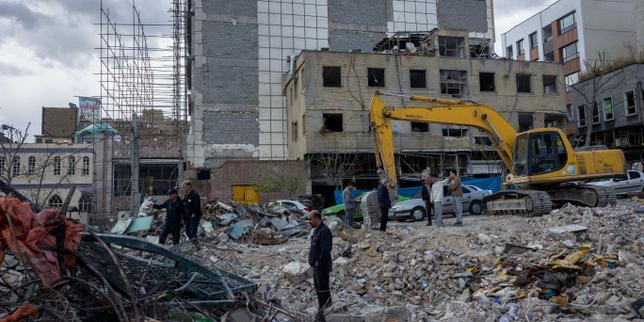
The maritime blockade of Iran is no longer a theoretical exercise in geopolitical pressure. It is a grinding, mechanical reality that has moved from the ledger of diplomats to the hulls of rusting tankers and the empty shelves of Tehran’s grocery stores. While the world focuses on the exchange of missile fire across the Levant, a more quiet and devastating campaign is unfolding at sea. The United States and its allies have moved beyond mere sanctions, implementing a physical and logistical tightening of Iranian ports that is effectively cutting the jugular of the Islamic Republic’s economy. This is a deliberate effort to turn the Persian Gulf into a one-way street where nothing leaves and even less comes in.
The current strategy targets the "Ghost Fleet," the shadowy network of aging tankers Iran uses to bypass international banking restrictions. By designating the vessels themselves as prohibited entities and pressuring global insurance hubs to revoke coverage, the U.S. Treasury and Navy have created a situation where docking at an Iranian terminal like Kharg Island is a death sentence for a ship’s commercial viability. It isn't just about the oil. It is about the friction. Every hour a ship spends idling in the Gulf because it cannot find a port willing to accept its "tainted" cargo is an hour that the Iranian treasury loses millions in liquid capital.
The Mechanics of Port Suffocation
A modern port operates on trust and data. When you remove both, the system collapses. The current blockade isn't necessarily a ring of destroyers sitting five miles offshore—though the presence of the U.S. Fifth Fleet is always felt. Instead, it is a digital and bureaucratic wall. The primary mechanism of this "asphyxiation" involves the systematic targeting of the Maritime Service Providers.
Ships require more than just fuel to move. They need pilots to navigate shallow channels, tugboats to dock, and surveyors to certify that their hulls are seaworthy. By threatening sanctions against the private companies that provide these essential services, the U.S. has made it radioactive to touch an Iranian-flagged vessel. In Bandar Abbas, the country’s primary commercial gateway, the result is a visible slowdown. Cranes sit idle not because there is no cargo to move, but because the global shipping lines—Maersk, MSC, and Hapag-Lloyd—refuse to risk their entire global operations for a single Iranian contract.
The Insurance Trap
Insurance is the hidden nervous system of global trade. No legitimate port in China, India, or Turkey will allow a vessel to dock without Protection and Indemnity (P&I) insurance. This covers everything from oil spills to collisions. Historically, Iran relied on the "International Group" of P&I Clubs, which covers about 90% of the world's ocean-going tonnage.
Under current pressure, these clubs have purged Iranian business. Tehran has attempted to create its own domestic insurance pools, but these are largely viewed as worthless by international port authorities. If an Iranian tanker leaks oil in the Strait of Malacca, a "Tehran-backed" insurance policy won't pay for the cleanup. Consequently, Iranian ships are being turned away from the very markets they rely on for survival, forced to engage in risky, ship-to-ship transfers in the middle of the night to hide the origin of their cargo.
Why the War in the Middle East Changed the Calculus
Before the current regional escalation, the "Maximum Pressure" campaign was largely a game of cat and mouse. There was a level of unspoken tolerance for "leakage"—small amounts of oil reaching the black market to prevent a global price spike. That tolerance has evaporated. The U.S. now views the Iranian maritime sector not just as an economic target, but as the direct logistical tail of the regional conflict.
The logic is simple: Hard currency from oil exports funds the proxy networks. By tightening the noose on the ports, the West is attempting to force a choice between domestic stability and foreign military adventurism. The Iranian rial has plummeted to record lows against the dollar, a direct reflection of the lack of incoming foreign exchange. When the ports stop breathing, the currency dies.
The Grain Bottleneck
While oil gets the headlines, the blockade is hitting the Iranian people where it hurts most: the dinner table. Iran is not self-sufficient in food. It relies heavily on imports of wheat, corn, and soy. While "humanitarian goods" are technically exempt from sanctions, the reality of the port blockade makes importing food a nightmare.
Banks are terrified to process any transaction involving an Iranian port, even if the cargo is grain. Shipping companies fear their vessels will be seized or delayed for weeks if they carry supplies to Imam Khomeini Port. This creates a massive "risk premium." Iran ends up paying 20% to 30% above market rates for basic commodities because only the most desperate or corrupt middlemen are willing to handle the logistics. This is the definition of economic asphyxiation—a slow, agonizing squeeze that drains the country's reserves just to keep the population fed.
The Failure of the Eastern Alternative
Tehran’s long-standing strategy was to "Look East." The assumption was that China and Russia would provide a permanent vent for the pressure. While China remains the primary buyer of Iranian "discounted" crude, even Beijing is showing signs of fatigue.
Chinese state-owned banks are increasingly wary of being cut off from the U.S. dollar clearing system. They have begun to demand steeper discounts on Iranian oil—sometimes as much as $20 or $30 below the Brent benchmark—to compensate for the risk. Iran is essentially being "bottom-fished" by its only remaining allies. They are selling their national wealth at fire-sale prices just to maintain a trickle of revenue.
The Russian Complication
Russia, once a partner in circumventing Western pressure, is now a competitor. Following the invasion of Ukraine and the subsequent sanctions on Moscow, Russia is dumping its own oil on the same black markets Iran once dominated. The two nations are now fighting over the same small pool of "shady" buyers and the same limited supply of uninsured tankers. Moscow has more leverage and better resources, often pushing Iranian crude out of the market entirely.
The Infrastructure Decay at Home
You cannot maintain a world-class port without parts. The blockade has halted the flow of specialized equipment needed to maintain the deep-water berths and the massive container cranes at Shahid Rajaee.
In any other major global port, a broken sensor on a crane is a 24-hour fix. In Iran, it is a three-month logistical puzzle involving shell companies in Dubai and smuggled parts from Southeast Asia. Over time, this leads to a "rusting out" of the maritime infrastructure. The efficiency of Iranian ports has dropped by an estimated 40% over the last five years. Ships take longer to unload, which increases costs, which further fuels inflation. It is a feedback loop of failure.
The Role of Technology and Satellite Tracking
The days of a tanker simply "going dark" by turning off its AIS (Automatic Identification System) are over. Private intelligence firms and Western militaries now use synthetic aperture radar (SAR) and high-resolution satellite imagery to track vessels even through cloud cover or in total darkness.
Every time an Iranian ship attempts a clandestine transfer, it is logged. The buyers are identified. The shell companies are blacklisted. This technological superiority has turned the blockade from a porous net into a solid wall. The Iranians are finding that their old tricks—painting over ship names or flying the flags of tiny landlocked nations—no longer provide cover.
The Strategic Miscalculation
Tehran’s leadership appears to have bet that the world’s need for energy would eventually break the blockade. They underestimated the surge in U.S. domestic production and the expansion of capacity in other OPEC nations. The global oil market is currently well-supplied enough to absorb the loss of Iranian barrels, or at least to tolerate the friction that keeps them off the formal market.
The "war" at the ports is being won by the side with the most patience and the deepest control over the global financial architecture. For the average Iranian, the result is a cost of living that is becoming untenable. When a country's ports are blocked, its future is effectively put in storage.
The immediate takeaway for any business still attempting to navigate these waters is clear: the era of "manageable risk" in the Persian Gulf is over. The blockade is now a permanent feature of the regional landscape, and it is functioning exactly as intended. It is not just about stopping ships; it is about making the cost of being Iranian so high that the internal structures of the state begin to crack under their own weight.
Keep a close eye on the insurance premiums for the "Suezmax" class vessels in the coming quarter. If those rates continue to climb, it will signal that the final stage of maritime isolation is beginning, moving from targeted sanctions to a total exclusion of Iranian hulls from the high seas.