International justice is notoriously slow, but a major legal hurdle just collapsed in Europe. Thirty-four European states, alongside Australia, Costa Rica, and the European Union, have formally signed on to establish a special tribunal targeting Russia's leadership for the invasion of Ukraine. It sounds like a massive breakthrough. For the first time, thirty-six nations have put their pens to paper to build a legal engine explicitly designed to try the "crime of aggression"—the literal act of starting an illegal war.
If you've been following the conflict, you know the International Criminal Court (ICC) already issued an arrest warrant for Vladimir Putin over the forced deportation of Ukrainian children. But the ICC has a glaring weakness. It can't prosecute Russia for the broader crime of launching the invasion because neither Russia nor Ukraine ratified the necessary amendments to give the ICC that specific power. This new tribunal is meant to bypass that roadblock completely.
But let's be totally honest about what this agreement actually means. While the political symbolism is immense, the practical path to dragging Russian generals and politicians into a courtroom is messy, legally complicated, and highly dependent on global politics.
The Loophole the Ukraine War Tribunal Attempts to Close
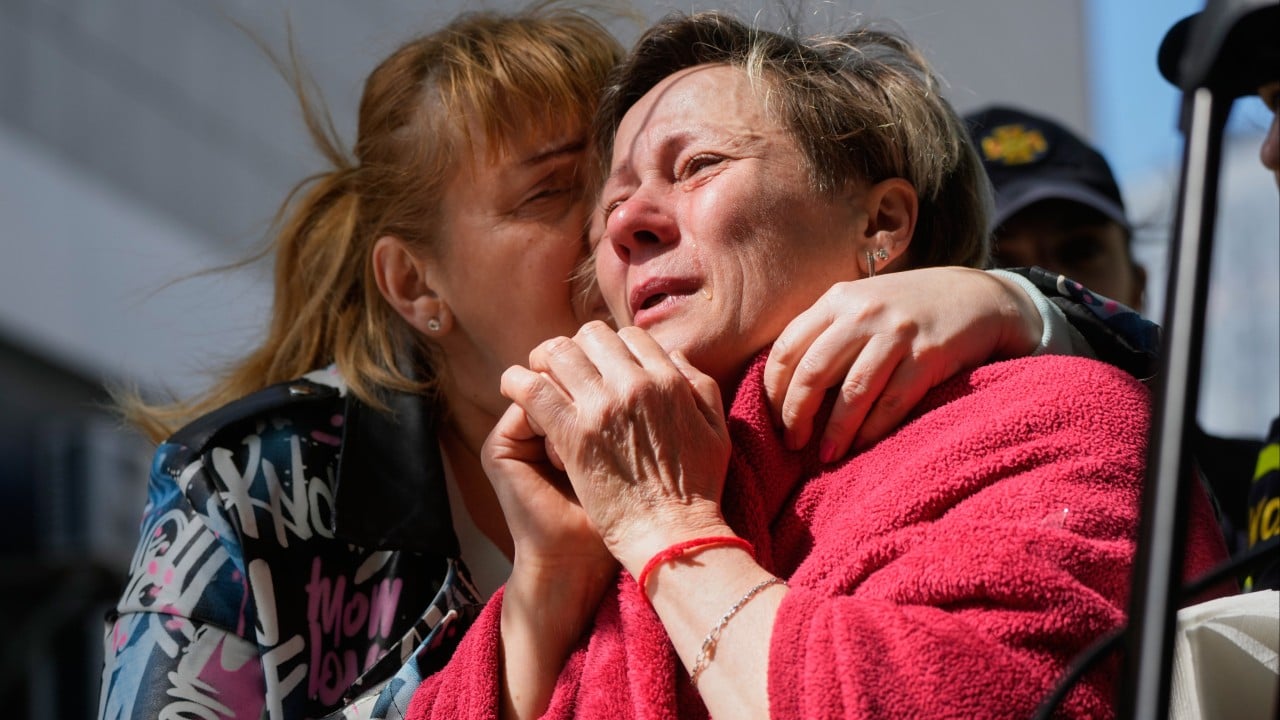
To understand why thirty-six nations just rushed to back this project, you have to look at how international law treats war crimes versus the act of going to war itself. Right now, prosecutors in Ukraine are tracking tens of thousands of individual war crimes on the ground. These include the horrific targeting of apartment blocks, like the recent missile strike in Kyiv's Darnytskyi district that killed dozens of civilians.
But trying individual soldiers or local commanders doesn't touch the architects of the conflict. The Nuremberg trials after World War II established that initiating a war of aggression is the supreme international crime, because it contains within itself the accumulated evil of the whole.
The Council of Europe approved the framework for this new tribunal because existing structures are toothless against Moscow's top decision-makers. By focusing purely on the "crime of aggression," prosecutors won't need to prove that a specific Russian minister ordered a specific missile strike. They only need to prove that the individual helped plan, initiate, or execute a blatant violation of the UN Charter.
The Elephant in the Courtroom is Head of State Immunity
Here is where reality clashes with the idealism of international lawyers. Under customary international law, sitting heads of state, heads of government, and foreign ministers enjoy what's known as "personal immunity." This means as long as Vladimir Putin is the president of Russia, international courts cannot legally touch him unless a massive shift occurs in how customary law is interpreted.
This immunity dilemma splits the legal world into two distinct camps:
- The Internationalist Approach: Proponents want a fully international treaty backed by the UN General Assembly to strip away immunity, arguing that egregious crimes nullify traditional diplomatic protections.
- The Hybrid Model: Some allies favor a court rooted in Ukrainian law but packed with international judges and based in an allied city like The Hague. However, a hybrid court almost certainly cannot overcome the legal immunity of a sitting head of state.
The current framework backed by the Council of Europe tries to split the difference, but it cannot escape the geopolitical reality. Unless Putin is ousted from power, or a successor government decides to hand him over to save Russia from economic ruin, any indictment will remain a piece of paper. Trials in absentia are possible under some European legal frameworks, but convicting someone who is safely sitting in the Kremlin does little to stop the missiles from falling.
Finding the Cash to Keep the Gavel Falling
A major issue that often gets buried in press releases is funding. International courts are incredibly expensive to run. The Special Court for Sierra Leone and the International Criminal Tribunal for the former Yugoslavia cost hundreds of millions of dollars and took decades to conclude their work.
This new tribunal won't be funded by the United Nations because Russia would immediately use its veto power in the Security Council to block the budget. Instead, a coalition known as the "Core Group"—which includes heavy hitters like the Netherlands, Japan, and Canada—is expected to foot the bill.
Relying on a voluntary coalition introduces massive political risk. Shifts in domestic politics among donor nations can dry up funding fast. We already saw how shifting leadership in the United States altered Washington's enthusiasm for international judicial interventions. Without a permanent, locked-in funding structure, the tribunal risks running out of steam before the first major trial even begins.
What Needs to Happen Next
If this initiative is going to be anything more than a glorified press release, the participating nations need to move past political statements and execute specific legal steps immediately.
First, the Core Group must finalize the physical location of the court. The Hague is the logical choice due to its existing legal infrastructure and the presence of the International Centre for the Prosecution of the Crime of Aggression, which has been gathering evidence since 2023. Second, member states need to harmonize their domestic laws to ensure they can legally detain and extradit suspects if they travel outside of Russia.
The political will is clearly there, driven by the sheer scale of destruction in Ukraine. But the true test of this tribunal isn't the number of countries that sign the registry. It's whether those countries possess the long-term geopolitical stamina to enforce the law when the spotlight fades.
For more details on how international bodies are structuring these accountability efforts, check out the official Council of Europe Portal.
This short video breaks down the political reaction to the Council of Europe's decision and what it means for future prosecutions: Council of Europe Approves Special Tribunal for Russian Crimes.