The red Toyota Crown idles at a stand in Mong Kok, its engine a low hum against the midnight chorus of neon signs and distant jackhammers. Inside, Mr. Lam rests his forehead against the steering wheel. His hands are dry, mapped with the blue veins of a man who has spent thirty years navigating the labyrinthine arteries of Hong Kong. To most, this car is a convenience, a box of metal to get from point A to point B. To Lam, it is an office, a dining room, and—lately—a predatory beast that eats his earnings before he can even turn the key.
The cost of keeping this machine alive has become a suffocating weight.
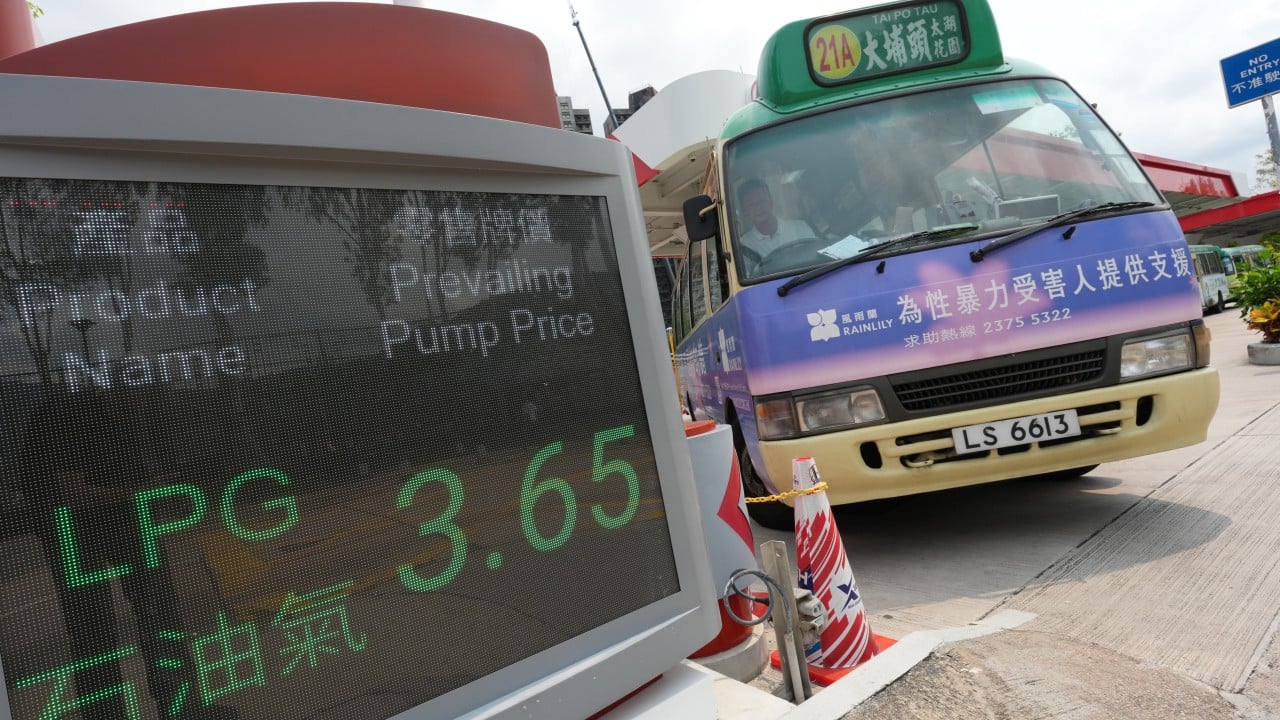
Liquefied Petroleum Gas, the lifeblood of the city’s 18,000 taxis and thousands of green minibuses, has seen its price tag swell like a bruised limb. For a driver like Lam, the math is brutal and unforgiving. He operates on the razor’s edge of a thin margin. Every cent added to the price per liter is a cent taken from his daughter’s university fund or the family’s grocery budget. When fuel prices soar, the city doesn’t just see a change in a commodity index; it sees a crisis of the kitchen table.
The Invisible Engine of the City
People often forget that Hong Kong moves because of men like Lam. They are the circulatory system of the territory. While the financial towers of Central glow with the light of high-frequency trading and global capital, the literal movement of the workforce depends on the viability of the gas tank. If the taxis stop, the city limps.
The government has stepped into this volatile space with a gesture of breathing room. A two-month LPG subsidy has been triggered, offering a direct rebate of $1 HKD per liter to taxi and minibus drivers. On paper, it sounds like a bureaucratic adjustment. In the driver’s seat, it is the difference between a twelve-hour shift and a fourteen-hour shift.
Consider the physics of a typical day. A taxi driver might cover 200 to 300 kilometers in a single stint. Under normal conditions, fuel is already the largest overhead. But when global energy markets shudder—driven by distant wars or supply chain tremors—the shockwaves travel instantly to the pumps in Kowloon. The driver absorbs the blow first. They cannot simply raise their "prices" on a whim; the meters are regulated, fixed by law, and slow to change. They are trapped between a rising floor and a hard ceiling.
The Weight of a Single Dollar
One dollar. In the luxury boutiques of Causeway Bay, a single Hong Kong dollar is less than a rounding error. It is the copper coin left at the bottom of a handbag. But apply that dollar to every liter of gas pumped into a fleet of thousands over sixty days, and the scale shifts.
For the driver of a green minibus, the stakes are even more concentrated. These drivers operate on fixed routes, often serving the elderly in hilly estates where the MTR doesn't reach. They are the lifelines for grandmother going to the wet market or the student rushing to a morning exam. Unlike a taxi, which can hunt for high-value fares, the minibus is a clockwork servant. If the fuel costs more than the collective fares of the passengers, the route becomes a charity.
The subsidy acts as a temporary dam against a rising tide. It is an acknowledgement by the authorities that the social fabric of the city is woven with the exhaust of these vehicles. If the drivers cannot afford to drive, the connectivity of the city breaks down. The subsidy isn't just about business; it’s about preventing a paralysis of movement.
The Ghost at the Pump
Wait at a gas station in the early hours of the morning and you will see the ritual. The drivers climb out, stretching backs that have been curved into the shape of their seats for hours. They watch the numbers on the pump display with a focus that borders on the religious. Every decimal point matters.
There is a psychological toll to this volatility. When a person works a full day and realizes that forty percent of their gross income has vanished into the fuel tank, the motivation to continue erodes. This is the "hidden cost" that spreadsheets often miss. It is the exhaustion of the spirit. It is the stress that follows a driver home, making them shorter with their spouse or too tired to play with their children.
The two-month window of this subsidy is a patch, not a cure. It provides a moment to exhale. But as the world’s energy appetite remains unpredictable, the fear remains that the price will only climb higher once the support is withdrawn. The drivers are well aware that they are living in a reprieve, not a resolution.
A City in Transition
The broader context is even more complex. Hong Kong is at a crossroads. There is a push toward "green" energy, toward electric vehicles and carbon neutrality. But transitions are messy, expensive, and slow. You cannot tell a man who is struggling to pay for LPG today that he should simply buy a $400,000 electric vehicle tomorrow. The infrastructure isn't there yet, and neither is the capital.
The current fleet is the bridge between the city’s past and its future. We are asking these drivers to cross that bridge while the planks are being pulled up beneath them. The subsidy is the temporary reinforcement of those planks.
But look closer at the faces in the taxi queue. These are not people looking for a handout; they are professionals looking for fairness. They see the cost of living in one of the world's most expensive cities rising in every direction—rent, food, electricity. The fuel price is simply the most visible symptom of a larger squeeze.
The Human Geometry of the Road
The logic of the city is built on flow. We expect the taxi to appear when we raise a hand. We expect the minibus to arrive at the corner every ten minutes. We take this flow for granted, as if it were a natural law like gravity. It isn't. It is a manufactured miracle sustained by the endurance of individuals who are making a series of increasingly difficult financial calculations.
When the government intervenes, they aren't just adjusting a budget line. They are recalibrating the human geometry of the road. They are ensuring that Lam can afford to keep his engine running without sacrificing his dignity.
As the sun begins to creep over the peaks of Hong Kong Island, Lam finishes his shift. He pulls into the gas station. He fills the tank, noting the slight reduction in the total price—the first day of the subsidy. It is a small victory, but a victory nonetheless. He will go home, sleep for a few hours in a crowded flat, and then return to the red car.
The engine will turn over. The meter will reset. The city will continue to move, held together by a one-dollar coin and the stubborn resilience of the men behind the wheel.