The air inside the diner in Windsor smells of diesel exhaust and burnt coffee. Across the street, the Ambassador Bridge looms like a giant, rusted ribcage connecting two nations. For decades, this bridge has been the pulse of a continent. Every hour, millions of dollars in parts, produce, and potential rumble across its span. If that bridge closes for a day, a factory in Michigan goes dark. If it closes for a week, a family in Ontario loses their mortgage.
Mark, a third-generation machinist I spoke with recently, sees the bridge every morning. To him, it isn't a symbol of friendship. It’s a tether.
"We don’t make anything here anymore that they don't tell us to make," he said, wiping grease from a thumb that has spent thirty years perfecting American car doors. "When they sneeze in DC, we get the flu. When they decide they want to build their own doors, I’m the one who stops eating."
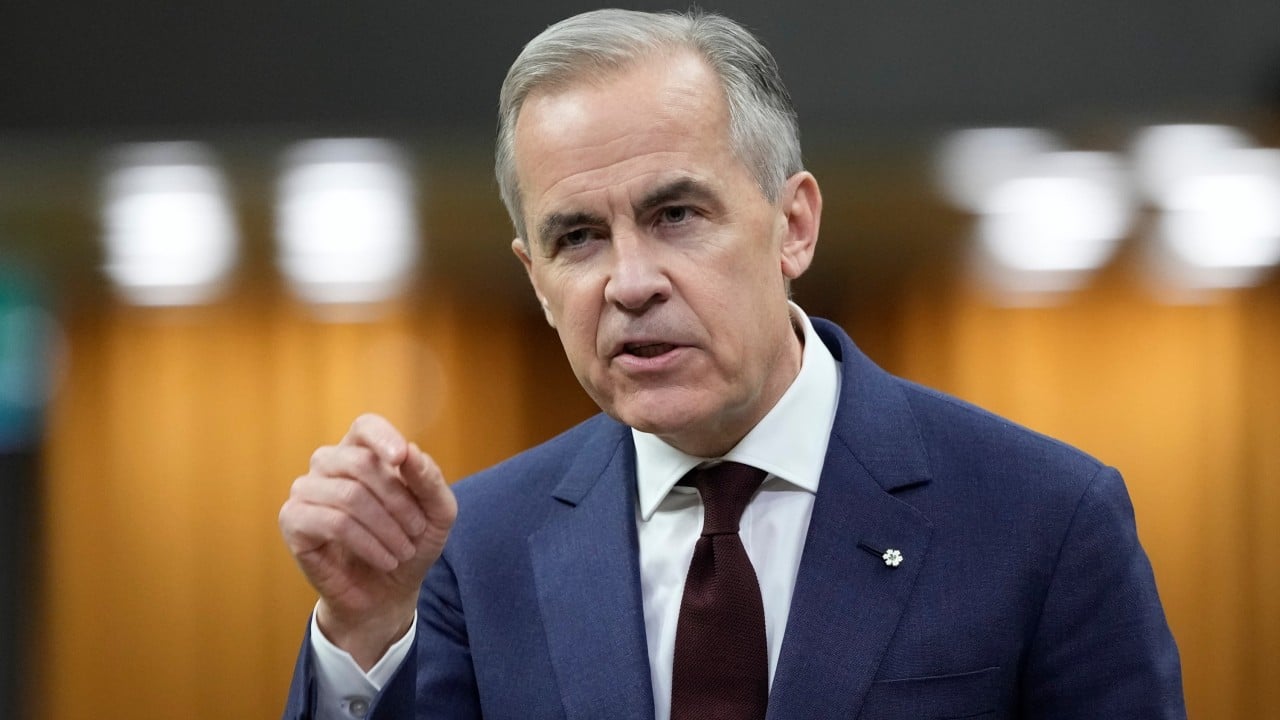
Mark’s anxiety is the human face of a mathematical trap. For over half a century, Canada has operated on a simple, seductive premise: if we hitch our wagon to the biggest engine in human history, we will never stop moving. We turned our backs on the rest of the world because the neighbor next door was the best customer a shopkeeper could ever hope for. But the neighbor is changing. The neighbor is putting up a fence. And according to Mark Carney, the former central banker who has seen the ledgers of the world, Canada’s greatest strength has quietly become its most dangerous vulnerability.
The Comfort of the Mono-Customer
The numbers tell a story of total immersion. Roughly 75% of everything Canada exports goes to one single country. Imagine a small business where one client accounts for three-quarters of the revenue. That business isn't a partner; it’s a dependency. If that client decides to renegotiate, you don't argue. You submit.
Carney’s argument isn't built on anti-Americanism. It’s built on the cold reality of "concentration risk." In the world of finance, putting all your eggs in one basket is a rookie mistake. In the world of nation-building, we’ve called it a "special relationship" for decades to make the risk sound like a virtue.
The "special relationship" was forged in an era of open borders and the "End of History," where the world was supposed to become one giant, frictionless marketplace. In that world, being the primary gas station and parts-supplier for the United States was a brilliant strategy. But that world is dead. It died under the weight of supply chain collapses, rising protectionism, and a global shift toward "friend-shoring"—a polite term for picking sides.
The United States is currently engaged in a massive, once-in-a-century industrial pivot. Through the Inflation Reduction Act and the CHIPS Act, America is vacuuming up capital to rebuild its own domestic manufacturing. They aren't looking for partners; they are looking for security. When the American giant starts looking inward, the person standing on its doorstep—Canada—suddenly feels very small and very cold.
The Invisible Leash
The stakes aren't just about trade balances or GDP growth. They are about the "invisible leash" that dictates how Canadians live.
When our economy is a mirror of the American one, our interest rates, our currency value, and our environmental standards are often decided in rooms where no Canadian sits. We have outsourced our economic destiny. We became comfortable being the "plus-one" to the American party, forgetting that the host can revoke the invitation at any moment.
Carney points to a stagnation that has crept into the Canadian soul. Because we have such an easy market to the south, our businesses haven't felt the pressure to innovate. Why work hard to sell a new software tool to Japan or Germany when you can just sell more raw lumber or crude oil to Minnesota? It’s the "Resource Curse" disguised as a friendship. It has made us slower, less competitive, and dangerously complacent.
Consider the tech sector. Canada produces some of the most brilliant engineers on the planet. Yet, for years, our greatest export hasn't been software—it’s been the people who write it. They go to Silicon Valley because that’s where the gravity is. We have become a farm team for the American majors. We pay for the education, the healthcare, and the upbringing of the talent, and then we hand them over the border because we haven't built an economy that can keep them.
The Global Pivot
Fixing this isn't as simple as signing a few papers. It requires a fundamental rewiring of what it means to be Canadian.
The world is hungry. Not just for the oil and minerals we have in the ground, but for the stability we represent. There is a massive, growing middle class in Indo-Pacific nations that needs what we have. There are European allies desperate to decouple from autocracies who are looking for democratic partners in energy and technology.
Yet, we are like a person standing in a room full of open doors, staring intently at the one door that is slowly being locked from the other side.
Carney’s vision involves a "correction" that feels more like a revolution. It means moving beyond the role of the continent's warehouse. It means building our own industrial policy that doesn't just react to what Washington does, but anticipates where the rest of the 7 billion people on Earth are going.
The Cost of the Status Quo
What happens if we do nothing?
The math is unforgiving. If Canada remains a one-client nation in an age of protectionism, our standard of living will continue its slow, agonizing slide. We see it already in the housing crisis, in the lagging productivity, and in the "brain drain" that has become a "brain flood."
We are currently living on the leftovers of twentieth-century prosperity. We are spending the inheritance our grandparents built when the world was desperate for Canadian wheat and steel. But the inheritance is running out.
The risk is that we become a "vassal state" in everything but name. A country that has the trappings of sovereignty—a flag, an anthem, a parliament—but no actual agency over its economic future. If your only customer decides they don't like your carbon tax, or your labor laws, or your digital services tax, they can simply squeeze the bridge. And Canada, lacking any other options, will have to fold.
A New Map for the Machinist
Back in Windsor, Mark doesn't care much for "industrial policy" or "multilateral trade frameworks." He cares about the fact that his son, also a gifted mechanic, is moving to Texas because "that’s where the work is."
"It used to be that the border was just a line," Mark said, staring at the bridge. "Now it feels like a wall that only opens one way. We're on the wrong side of it."
To change Mark's reality, Canada has to stop being afraid of the world. For a century, the U.S. was our shield and our paycheck. It felt safe. But true safety doesn't come from a single protector; it comes from having a dozen friends who all need you for different reasons.
We have the lithium the world needs for batteries. We have the uranium for the next generation of nuclear power. We have the fresh water, the arable land, and the educated workforce. We have everything we need to be a global power in our own right, rather than an American appendage.
But to get there, we have to endure the discomfort of the "correction." We have to stop looking south for permission and start looking at the horizon. We have to build our own brands, our own tech giants, and our own trade routes that don't pass through a single American checkpoint.
The bridge in Windsor will always be there. It will always be important. But a nation cannot live on a bridge. It needs to stand on its own soil, looking at a map that includes the whole world, not just the neighbor's backyard.
The sun is setting over the Detroit River, casting a long, dark shadow of the bridge across the Canadian shore. In the flickering light, the shadow looks less like a path and more like a cage. It is time to step out of the dark and see what else is out there.