The Tennessee Highway Mess Was Not a Tragedy
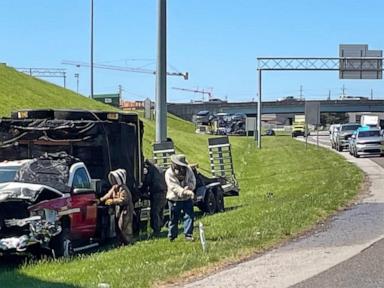
A truck flips on a Tennessee highway ramp. One million bees escape. The local news treats it like a script for a B-movie disaster, complete with "bumper-to-buzzer traffic" puns and panicked warnings to keep windows rolled up. The public reacts with a mix of horror and a bizarre, misplaced grief for the "lost pollinators."
Let’s get one thing straight. Those bees shouldn’t have been there. Not because of a traffic violation, but because the very existence of industrial-scale honeybee transport is a symptom of a broken ecological model that we’ve been tricked into subsidizing with our emotions.
The media loves a "save the bees" narrative. It’s easy. It’s consumable. It makes you feel like buying a jar of wildflower honey is a revolutionary act. It isn’t. In fact, if you actually care about biodiversity, those million bees on that highway were the villains, not the victims.
The Honeybee is the Cow of the Insect World
We have been conditioned to see Apis mellifera (the Western honeybee) as a fragile symbol of a dying planet. This is the greatest marketing trick ever pulled by the commercial beekeeping industry.
Honeybees are not endangered. They are livestock.
Saying we need to save the honeybee to save the environment is like saying we need to breed more chickens to save the wild birds of the rainforest. It is a logical fallacy that ignores the brutal reality of competition. When a million honeybees are dumped into a Tennessee ecosystem—or even when they are "correctly" placed there for pollination—they act as a massive, invasive vacuum.
They outcompete native bees for pollen and nectar. They spread diseases to wild populations that don't have a commercial lobby to protect them. I’ve watched local ecosystems get stripped bare because well-meaning hobbyists decided to "save the planet" by putting two hives in a backyard that was already struggling to support its local mason bees and bumblebees.
The Logistics of a Biological Failure
The Tennessee spill highlights a deeper, more systemic stupidity: the migratory pollination industry.
Every year, we put billions of bees on flatbed trucks and drive them thousands of miles to pollinate monocultures like California almonds. It is a logistical nightmare and a biological catastrophe. We move these insects around like software updates, expecting them to "patch" a landscape that we’ve rendered sterile with pesticides and industrial farming.
Why did that truck flip? Because we have built a food system so fragile that it requires the high-speed transit of millions of stressed, stinging insects across state lines just to ensure a crop survives.
The Cost of Convenience
- Pathogen Spread: These trucks are rolling petri dishes. They pick up mites and viruses in one state and deposit them in another.
- Genetic Homogenization: We are breeding for transportability and honey yield, not for ecological resilience.
- The Pollination Deficit: By relying on a single, non-native species, we have created a single point of failure. If Apis mellifera crashes, the system stops.
If you’re worried about the bees on that highway, you’re worrying about the wrong thing. You should be worried about the fact that our agricultural "innovation" has reached a point where we are essentially trucking a life-support system to a dying field.
Stop Trying to "Save" the Honeybee
The "People Also Ask" sections of the internet are filled with questions like "How can I help the bees?" The honest, brutal answer? Stop keeping them.
If you are a suburbanite with a hive, you aren't an environmentalist. You’re a farmer. And that’s fine, as long as you admit you’re doing it for the honey or the hobby. But don't pretend you're buffering the planet against collapse.
To actually support pollination, you need to do the opposite of what the "save the bees" campaigns tell you:
- Kill Your Lawn: Grass is a green desert. It requires more chemicals and water than it's worth.
- Plant "Ugly" Natives: Stop buying the hybridized, flashy flowers at big-box retailers. They are often bred to be sterile or have low nectar counts.
- Accept the Mess: Leave the dead wood. Leave the patches of bare dirt. That is where native bees—the ones actually doing the heavy lifting—live.
The Myth of the Bee-pocalypse
Is there a crisis? Yes. But it’s not a honeybee crisis. It’s a habitat crisis.
Commercial honeybee colonies in the United States are at some of their highest levels in decades. We are very good at making more honeybees. What we are failing at is maintaining a world where insects can survive without being hauled around on a semi-truck.
The Tennessee highway spill wasn't a tragedy because the bees died. It was a tragedy because it reminded us how much we rely on a circus act to keep our grocery stores stocked. We’ve replaced complex, self-sustaining natural systems with a loud, vibrating, fragile logistics chain.
The Counter-Intuitive Truth
The most radical thing you can do is stop caring about the honeybee and start caring about the fly, the wasp, the beetle, and the solitary bee. They don't have PR firms. They don't make delicious syrup that you can put in your tea. They just do the work.
When that truck overturned, the "traffic nightmare" was the only honest part of the story. It was a physical manifestation of a system that has ground to a halt. We are stuck in a loop of fixing the wrong problems with the wrong tools.
We don't need more bees on trucks. We need fewer trucks because we’ve built landscapes that can actually feed themselves.
Next time you see a headline about a million bees on the loose, don't mourn the insects. Mourn the fact that we live in a world where a million insects have to be strapped to a trailer just to make sure an almond tree in a desert can grow a nut.
The hive mind is wrong. The honeybee isn't the solution. It’s the distraction.
Stop "saving" the livestock. Start rebuilding the home.