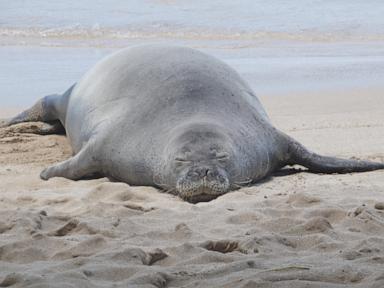
A tourist snaps a video throwing a rock near a Hawaiian monk seal. The internet spots it. Within forty-eight hours, the digital mob tracks down the offender, leaks their personal information, and floods their inbox with death threats. The mainstream media steps in, running hand-wringing pieces about the offender's legal defense team complaining about cyberbullying.
Everyone goes home feeling righteous. The internet cops saved the day.
Except they didn’t. They changed absolutely nothing.
The lazy consensus surrounding wildlife harassment incidents in Hawaii is that public shaming and draconian criminal penalties are the definitive solutions to protecting endangered fauna. We treat every ignorant vacationer like an eco-terrorist, believing that if we just ruin enough lives on TikTok, the remaining tourists will suddenly develop a deep, intrinsic reverence for marine biology.
It is a comforting lie. It allows local authorities, tourism boards, and outraged citizens to pretend they are solving a systemic conservation crisis by hyper-focusing on individual bad actors.
The reality? This performative outrage is an expensive distraction. It addresses the symptom of a broken tourism model while completely ignoring the structural failures that guarantee these encounters will keep happening. If we actually care about saving Neomonachus schauinslandi—the Hawaiian monk seal—we need to stop treating tourist ignorance as a criminal conspiracy and start treating it as a predictable infrastructure failure.
The Myth of the Deterrent Effect
The standard playbook for a marine mammal incident follows a rigid script. The state levies a hefty fine under Chapter 195D of the Hawaii Revised Statutes, which protects threatened and endangered species. Federal authorities drop the hammer using the Endangered Species Act and the Marine Mammal Protection Act. The public demands jail time.
We are told these high-profile punishments serve as a deterrent. They don't.
To believe in the deterrent effect, you have to believe that a tourist from Ohio spends their pre-vacation time auditing Hawaii state wildlife statutes. They don’t. The average visitor lands in Honolulu with zero contextual awareness of marine mammal distances. They do not know that NOAA Fisheries mandates a 50-foot buffer for monk seals and a 150-foot buffer for pups.
When a tourist crosses those boundaries, it is rarely an act of calculated malice. It is an act of profound, uneducated oblivion.
Punishing someone after they have already disturbed a resting, pregnant, or molting seal is a failure of conservation. The stress hormone spike in the animal has already occurred. The biological cost has been paid. Using the legal system as a blunt instrument of hindsight does not undo the disruption to the animal’s energy budget.
We are bankrupting our emotional and legal resources on retributive justice instead of focusing on physical prevention.
The Tourism Industrial Complex Profits from Spatial Conflict
Let us look at the numbers. The Hawaii Tourism Authority constantly tracks visitor expenditures, pumping billions into the local economy. At the same time, the state's Department of Land and Natural Resources (DLNR) operates on a shoestring budget relative to the massive volume of human beings they are required to police.
We invite millions of people to an island ecosystem, pack them into concentrated coastal zones, and then act shocked when they step on the wildlife.
Imagine a scenario where an amusement park operator builds a high-speed roller coaster but refuses to install guardrails, relying instead on a sign that says "Please Do Not Fall Off." When a patron inevitably tumbles out, the park blames the patron’s lack of common sense. That is the exact strategy Hawaii uses for coastal conservation.
Hotels sell the dream of pristine, untouched paradise. Influencers geo-tag secluded beaches where monk seals haul out to sleep after days of deep-sea foraging. The tourism machine monetizes the proximity to nature, but leaves the burden of enforcement to underfunded state officers and exhausting volunteer networks like Hawaii Marine Animal Response (HMAR).
If a tourist can walk directly up to an endangered species without encountering a physical barrier, a docent, or a mandatory education checkpoint, the system has failed long before the rock is thrown or the selfie is taken.
The Hypocrisy of the Local vs. Visitor Narrative
There is a fierce, protective tribalism in Hawaii regarding the land (’āina). It is entirely justified given the historical exploitation of the islands. However, the media narrative surrounding wildlife harassment loves to weaponize this by painting a binary picture: the evil, entitled tourist versus the pristine, respectful local environment.
This narrative is statistically dishonest.
Any veteran conservation officer will tell you off the record that local residents are regularly cited for wildlife infractions. Loose domestic dogs on North Shore beaches present a massive, ongoing threat to monk seal pups. Illegal gill nets drown green sea turtles (honu) every single year. Off-road vehicles tear through coastal dune ecosystems that serve as critical nesting habitats.
Yet, when a resident’s dog attacks a seal pup, it rarely makes national headlines. It doesn’t trigger an internet manhunt.
By framing wildlife protection exclusively as a "tourist problem," we create a cultural blind spot. We allow local systemic issues to slide while converting international visitors into scapegoats. This tribalism feels good, but it delivers terrible conservation outcomes. A monk seal doesn't care about the residential address of the entity that woke it up; it only suffers the biological consequences of the disturbance.
How to Actually Fix the Problem
If we want to stop writing articles about threatened tourists and stressed seals, we have to dismantle the current passive approach to management.
1. Hard Closures Over Soft Warnings
The current method of placing plastic cones and a yellow "Do Not Cross" tape around a hauled-out seal is a joke. It relies entirely on voluntary compliance. If a monk seal chooses a high-traffic beach like Waikiki or Poipu to rest, that specific section of the beach must be subject to an immediate, legally enforced hard closure. No entry. No exceptions. If you cross the physical barrier, you face immediate removal from the beach, not a prolonged court date six months later.
2. The Vacation Tax Must Directly Fund Direct Guarding
Hawaii levies a transient accommodations tax (TAT). A dedicated, non-negotiable percentage of this revenue should be legally earmarked to fund a 24/7, rapid-response Wildlife Guard corps. These should not be volunteers trying to politely persuade tourists to step back. These should be paid, uniformed enforcement officers stationed at high-probability haul-out zones during peak seasons.
3. De-Market Endangered Wildlife
Stop using images of monk seals and sea turtles in promotional tourism materials. When you feature these animals in airline safety videos and hotel brochures as part of the "exotic Hawaiian experience," you create an expectation of access. You turn an endangered species into an attraction, a bucket-list item to be checked off and documented on social media. Remove them from the marketing narrative entirely.
The legal circus surrounding the latest viral villain changes nothing about the reality on the ground. The tourist's lawyer will argue mitigating circumstances, the public will scream for blood on Instagram, and the seal will eventually swim away.
Tomorrow, another flight will land at HNL. Another thousand tourists will spill onto the beaches. And because the infrastructure remains completely unchanged, someone else will walk too close, open their camera app, and restart the entire useless cycle of outrage.
Stop hunting the idiots. Fix the system.