The traditional narrative surrounding massive philanthropic gifts is exhausting. A billionaire cuts a check with nine zeros, a legacy non-profit builds a shiny new facility, and the public applauds a supposed masterclass in social impact.
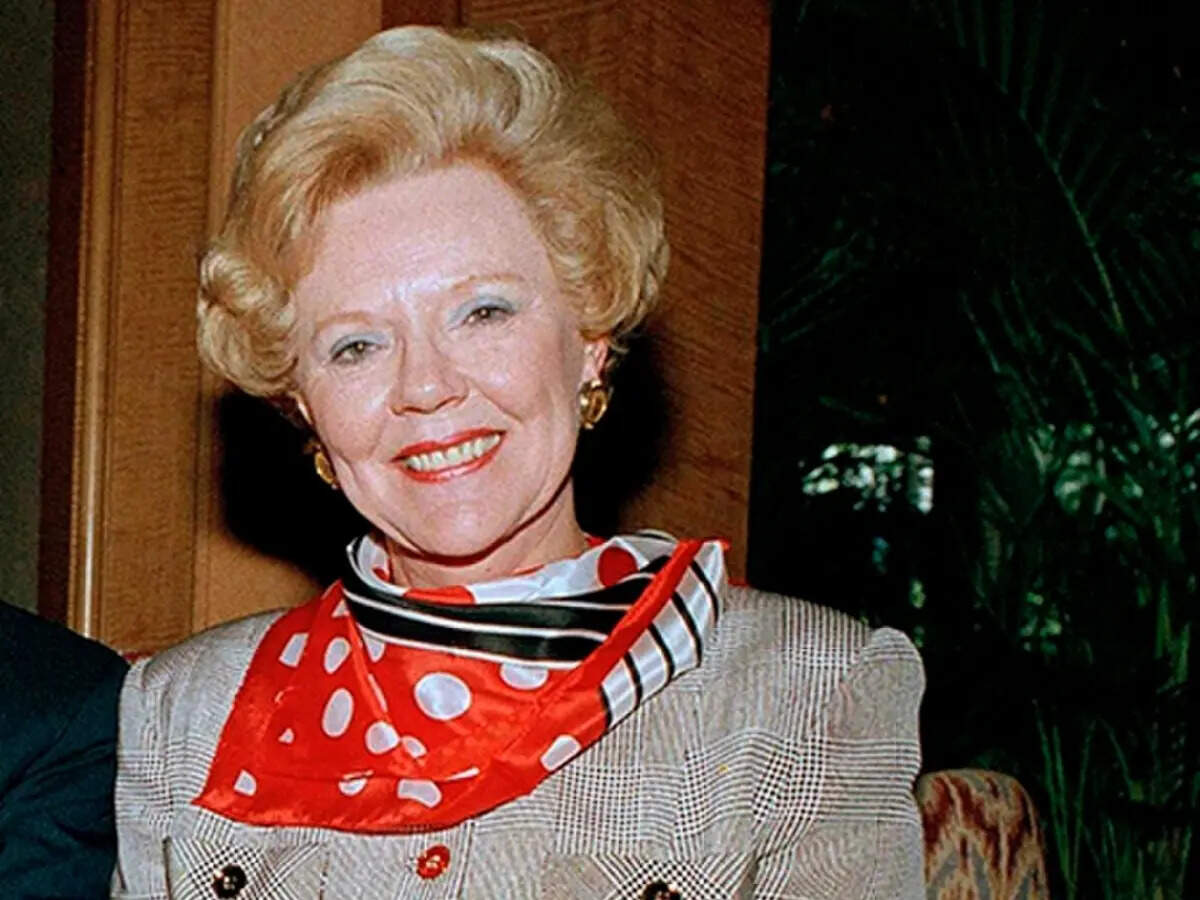
We see this exact fairy-tale framing applied to Joan Kroc’s landmark $1.5 billion bequest to the Salvation Army in 2003. The consensus view, parroted by standard industry fluff pieces, is that this historic windfall permanently transformed the organization’s ability to serve communities by funding dozens of massive "Kroc Centers" across the United States.
That narrative is dangerously wrong.
It ignores the brutal economic reality of managing a mega-gift. In the non-profit sector, we routinely witness what happens when a sudden, massive injection of capital hits an organization built for incremental budgeting. It fractures operations. It creates permanent funding deficits. It forces a radical, often detrimental, shift in core mission focus.
Joan Kroc did not save the Salvation Army’s modern era. She accidentally saddled it with a permanent real estate liability.
The Mirage of the Fully Funded Gift
To understand why this gift became an operational headache, look at the math and the specific constraints Kroc attached to the money. This was not unrestricted capital. The $1.5 billion was strictly earmarked for the creation and operation of community centers.
Half of the money was allocated for construction. The other half went into an endowment to help cover operational costs.
On paper, a 50-50 split between capital expenditures and operational support sounds responsible. In practice, it is a mathematical trap. Anyone who has managed large-scale commercial real estate or enterprise-level non-profit budgets knows that a 50% operational endowment is woefully insufficient for high-end community centers featuring water parks, ice rinks, and massive fitness complexes.
Consider the ongoing costs of these facilities:
- High-volume energy consumption and climate control for massive indoor spaces.
- Specialized maintenance for aquatic centers and athletic facilities.
- Competitive wages for specialized staff, from lifeguards to facility managers.
- Cyclical capital replacement reserves for roofs, HVAC systems, and machinery.
A standard endowment payout rate sits around 4% to 5% annually to preserve the principal against inflation. On a $750 million operational endowment spread across roughly 26 centers, that yields roughly $1.15 million to $1.44 million per center, per year.
That does not cover the baseline payroll for a premier 100,000-square-foot community hub, let alone the utility bills. The result? The Salvation Army was instantly thrust into the commercial recreation business, forced to chase memberships and user fees just to keep the lights on.
Mission Creep via Architecture
Every non-profit has a core competency. For the Salvation Army, that competency historically centered on disaster relief, addiction rehabilitation, homeless shelters, and direct casework for poverty-stricken individuals. These are lean, agile, community-embedded services.
The Kroc Centers forced a structural pivot toward asset management and middle-class recreational programming.
When you build a state-of-the-art fitness center, your primary customer profile changes. To offset the operational deficits left by the inadequate endowment, these centers must sell memberships. To sell memberships, they must compete with commercial gyms and municipal recreation centers.
Suddenly, executive directors who should have been focusing on local poverty alleviation were worrying about member retention rates, marketing campaigns for spin classes, and pool chemistry. This is the definition of mission creep. The organization did not expand its existing mission; it adopted an entirely new, capital-intensive one that diluted its focus.
The Local Funding Squeeze
A common question in philanthropic circles is: "Why can't local communities just raise the difference?"
This question completely misunderstands local donor psychology. When a massive, glittering $50 million community center drops into a mid-sized city, funded by the Kroc estate, local donors do not think, "Wow, they need my $50 donation more than ever." They think, "The Salvation Army is rich. My money is better spent elsewhere."
The sheer visibility of a mega-gift cannibalizes grassroots fundraising. Local advisory boards found themselves in a vice. They were prohibited by the terms of the Kroc will from using the endowment money for traditional social services like soup kitchens or housing shelters. Yet, the presence of the Kroc Center depressed local donations for those exact traditional services.
Furthermore, many municipalities required local branches to raise millions in matching funds before construction could even begin on a Kroc Center. This drained local fundraising ecosystems of discretionary capital that would have otherwise gone directly to immediate, high-impact poverty relief.
The False Promise of Asset-Heavy Philanthropy
The Kroc gift highlights a systemic flaw in how modern society views charity: the obsession with permanent monuments.
Wealthy donors love bricks and mortar. Buildings can be named. Buildings can be photographed. Buildings feel permanent. But in the social services sector, buildings are liabilities. They are fixed costs that cannot adapt to changing economic climates or shifting demographic needs.
Imagine an alternative scenario where that $1.5 billion was structured as a flexible, unrestricted endowment dedicated solely to direct service delivery. No buildings. No pools to chlorinate.
Distributed via a standard 4.5% payout, it would have generated roughly $67.5 million every single year in pure, adaptable operational cash flow. During economic downturns, when demand for food and shelter spikes, that money could have deployed instantly to where the pain was greatest. Instead, millions of dollars are permanently locked into paying utility bills for empty basketball courts on Tuesday mornings.
The downside to the contrarian approach—demanding purely unrestricted, asset-light giving—is that it is incredibly difficult to sell to ultra-high-net-worth individuals. It requires donors to subvert their ego and trust the institution completely. But the alternative is what we see with the Kroc legacy: an organization burdened with the endless upkeep of a billionaire’s idealized vision of community life.
Stop Celebrating the Wrong Metrics
We must stop judging the success of a philanthropic act by the size of the initial check or the architectural beauty of the resulting facility. Those are vanity metrics.
True philanthropic efficiency is measured by the ratio of capital deployed to direct human outcomes, adjusted for long-term operational drag. By that metric, mega-gifts burdened with heavy real estate mandates are remarkably inefficient. They create an illusion of progress while structurally weakening the financial resilience of the institutions receiving them.
The Salvation Army has spent more than two decades grinding through the operational realities of the Kroc bequest, doing its best to manage a logistical whirlwind. But let's be entirely clear about the lesson here.
If you want to support a non-profit, do not buy them a monument they cannot afford to maintain. Give them the unglamorous, unrestricted liquidity they need to do their actual work. Stop building palaces on top of fragile foundations.