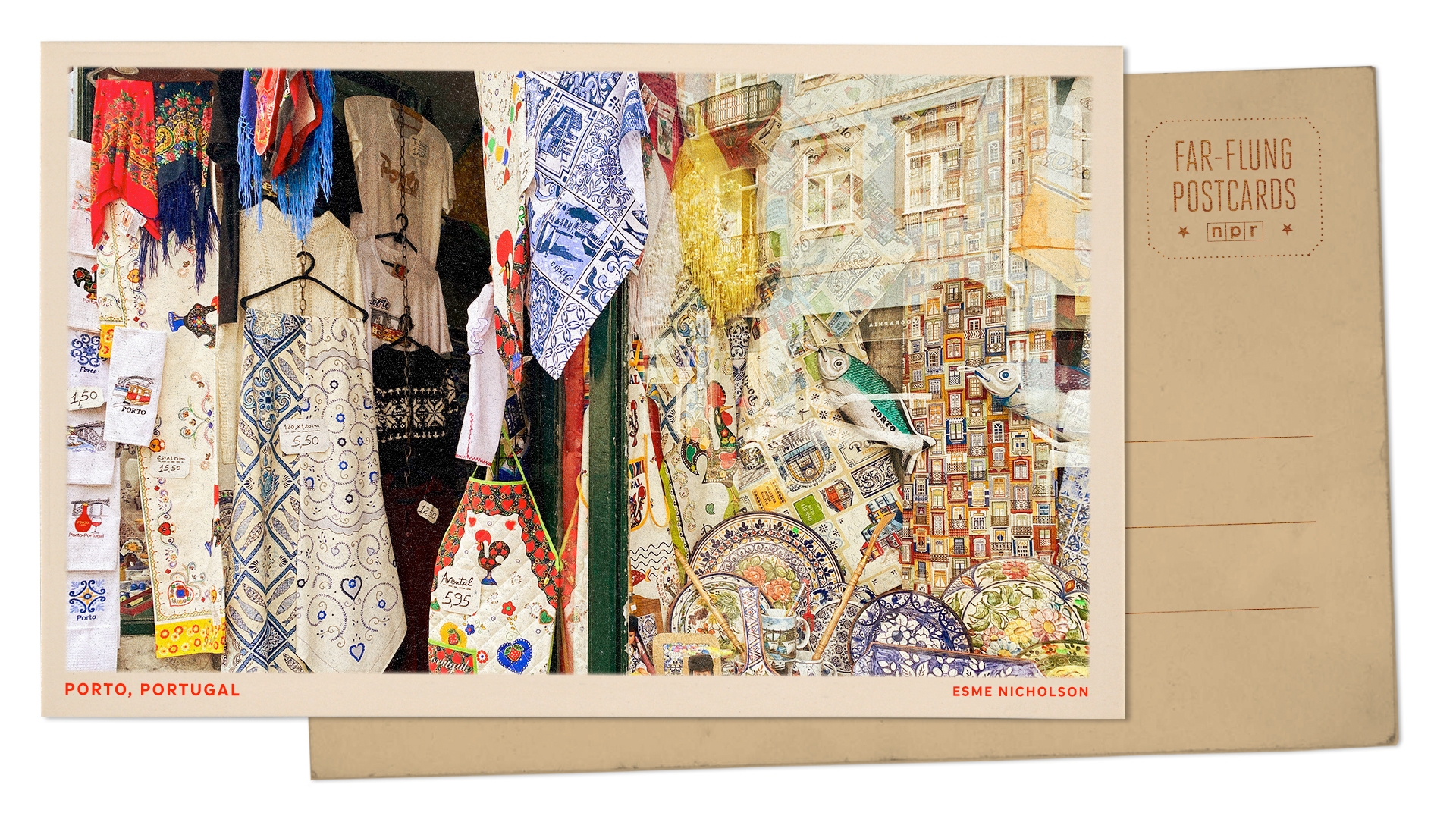
Travel writers love to sell you a pastel-colored lie. They visit Porto for forty-eight hours, walk down the Ribeira, spot a few pieces of laundry hanging across a narrow alley, and immediately pen a breathless love letter about "the timeless, romantic lanes lined with colorful textiles."
It is lazy journalism. It is predictable photography. Worst of all, it fundamentally misunderstands the city.
Those picturesque textiles blowing in the Atlantic breeze are not a curated outdoor art exhibit staged for your Instagram feed. They are the daily laundry of a shrinking working-class population fighting displacement in a city rapidly converting its soul into short-term holiday rentals. When a travel publication romanticizes the mundane realities of local poverty and dense urban living as a quirky aesthetic feature, it ignores the real mechanics of the city.
If you visit Porto looking for a quaint, static museum piece wrapped in blue azulejo tiles, you will miss the actual pulse of the northern capital. Stop consuming travel narratives designed for a 1990s guidebook. The reality of Porto is much rougher, significantly more industrial, and infinitely more fascinating than the sanitized version pushed by lifestyle influencers.
The Aesthetic Trap of the Ribeira
The standard tourist itinerary dictates that you must spend your days wandering the riverfront, drinking mediocre port wine spritzers, and marveling at the decayed charm of the old town.
This is a mistake.
The Ribeira has become a monoculture. When an area becomes entirely dependent on the tourist dollar, the authentic infrastructure collapses. The traditional grocery stores become souvenir shops selling mass-produced cork coasters. The authentic tascas get replaced by brunch spots serving avocado toast at Parisian prices.
By hyper-focusing on the "colorful textiles" and medieval lanes, travelers participate in a strange form of architectural voyeurism. You are looking at a shell.
To actually understand Porto, you have to look at its relationship with industry and economic survival. This is not Lisbon. Lisbon is cosmopolitan, bureaucratic, and historically focused on maritime empire. Porto is, and always has been, a city of commerce, granite, and sweat. The local saying goes, "Coimbra sings, Braga prays, Lisbon parades, and Porto works."
If you spend your entire trip looking for pretty backdrops, you miss the engineering marvels that actually define the region. The Dom Luís I bridge is not just a photo opportunity; it is an artifact of nineteenth-century ironwork designed by a disciple of Gustave Eiffel, built to connect the industrial wine lodges of Vila Nova de Gaia with the commercial hub of Porto. The wealth of this city did not come from being pretty. It came from the brutal, unpredictable Douro River and the merchants who learned how to tame it.
The Great Port Wine Misconception
Let us dismantle the biggest marketing triumph in the region: the port wine lodges of Vila Nova de Gaia.
Tourists flock across the river thinking they are experiencing a rustic, agricultural tradition. They sit in dark, damp cellars beneath massive oak vats, listening to a rehearsed speech about the Douro Valley harvest.
Here is the truth you will not find in the glossy travel brochures: the historic port wine trade is an English invention built on geopolitical maneuvering, not a purely Portuguese pastoral tradition. The Methuen Treaty of 1703 allowed English textiles into Portugal duty-free, in exchange for preferential customs duties on Portuguese wines. British merchants moved in, established the famous lodges—hence names like Taylor's, Graham's, and Croft—and fortified the wine with grape brandy to prevent it from spoiling during the sea voyage back to London.
When you drink port in Gaia, you are participating in a three-hundred-year-old corporate supply chain.
Furthermore, port is not what locals drink on a Tuesday night in a neighborhood tavern. It is a digestif, an export product, and increasingly a luxury commodity. If you want to understand the contemporary liquid culture of Northern Portugal, you need to abandon the tourist lodges and look at what is actually happening in the regional wine scene.
- Vinho Verde: Stop thinking of this as cheap, fizzy pool wine. The Minho region, just north of Porto, is producing high-acid, bone-dry, mineral-driven whites from the Alvarinho and Loureiro grapes that rival the best Rieslings of the world.
- The Douro Revolution: The same steep, terraced vineyards that produce sweet port are now producing some of the most complex, non-fortified red wines in Europe. They are dense, tannic, and taste of schist and sun.
To find these, you do not go to a multi-national corporate lodge with a ticketed tour. You go to the small wine bars in the Cedofeita or Bonfim neighborhoods, where independent bottle shops showcase producers who are rewriting Portuguese viticulture without a single British coat of arms on the label.
Deconstructing the People Also Ask Mythos
Is Porto a walkable city?
The conventional wisdom says yes, because it looks compact on a map. The reality is that Porto is a vertical labyrinth designed to destroy your knees. It is built on granite cliffs overlooking a river gorge. Walking from the riverfront up to the Clérigos Tower is not a casual stroll; it is a cardiovascular workout on uneven, slippery cobblestones that turn into ice the moment a light Atlantic mist rolls in.
If you do not plan your routes based on elevation changes rather than horizontal distance, you will spend your trip exhausted, frustrated, and trapped in traffic-choked funicular lines.
What is the best neighborhood to stay in Porto?
Every travel blog will tell you to stay in Baixa or Ribeira. They are wrong. Staying in the hyper-center means you are living in an artificial bubble. The noise from late-night bar crawls echoes through the narrow stone streets, and you will wake up to the sound of rolling suitcases on cobblestones at 5:00 AM.
Look to the east and north. Bonfim and Cedofeita are where actual residents live, work, and open businesses. Bonfim still retains its mid-century modernist architecture, traditional bakeries, and elderly residents who will yell across the street to their neighbors. Cedofeita balances a creative district with old-school ironmongers and family-run auto repair shops. These neighborhoods are not sanitized for your comfort; they are functional.
How many days do you need in Porto?
The consensus is two to three days. This assumes Porto is merely a stopover on a broader Iberian vacation—a place to snap a few photos, eat a heavy sandwich, and leave.
This transactional view of travel is why people find the city charming but superficial. To understand the north, you need at least a week, using Porto as a base to explore the industrial and cultural landscape that feeds it.
You need to take the train out to Guimarães, the cradle of the Portuguese nation, where the architecture shifts to heavy medieval stone. You need to visit Braga to see how Baroque architecture intersects with a massive, vibrant university population. You need to head to Matosinhos to see the raw, industrial fishing port where the fish is grilled on open charcoal pits on the sidewalk, completely devoid of historicist pretense.
The Francesinha Fallacy
You cannot talk about Porto without discussing the Francesinha, the city’s signature sandwich. It is a mountain of bread, wet-cured ham, linguiça, steak, and melted cheese, drowned in a hot, thick tomato and beer sauce.
Travel writers treat it as a culinary holy grail. They describe it as an ancient tradition.
It is actually a twentieth-century adaptation of the French croque-monsieur, brought back by an emigrant named Daniel da Silva in the 1950s. More importantly, it is a nutritional wrecking ball designed for working-class laborers who needed massive caloric intake to survive manual labor in damp, cold winters.
Eating a Francesinha in the middle of a July afternoon before trying to hike up the hills of the city is an act of self-sabotage. It is tourist theater.
If you want to understand how the people of Porto actually eat, look past the cheese-covered spectacle. Look for the daily lunch specials (pratos do dia) scrawled on dry-erase boards outside nameless taverns.
Look for Tripas à Moda do Porto (tripe stew with white beans, sausage, and vegetables). This dish defines the psychology of the city. In 1415, when Prince Henry the Navigator was preparing his fleet to conquer Ceuta, the citizens of Porto slaughtered all their cattle to provision the ships, keeping only the offal for themselves. They became known as tripeiros (tripe-eaters).
It is a dish born of sacrifice, logistics, and military necessity. It is heavy, complex, unphotogenic, and absolutely delicious. It is the exact opposite of a colorful textile blowing in the wind. It is gritty reality on a plate.
The Cost of the Picturesque
Tourism is not a neutral activity. When we consumerize a city based entirely on its aesthetic charm, we alter the market dynamics in a way that often chokes out the very culture we claim to admire.
Porto is currently grappling with severe housing shortages. The historic center, once a densely populated working-class stronghold, has seen massive demographic shifts. When tourists demand the "authentic experience" of staying in a renovated apartment in a historic alleyway, they compete directly with locals whose average wages do not align with global tourism revenues.
The contrarian traveler understands this dynamic and adjusts their behavior accordingly.
Do not look for the most picturesque street. Look for the most functional one. Buy your groceries at the traditional municipal markets like Mercado do Bolhão, which, despite its recent glossy renovation, still houses the traditional vendors who have been shouting about fresh fish for generations. Spend your money at multi-generational family businesses rather than design-forward concept stores that look exactly like the ones in Brooklyn, London, or Berlin.
Drop the Guidebook
The real Porto is found when you accept that the city is not a romantic painting.
It is a city of gray granite that looks brooding and magnificent under an overcast sky. It is a city where contemporary architecture masters like Álvaro Siza Vieira and Eduardo Souto de Moura have left a legacy of stark, minimalist concrete that cuts through the historical clutter. It is a city where the Atlantic Ocean crashes violently against the piers of Foz do Douro, reminding you that this is an outpost on the edge of a wild ocean, not a placid Mediterranean resort.
Stop looking for the colorful textiles.
Walk past the crowds waiting in line for three hours to see a bookstore staircase because it allegedly inspired a wizard movie. Walk away from the river. Head up the hills until the English commentary fades away and you hear the harsh, rhythmic northern Portuguese dialect bouncing off the stone walls.
Get lost in the working-class neighborhoods where the buildings are stained with soot from old factories. Look at the rust, the granite, and the concrete. That is where the real city lives. The rest is just marketing.