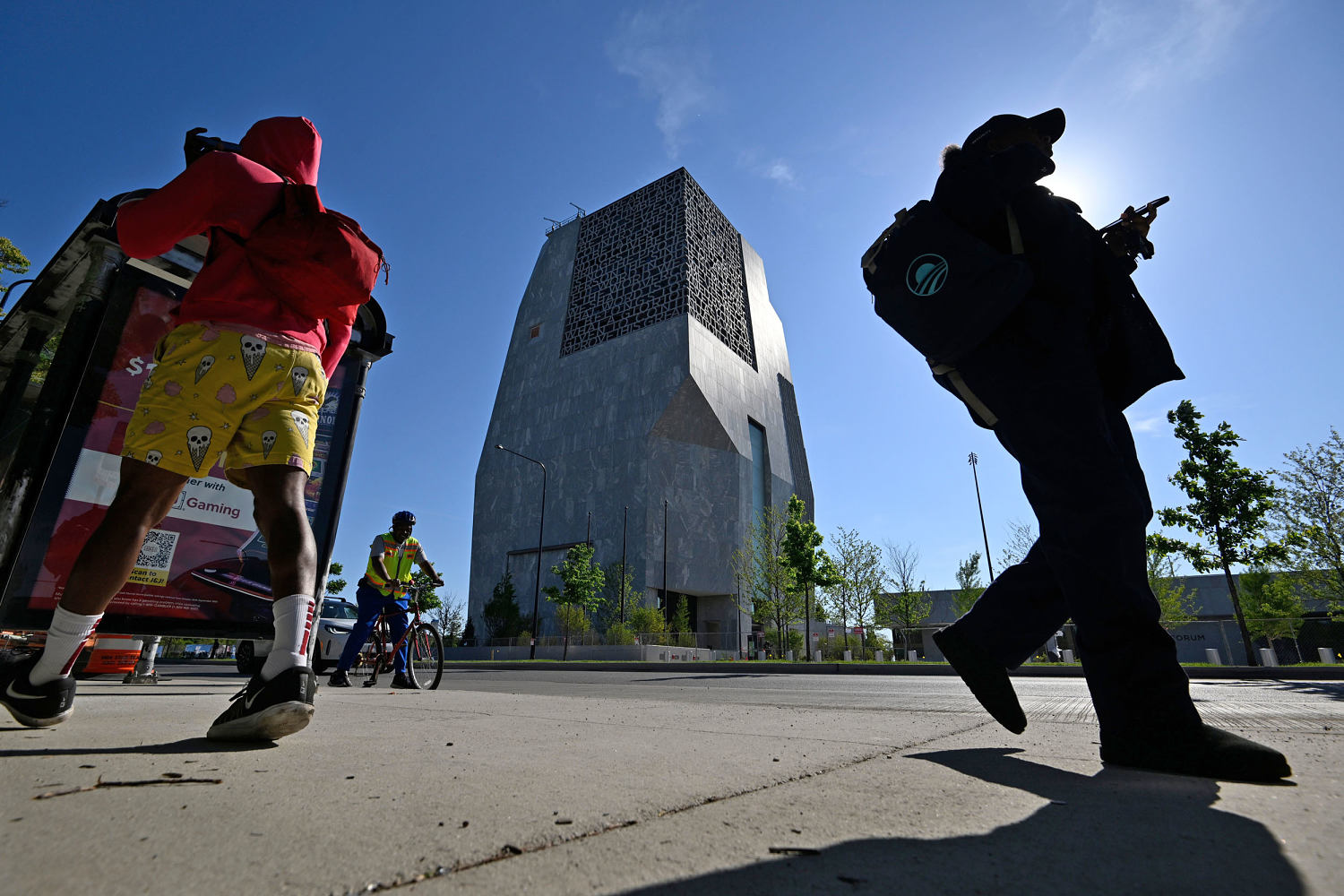
The polished promotional videos released by the Obama Foundation paint a pristine picture of civic harmony on Chicago's South Side. In these carefully framed digital sneak peeks, viewers see gleaming granite facades, children laughing on a lagoon-themed playground, and an NBA-regulation basketball court emblazoned with inspiring presidential quotes. But behind the strategic camera angles and the soaring orchestral backing tracks lies a far more complicated reality. The massive, $850 million project rising above Jackson Park has become a physical manifestation of a deep ideological divide, exposing the friction between grand presidential legacy-building and the immediate, desperate needs of a historic Black neighborhood fighting against displacement.
For decades, presidential libraries followed a predictable, quiet blueprint. They were tranquil repositories of paper records, built in partnership with the National Archives and Records Administration, serving primarily as quiet research hubs for historians and tourists.
The Obama Presidential Center breaks that mold entirely. It is not, technically speaking, a presidential library at all.
Because Barack Obama opted to digitize his entire presidential archive rather than house physical papers on-site, the federal government does not run this facility. Instead, it is controlled entirely by his private foundation. This structural shift freed the architects and planners from federal constraints, allowing them to envision a 19-acre campus that acts more like a bustling civic theme park than a traditional monument.
The centerpiece of this vision is a towering, 225-foot museum building that looms heavily over the low-rise Woodlawn and South Shore neighborhoods. While the foundation describes the architecture as representing four hands coming together in prayer, critics on the ground view the near-windowless, chiseled monolith with skepticism. To some architectural observers, its sheer, blocky granite walls feel less like an open civic invitation and more like a fortress.
The physical structure, however, is merely a backdrop to a much larger economic battle.
When the project was first announced, it promised a wave of economic rejuvenation for an underserved part of the city. The foundation projected billions of dollars in long-term economic lift. Yet, the anticipation of that wealth has triggered a classic gentrification cycle before the museum doors have even officially opened.
Speculative capital has flooded the blocks surrounding Jackson Park. Landlords have aggressively raised rents, and property taxes are climbing. For the fixed-income seniors and working-class families who have anchored these neighborhoods for generations, the arrival of the center feels less like a blessing and more like an eviction notice.
This displacement crisis has forced a painful irony to the surface. Decades ago, a young Barack Obama cut his teeth on these very streets as a community organizer, teaching residents how to band together to demand accountability from powerful institutions. Today, local activists are using those exact tactics against his own legacy project.
A coalition of 19 community and activist groups formed the Obama Library South Side Community Benefits Agreement Coalition. Their goal is straightforward: a legally binding contract requiring the foundation and the City of Chicago to set aside jobs for local residents, cap rent hikes, and protect low-income housing.
The response from the foundation has been a firm refusal. Barack Obama himself addressed the pushback, arguing that a private non-profit should not sign a binding agreement with specific, self-appointed activist groups that may not represent the entire, diverse community. He maintained that his deep personal ties to the neighborhood served as a better guarantee of goodwill than any legal contract.
That explanation has not satisfied the coalition. Activists argue that goodwill does not pay the rent when property values skyrocket.
Furthermore, the financial burden of the project extends far beyond the foundation’s private fundraising. While the campus buildings are paid for by donors, the extensive infrastructure changes required to accommodate the center—including rerouting major roads and altering public parklands—fall squarely on the public ledger. Taxpayers are on the hook for an estimated $175 million in infrastructure adjustments.
This public investment complicates the foundation's argument that it should operate completely free of local legislative strings.
Inside the campus gates, the attention to detail is undeniable. World-renowned artists have been commissioned to fill the spaces with culturally resonant work. A massive, multi-story digital wall celebrates the power of words, acknowledging Obama’s status as the first truly digital president. There is an elite auditorium named after Elie Wiesel and a peaceful water terrace dedicated to Obama’s late mother, Ann Dunham.
These features will undoubtedly attract millions of global tourists and substantial revenue to the city. The question that remains unanswered, however, is who will actually pocket that revenue.
If the surrounding neighborhood is hollowed out by rising costs, the center will stand as an isolated island of wealth in an area that desperately needed holistic investment. The shiny sneak peeks distributed to the media offer a look at a completed architectural marvel, but they cannot show the human cost of the transformation outside the frame.
The true measure of the Obama Presidential Center will not be found in the height of its granite tower or the design of its basketball courts. It will be measured by whether the families who survived the neighborhood's hardest years are still there to walk through its doors.


