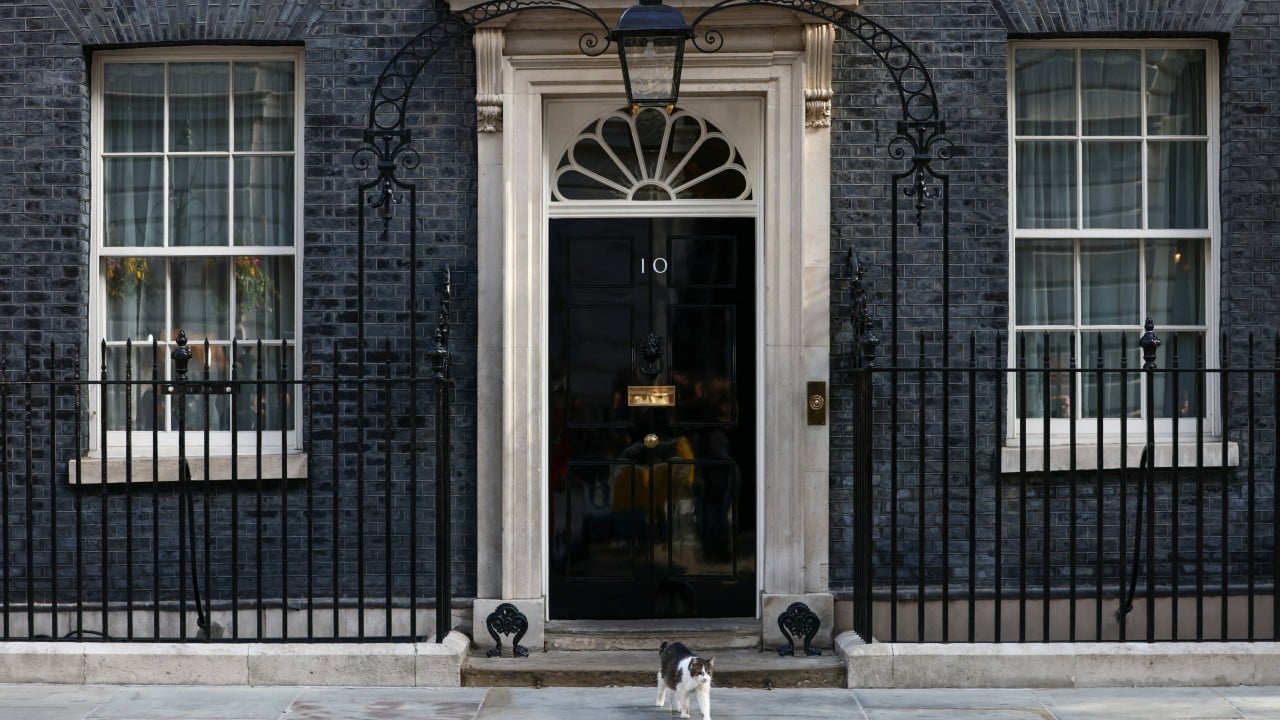
Keir Starmer is currently enduring a collapse in political authority that has arrived faster than any modern precedent. While his massive parliamentary majority suggests stability, the reality is a government trapped between a shrinking electoral base and an unforgiving economic reality. The Prime Minister is not just fighting a PR crisis over donations or internal staff friction; he is battling the realization that his path to power was built on a foundation of public apathy rather than a mandate for his specific brand of technocratic austerity. This survival struggle now hinges on whether he can pivot from managing decline to delivering tangible material gains before the next cycle of local elections.
The Mandate of Sand
The sheer size of the Labour majority hides a structural weakness. In the 2024 election, the party secured roughly 34% of the vote on a historically low turnout. This was not a "love match" between the British public and the Labour leader. It was a cold, clinical eviction of the previous administration.
The problem with winning by default is that the honeymoon period does not exist. Voters did not grant Starmer a period of grace; they granted him a period of probation. When a leader lacks a deep reservoir of ideological passion from their base, any perceived ethical lapse or policy failure acts as a corrosive agent. This explains why the "freebie" scandal—involving designer clothes and luxury penthouse stays—hit with such devastating force. For a politician who sold himself as the "adult in the room," the optics of being subsidized by wealthy donors felt like a betrayal of his core brand.
The Winter Fuel Gamble and the Logic of Pain
Starmer’s decision to means-test the Winter Fuel Payment was designed to be a display of "fiscal responsibility." The internal logic was straightforward. By making a difficult, unpopular decision early, the government hoped to prove its metal to the bond markets and create a clear distinction from the perceived chaos of the Truss era.
It backfired because it lacked a corresponding narrative of hope. If you are going to take away a universal benefit from the elderly, you must simultaneously offer a vision of what that sacrifice buys. Instead, the Treasury, led by Rachel Reeves, has doubled down on a grim rhetoric of "black holes" and "tough choices."
This strategy assumes that the British public has an infinite appetite for belt-tightening. It is a dangerous miscalculation. After fourteen years of stagnant wages and crumbling public services, "more of the same, but with better manners" is a hard sell. The government has framed its first budget as a necessary corrective, but if the investment doesn't materialize in visible ways—shorter NHS queues or lower energy bills—the fiscal credibility they are chasing will become a political noose.
Shadow of the Far Right and the Reform Threat
While the Conservative Party remains in a state of post-traumatic transition, the real threat to Starmer’s longevity comes from the populist right. Nigel Farage’s Reform UK has successfully positioned itself as the "voice of the forgotten," capitalizing on the vacuum left by Labour’s shift toward the center-ground.
Starmer is being squeezed. On one side, he must keep the city markets happy by maintaining strict spending limits. On the other, he must address the grievances of "red wall" voters who feel that neither major party represents their interests on immigration or the cost of living.
The summer riots were a warning shot. They revealed a volatile undercurrent of social fragmentation that cannot be solved by policing alone. If Starmer continues to govern as a managerial centrist while the underlying economic conditions of these communities remain bleak, he will find himself presiding over a country that is increasingly ungovernable. The threat isn't just a vote of no confidence in Westminster; it is a total withdrawal of consent from the electorate.
The Internal Friction and the Gray Problem
The departure of Sue Gray as Chief of Staff was the first public rupture in the Starmer machine. It signaled more than just a personality clash. It highlighted a fundamental tension between the "campaigning" wing of the party and the "governing" wing.
Gray was brought in to prepare the party for the machinery of Whitehall, but her presence became a lightning rod for discontented advisors and MPs who felt sidelined. The restructuring of his inner circle, bringing in Morgan McSweeney, suggests a move back toward a permanent campaign footing.
However, changing the personnel doesn't change the policy. Starmer has a reputation for being a "ruthless" political operator—someone who purged the left of his party to make it electable. But ruthlessness in opposition is not the same as effectiveness in power. In power, you need a North Star. Currently, the Starmer government feels like a collection of departments searching for a unifying theme.
The Housing Dilemma
If there is one area where Starmer can potentially break the cycle of decline, it is planning reform. The government’s commitment to "bulldozing" the planning system to build 1.5 million homes is their most radical and necessary gamble.
Success here would be a genuine turning point. Building houses creates jobs, lowers rents, and gives a generation of young voters a reason to support Labour. But it also involves a direct confrontation with the "NIMBY" (Not In My Back Yard) elements of the shires and even within his own backbenchers.
The pushback has already begun. Every time a new development is proposed on a patch of "grey belt" land, Starmer will face a local insurgency. If he wavers, he proves his critics right—that he is a man of process who flinches at the first sign of real conflict. If he pushes through, he risks losing the very "middle England" voters who gave him his majority. It is the definitive test of his leadership.
The Energy Sovereignity Play
Great British Energy, the proposed state-owned energy company, is the second pillar of the Starmer survival strategy. In theory, it addresses the two biggest concerns of the British public: the climate crisis and the astronomical cost of living.
The challenge is the timeline. Energy infrastructure takes years, often decades, to bear fruit. Starmer is operating on a four-year electoral clock. He needs to show that his "Green Prosperity Plan" isn't just an abstract investment vehicle, but something that puts money back into the pockets of workers in former industrial heartlands.
There is a risk that GB Energy becomes a bloated bureaucratic entity that fails to compete with the private sector or lower prices. If that happens, Starmer’s main claim to "active government" will be seen as a costly failure, further feeding the narrative that the state is incapable of solving big problems.
The Foreign Policy Trap
Starmer has sought to "reset" relations with the European Union, but he is doing so while maintaining a series of "red lines" that make a meaningful economic shift difficult. He has ruled out a return to the Single Market or the Customs Union, fearing that doing so would give the Conservatives a "Brexit betrayal" stick to beat him with.
This leaves him in a diplomatic limbo. He wants the benefits of closer trade without the political cost of integration. The EU, meanwhile, has little incentive to offer the UK a "bespoke" deal that undermines its own rules.
While he focuses on these marginal gains in Brussels, the global stage is becoming more volatile. The relationship with the United States, particularly with the looming possibility of a second Trump term, poses a systemic threat to British security and trade. Starmer’s instinct is to play the reliable ally, but a world of protectionism and trade wars doesn't favor a medium-sized island nation that has cut itself off from its largest trading bloc.
The Fragility of the Center
The history of the 21st century is littered with centrist leaders who rose to power on a wave of competence only to be swept away by populist anger. From Macron in France to the various "technocratic" governments in Italy, the pattern is clear: if you don't fix the underlying economic inequality, you are merely a placeholder for the next radical movement.
Starmer is currently acting as a placeholder. He has stabilized the ship of state after the lurching chaos of the Johnson and Truss years, but stabilization is not the same as progress. The public can sense the difference.
His survival depends on a shift in tone. The "doom and gloom" narrative served its purpose during the election to frame the Tories as failures. Now, it is becoming a self-fulfilling prophecy that suppresses consumer confidence and investment. To stay in power, Starmer must stop telling the country why things are bad and start showing them how they get better.
The Bottom Line for the Prime Minister
Starmer is not in immediate danger of a coup. His majority is too large and his internal rivals are too disorganized. But he is in danger of something worse: irrelevance.
A government that has a massive majority but lacks the courage to use it effectively is a government that is dying on the vine. The coming months will determine if Starmer is a transformative leader who can rebuild Britain’s social contract or if he is simply the final, exhausted gasp of an establishment that has run out of ideas.
The clock is ticking. The public's patience is not just thin; it is transparent. If the upcoming budget and the subsequent legislative push do not deliver a visible change in the quality of daily life, the "Starmer Project" will be remembered as a historical footnote—a brief, quiet interlude between eras of upheaval.
He must decide if he wants to be a manager or a builder. Managers are easily replaced. Builders leave a legacy that is harder to tear down.