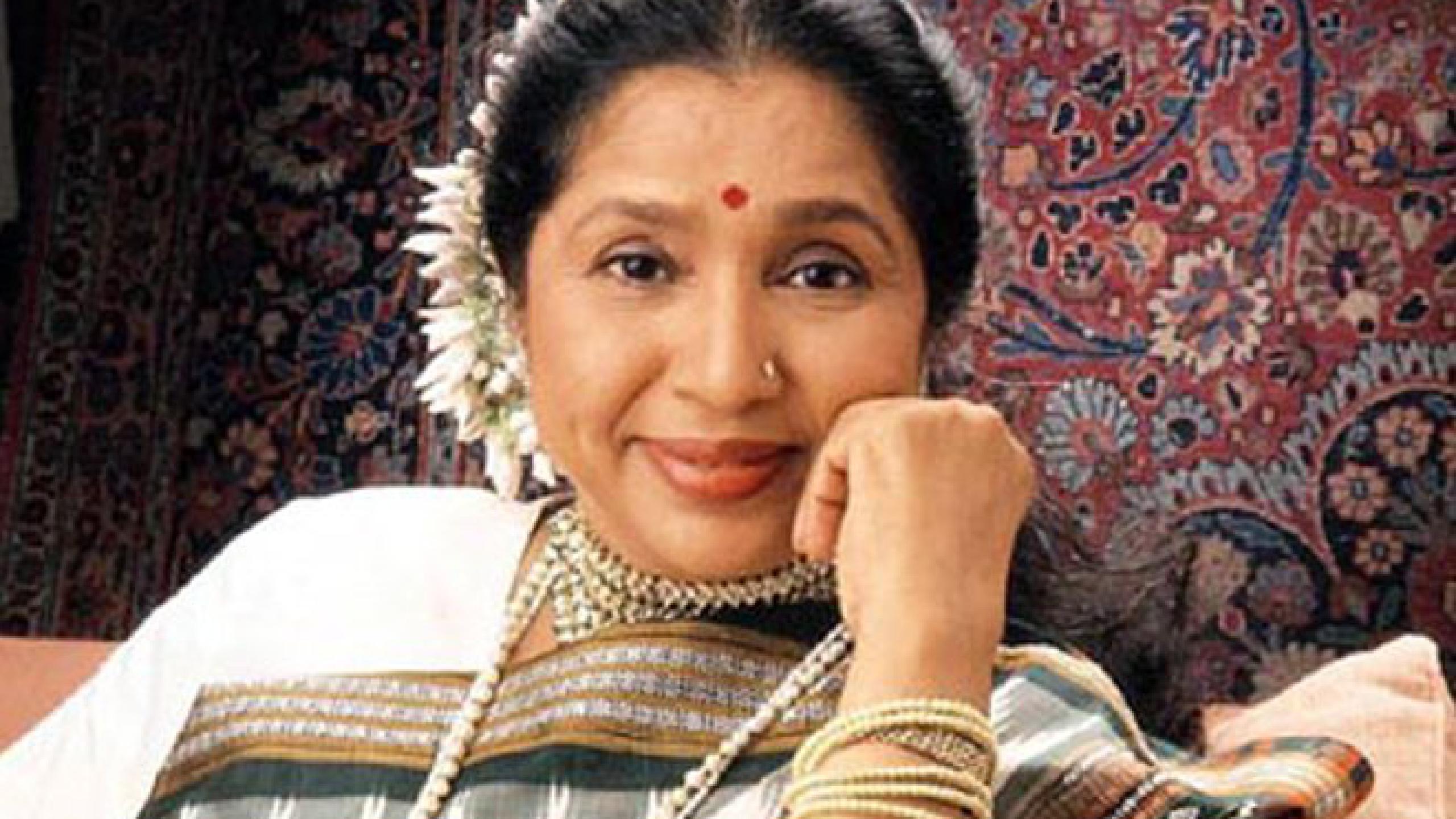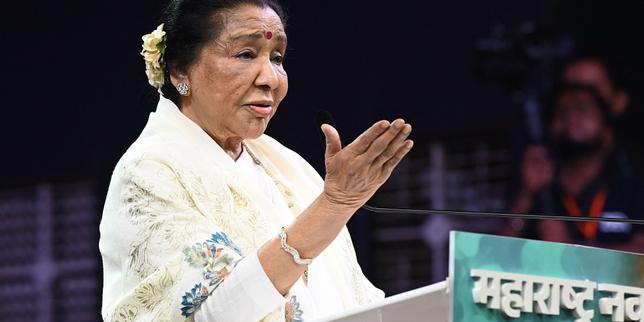
The voice that defined Indian playback singing for nearly eight decades has finally gone quiet. Asha Bhosle, the prolific artist who bridged the gap between classical purity and the gritty demands of modern pop, died at the age of 92. Her passing marks the end of an era that will never be replicated because the industry that birthed her no longer exists. She was the last surviving pillar of a golden age, a woman who didn't just sing songs but engineered the emotional soundtrack for over a billion people across multiple generations.
While the news of her death triggers a wave of predictable nostalgia, it also forces a reckoning with what we have lost. Bhosle was more than a singer. She was a survivalist in a cutthroat industry, a technical master who outlasted every contemporary, and a risk-taker who refused to be pigeonholed. She didn't just inherit the mantle of greatness; she fought for it, often in the shadow of her sister, Lata Mangeshkar, and in doing so, she became the more versatile of the two.
The Architect of the Versatile Vocal
To understand Bhosle’s impact, one must look past the sheer volume of her recordings. The Guinness World Record for the most studio recordings is a staggering statistic, but it doesn't explain the nuance. She possessed a vocal range that allowed her to pivot from a soulful ghazal to a high-octane cabaret number within the same recording session. This wasn't just talent. It was the result of a relentless work ethic and a deep understanding of the microphone as an instrument.
In the early days of Indian cinema, singers stood back from the mic, projecting their voices as if they were on a theater stage. Bhosle was one of the first to understand intimacy. She knew how to use breath, half-whispers, and sharp staccatos to convey character. When she sang for an actress on screen, she wasn't just providing a voice; she was providing a performance. She analyzed the actress's mannerisms and adjusted her tone to match. That level of technical detail is largely absent from the digitized, pitch-corrected landscape of modern music production.
Breaking the Mangeshkar Monopoly
The narrative of the Mangeshkar sisters is often sanitized for public consumption. The reality was much more complex. For decades, the Indian music industry was dominated by the "Mangeshkar Monopoly," a period where the two sisters were the only viable choices for any major film production. However, the internal dynamics were far from simple. While Lata Mangeshkar was the voice of the "ideal" woman—pure, virtuous, and ethereal—Asha was often handed the leftovers.
She was given the songs of the vamp, the cabaret dancer, or the "other woman." Instead of letting these assignments limit her, Bhosle used them to expand the boundaries of Indian film music. She embraced the sensual, the rebellious, and the experimental. This forced her to innovate. While her sister perfected the art of the perfect pitch, Asha perfected the art of the perfect mood. She collaborated with mavericks like R.D. Burman, her later husband, to introduce elements of jazz, rock, and Latin beats into the Indian mainstream. They broke the rules because they had to.
The R.D. Burman Partnership
The collaboration between Bhosle and R.D. Burman in the 1970s changed the sound of South Asia. They moved away from the heavy orchestral arrangements of the past and toward a more rhythmic, groove-based approach. Think of the track "Dum Maro Dum." It wasn't just a song; it was a cultural shift. Bhosle’s vocals were gritty and defiant, capturing the burgeoning hippie subculture in India. This period proved that she wasn't just a singer for hire but a co-creator of a new musical language.
The Technical Mastery of the Ghazal
Many critics dismissed Bhosle early in her career as a "pop" singer, unable to match the classical gravity of her peers. She spent the 1980s proving them wrong. Her work on the soundtrack for the film Umrao Jaan is a masterclass in the ghazal form. Under the direction of composer Khayyam, she lowered her pitch and focused on the intricate poetry of the lyrics.
The result was a haunting, restrained performance that remains a benchmark for the genre. It demonstrated a level of control that few singers ever achieve. She could strip away the flamboyance and deliver something raw and vulnerable. This ability to reinvent herself at the age of 50 is what kept her relevant while her contemporaries faded into the background.
The Business of Being Asha
Bhosle was a shrewd operator in an industry that often exploited its talent. She understood the value of her brand long before "personal branding" was a term. She expanded into the culinary world, opening a chain of successful restaurants across the globe. She treated her music career with the same professional rigor. She was known for her punctuality, her preparation, and her refusal to settle for a mediocre take.
In the recording studio, she was an alpha. She would often correct music directors on technical points of composition or suggest alternate phrasing that eventually became the hook of the song. She wasn't just a tool for the composer; she was an active participant in the creative process. This is why her songs have a longevity that others lack. There is a human thumbprint on every recording, an imperfection that makes it feel alive.
The Vacuum Left Behind
The death of Asha Bhosle isn't just the loss of a person; it’s the closure of a specific methodology of art. Today’s film music is increasingly fragmented. Singers are often recorded in isolation, their voices spliced together by engineers who prioritize perfect frequency over emotional resonance. We have moved into an era of "functional" music—songs designed to trend on social media for fifteen seconds rather than live in the memory for fifty years.
Bhosle’s career was built on the idea that a song was a story. She sang for the character, the situation, and the audience simultaneously. When she performed live, even in her 80s, she commanded the stage with a vitality that put younger performers to shame. She didn't need pyrotechnics or a dozen backup dancers. She just needed a microphone and her own unwavering sense of timing.
A Legacy of Defiance
If there is one lesson to be drawn from the life of Asha Bhosle, it is the power of the underdog. She spent the first half of her career being told she was the "second" sister, the backup option, the voice for the characters who didn't get the happy ending. She took that marginalization and turned it into her greatest strength. She became the voice of the modern Indian woman—someone who was complex, flawed, and fiercely independent.
She leaves behind a catalog of over 12,000 songs, but her true legacy is the path she cleared for every female artist who followed. She showed that you could be versatile without losing your soul. You could be a businesswoman without losing your art. You could grow old without becoming obsolete.
The industry will try to find a "new" Asha Bhosle, but they will fail. The conditions that created her—the rigorous classical training, the high-pressure environment of live-to-tape recording, the creative ferment of the 1960s and 70s—are gone. We are left with the recordings, the restaurants, and the memory of a woman who refused to be quiet until the very end.
Don't look for a successor; study the blueprint she left behind. It’s a map of how to survive in a world that is always looking for the next best thing. Asha Bhosle was never the next best thing. She was the only thing.