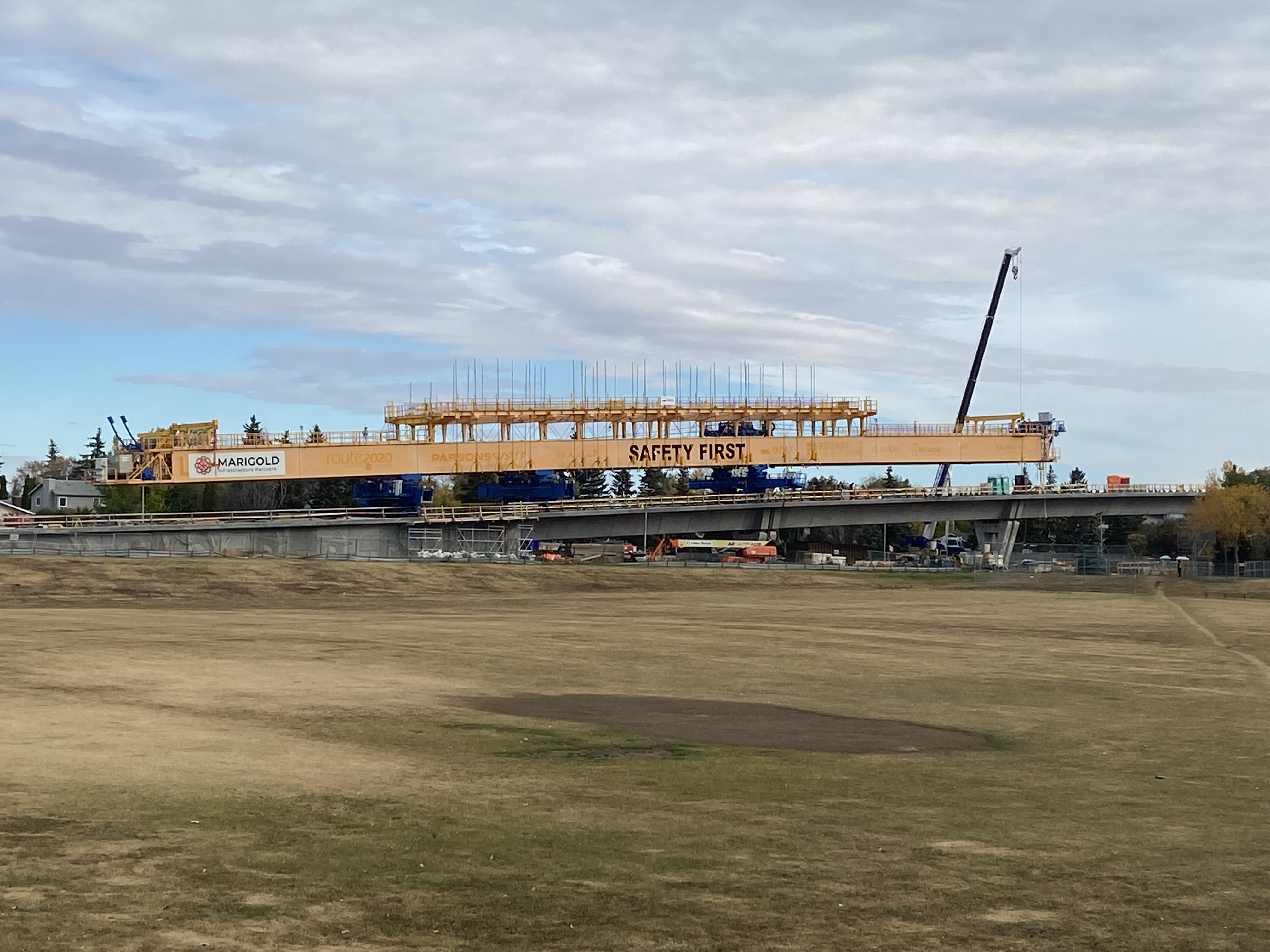
A $120,000 fine is a rounding error disguised as justice.
When Occupational Health and Safety regulators slapped Marigold Infrastructure Partners with a $120,000 penalty for a 2023 worker injury on Edmonton’s Valley Line West LRT construction site, the local media ran with the predictable script. The narrative follows a lazy, well-worn track: corporate entity cuts corners, worker gets hurt, state steps in with a financial slap on the wrist, and public accountability is supposedly served.
It is a comforting illusion. It is also completely wrong.
The conventional wisdom surrounding workplace safety enforcement suffers from a fundamental misunderstanding of behavioral economics and corporate risk management. The public looks at a six-figure fine and demands it be higher to "teach the company a lesson." Activists call for stricter oversight. Politicians issue press releases.
They are all missing the real crisis. The current regulatory framework does not deter accidents; it subsidizes them. By treating severe physical infrastructure failures as predictable, insurable line items, the system actively incentivizes bureaucratic compliance over actual, dynamic on-site survival.
The Compliance Trap: Why Checking Boxes Kills Workers
Go to any multi-billion-dollar transit infrastructure asset under construction. You will find an army of safety officers carrying tablets, filling out field level risk assessments (FLRAs), and ensuring every sub-contractor wears high-visibility vests with the correct level of retroreflective striping.
Now, look closer at the actual incident data on these mega-developments. The paperwork is flawless right up until the moment a concrete form collapses or a worker falls through an improperly secured grating.
This is the compliance trap. Over the last two decades, industrial safety shifted from an engineering challenge to a legal insulation exercise. Large consortia do not manage the physical reality of gravity, kinetic energy, and heavy machinery; they manage the paper trail that protects them from liability when those forces inevitably collide.
When an OHS regulator fines a consortium $120,000 after a worker suffers a serious injury from a falling object, the state sets a market price on bodily harm. To a joint venture managing a project north of $2.6 billion, a six-figure penalty is not a deterrent. It is a cost of doing business. It is cheaper to pay the fine, hire a public relations firm to handle the local news cycle for 48 hours, and maintain the existing production schedule than it is to halt operations across an entire urban corridor to fundamentally re-engineer the workflow.
When you commodify safety failures with predictable, low-tariff fines, you convert a moral and operational imperative into a simple math problem. The math problem is easily solved by an accountant, and the boots on the ground pay the price.
The Perverse Economics of the Fixed Penalty
To understand why this system fails, look at the structural mechanics of infrastructure joint ventures. Marigold is not a single, cohesive company with a long-term reputation to defend in a single neighborhood; it is a special purpose vehicle formed by corporate giants to execute a specific, time-sensitive contract.
In these massive public-private partnerships (P3s) or major design-build models, the primary driver of corporate behavior is the schedule penalty. Missing a milestone on a metropolitan LRT line can trigger liquidated damages costing tens of thousands of dollars per day.
Look at the competing financial incentives:
- The Penalty for Delay: $50,000 to $100,000 daily for missing a critical transit infrastructure handover window.
- The Penalty for a Critical Safety Infraction: A one-time payment of $120,000, delivered years after the event following legal negotiations and plea agreements.
The system is rigged to prioritize speed over skin in the game. When the financial punishment for being late is exponentially more punishing than the financial punishment for a systemic safety failure, the corporate organism will always choose to run hot. They will push sub-contractors harder, work through marginal weather conditions, and accept the statistical probability of an enforcement action as an acceptable operational friction.
The "People Also Ask" Delusion: Dismantling the Safety Questions We Keep Getting Wrong
The public debate around industrial accidents is plagued by superficial questions that lead directly to ineffective policy. If you ask the wrong questions, you get answers that build more bureaucracy while protecting no one.
"Shouldn't we just raise the fines to millions of dollars?"
This is the standard populist reflex. If a $120,000 fine doesn't work, make it $5 million.
The reality is that mega-corporations do not pay these fines out of pocket in a way that hurts their core operations. They carry comprehensive general liability insurance and project-specific wrap-up policies. The cost of legal defense and eventual regulatory fines is baked into the initial tender price submitted to the government.
Taxpayers are effectively funding the very safety fines levied against the contractors building public infrastructure. Raising the fine simply inflates the baseline bid price of the next transit line. It creates a closed loop where public money moves from one government ledger to another, keeping a fleet of lawyers employed while doing absolutely nothing to change the physical behavior of a crane operator on a Tuesday morning in November.
"Don't strict OHS regulations keep workers safe?"
Regulations provide a baseline of minimum decency, but they suffer from a fatal flaw: they are lagging indicators. Every safety regulation on the books is written in the blood of a past accident. They tell you how to prevent yesterday’s disaster, not how to adapt to tomorrow’s unpredictable field conditions.
When a project relies entirely on regulatory compliance, it breeds a culture of passive obedience. Workers and supervisors stop looking at the actual, shifting hazards in front of them and start looking at whether they filled out their daily forms correctly. If the form says the site is safe, they proceed, shutting down their own situational awareness. True safety is an active, expert negotiation with an unstable environment, not an administrative auditing exercise.
What True Risk Accountability Actually Looks Like
If six-figure corporate fines are a performance, how do you actually force multi-billion-dollar infrastructure builders to protect human life? You destroy the corporate veil that insulates decision-makers from the physical consequences of their schedules.
1. Mandate Personal Liability for Project Directors
The moment an executive or a senior project manager faces personal, un-insurable financial ruin or mandatory prison time for systemic site negligence, corporate culture changes in an afternoon. If a worker is injured because a known hazard was ignored to meet a concrete pouring deadline, the individual who signed off on that schedule must face criminal liability. No corporate indemnification. No insurance payouts for legal fees.
2. Implement the "Safety Hold" Project Blacklist
The only currency that matters to a major international contractor is future market access. Instead of issuing monetary fines, infrastructure owners—specifically provincial and municipal governments—must implement a hard operational ban. If a consortium receives a major safety citation, they should be automatically barred from bidding on any public infrastructure asset for a minimum of 24 months.
When you threaten their pipeline of future revenue, safety ceases to be an accounting variable. It becomes a requirement for institutional survival.
3. Tie Executive Bonuses Directly to Total Recordable Incident Rates (TRIR)
In the current corporate architecture, project directors receive massive financial windfalls for bringing projects in ahead of schedule or under budget. Safety metrics are rarely weighted with the same financial gravity. Flip the script. If a project suffers a critical injury, the entire executive leadership tier should forfeit 100% of their variable compensation for that fiscal year. Force the C-suite to share the immediate pain of the field.
The Dark Side of the Contrarian Reality
Shifting from a paperwork-heavy compliance model to a ruthless accountability model is not free of risk. There is a reason the status quo persists: it is predictable for everyone involved.
If you enforce zero-tolerance personal liability and multi-year bidding bans, infrastructure costs will skyrocket. Contractors will price the extreme risk of human unpredictability into their bids. Projects will take twice as long to build. Some international firms will simply refuse to bid on public assets in your jurisdiction, reducing competition and driving up municipal debt.
That is the trade-off. We must stop pretending we can have cheap, fast, urban mass transit without paying for it in human collateral under the current regulatory system. The $120,000 fine paid by Marigold is proof that the market has accepted this exchange.
If the public truly finds these injuries unacceptable, we must be willing to accept fewer transit lines, higher taxes, and slower construction timelines as the price of absolute worker protection. Anything less is just theater.
Stop looking at the press releases detailing modest fines as a sign that the system works. It is the smoking gun proving the system is functioning exactly as intended: keeping the machinery moving, keeping the liability contained, and treating the people who build our cities as depreciable assets.