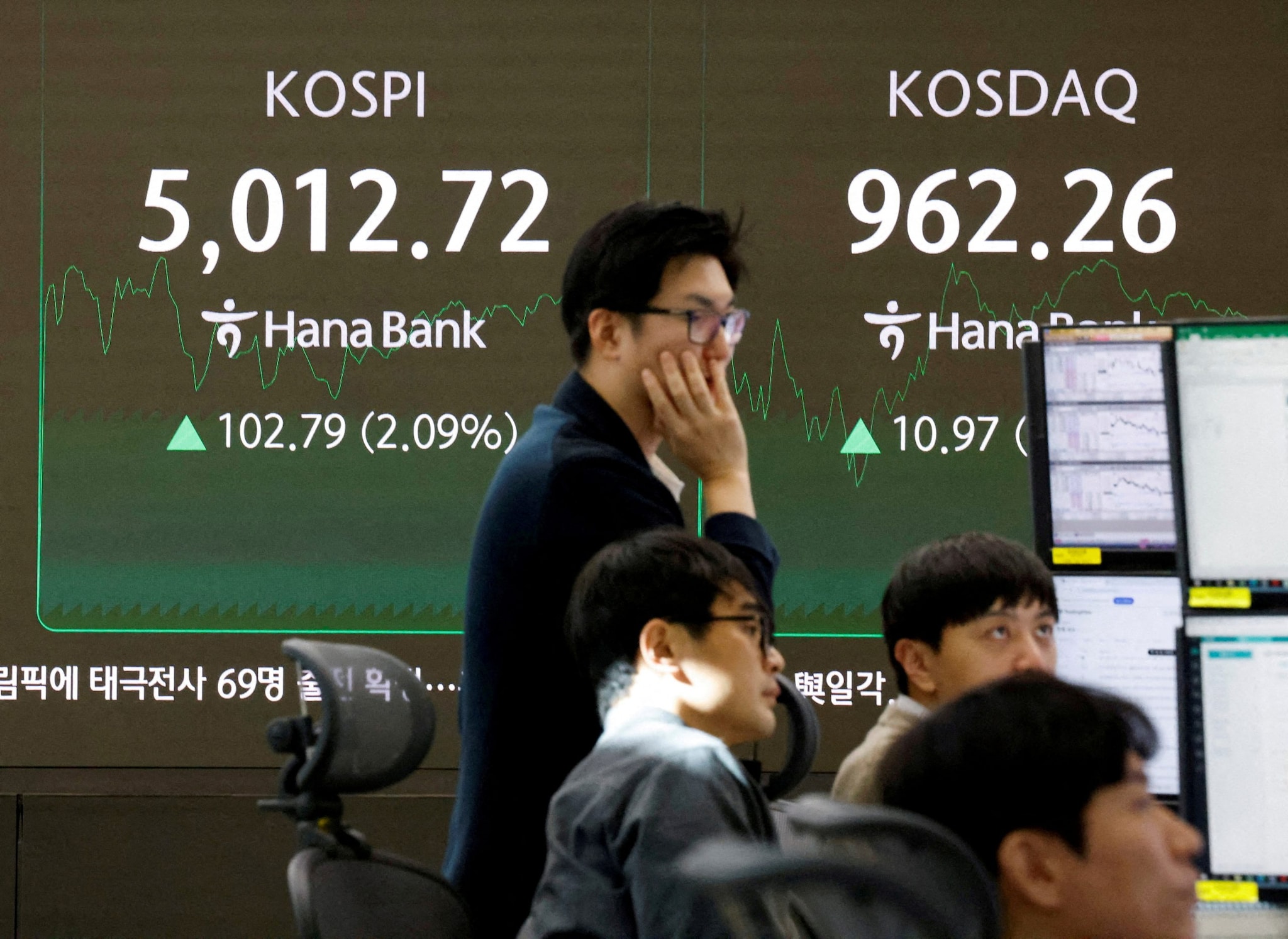
The global financial pecking order just got a massive shake-up. South Korea has officially overtaken the United Kingdom to become the eighth-largest stock market in the world. As of late April 2026, the total market capitalization of Korean-listed companies hit a staggering $4.04 trillion. Meanwhile, the UK is sitting at roughly $3.99 trillion.
If you haven't been paying attention to Seoul, you're already behind. This isn't just a minor flip on a spreadsheet. It's a fundamental shift in where global capital wants to be. Just two years ago, the UK market was twice the size of Korea's. Now? The "Korea Discount" is evaporating, and the London Stock Exchange is looking increasingly like a relic of a pre-AI world.
The AI Hardware Super Cycle
You can't talk about this surge without talking about chips. While the UK's index is heavy on "old economy" sectors like oil, mining, and banking, Korea is the hardware engine of the artificial intelligence revolution. Samsung Electronics and SK Hynix aren't just big companies; they're the gatekeepers of the high-bandwidth memory (HBM) that makes AI possible.
These two giants alone now account for over 40% of the KOSPI’s total value. Global investors have realized that software doesn't run on thin air. It runs on Korean silicon. This year alone, Korea’s total market cap surged by 45%. Compare that to the UK’s measly 3% growth in the same period. If you’re looking for growth, you aren't looking at London. You're looking at the memory-chip "super-cycle" powering every data center from California to Shenzhen.
Killing the Korea Discount
For decades, investors stayed away from Seoul because of the "Korea Discount." It was the idea that Korean stocks were permanently undervalued due to poor corporate governance, low dividends, and the looming shadow of the North. Basically, the chaebols (family-run conglomerates) were seen as opaque and unfriendly to minority shareholders.
That's changing fast. The "Corporate Value-Up Program," inspired by Japan's successful market reforms, is finally forcing companies to care about their stock price. President Lee Jae-myung’s administration has pushed through reforms that actually have teeth. We’re seeing:
- Increased dividend payouts.
- Aggressive share buybacks.
- New rules protecting minority shareholders during corporate splits.
It’s working. The KOSPI recently smashed through the 6,700 level. Analysts at Goldman Sachs have already hiked their year-end targets to 7,000, and some bulls are whispering about 8,000. When you combine the AI boom with a government that’s actually trying to make the market attractive, you get the kind of vertical move we’ve seen in 2026.
Why London is Losing the Fight
The UK's slide to ninth place is a sober reminder of what happens when a market fails to evolve. The London Stock Exchange has struggled with a lack of tech IPOs and a general sense of stagnation. While Korea was busy building the infrastructure for the next decade of computing, the UK was dealing with the long-tail effects of Brexit and a lack of high-growth domestic champions.
The data doesn't lie. Korea’s combined market cap (KOSPI and KOSDAQ) has expanded by over 50% year-to-date. In contrast, London has become a "value" market in a world that only wants to pay for "growth."
The Geopolitical Risk Reality Check
I'm not saying it's all sunshine and roses. Korea still faces massive geopolitical risks. Earlier this year, the Middle East conflict sent shockwaves through the KOSPI, causing a 20% correction in a matter of weeks. As an economy that imports almost all its energy, Korea is vulnerable to oil price spikes.
But here’s the kicker: the market bounced back almost immediately. It’s more resilient than people give it credit for. Investors are betting that the structural demand for AI hardware is stronger than the temporary pain of energy costs.
What You Should Do Now
If you’re still heavily weighted in European or UK equities, you’re missing the boat on the Asian re-rating. Korea isn't the "emerging market" play it used to be. It’s a core technology play.
- Watch the HBM market. Samsung and SK Hynix are the barometers for the entire global tech sector. If they’re winning, the KOSPI is winning.
- Follow the Value-Up disclosures. Companies that are voluntarily disclosing plans to improve their Price-to-Book ratios (PBR) are the ones seeing the biggest institutional inflows.
- Don't wait for a 10% dip. In this kind of momentum market, the dips are getting bought faster than ever.
The UK might have the history, but Korea has the future. The flip to eighth place isn't a fluke—it’s the new reality of the global economy. Stop waiting for the "old guard" to recover and start looking at the foundry of the world.