The defense establishment is currently obsessed with a shiny, multi-billion-dollar distraction.
Mainstream defense analysts look at South Korea’s maritime ambitions and repeat the same tired script: Seoul needs nuclear-powered attack submarines (SSNs) by the mid-2030s to counter North Korea’s ballistic missile submarines and keep pace with China. They point to the AUKUS deal, wring their hands over US-South Korea nuclear agreement restrictions, and lament the deep technological and diplomatic hurdles.
They are asking the entirely wrong question.
The debate shouldn't be about how South Korea can overcome US bureaucratic resistance to enrich its own naval fuel or build a 4,000-ton nuclear hull. The real question is why South Korea is trying to build a twentieth-century relic to fight a twenty-first-century war.
The conventional wisdom says nuclear submarines are the ultimate deterrent. The reality? Pouring trillions of won into a domestic SSN program is a strategic blunder that ignores geography, underestimates the evolution of sub-surface warfare, and misallocates capital that should be weaponizing the East Sea with asymmetric, uncrewed tech.
The Shallow Water Delusion
The foundational argument for a South Korean nuclear submarine relies on the cult of infinite endurance. Conventional diesel-electric submarines (SSKs), even those equipped with modern Fuel-Cell Air-Independent Propulsion (AIP) systems, have to surface or snorkel eventually. A nuclear reactor allows a boat to stay submerged for months, limited only by the crew's food supply.
That matters immensely if you are the United States or the United Kingdom, patrolling vast, deep oceanic trenches across the Pacific or Atlantic. It matters almost zero in the maritime choke points surrounding the Korean Peninsula.
The Yellow Sea (West Sea) features an average depth of just 44 meters. It is shallow, silt-heavy, and highly congested. Running a massive, hot-running nuclear submarine through these waters is tactical malpractice. Nuclear reactors cannot be turned off; they constantly require cooling pumps that emit a distinct, low-frequency acoustic signature. In shallow coastal waters, this makes them highly vulnerable to active sonar and magnetic anomaly detectors.
Even the East Sea (Sea of Japan), while deeper, is a confined basin. A South Korean SSN would not be hunting in the open ocean. Its primary mission would be tracking North Korean ballistic missile submarines (SSBs), like the Sinpo-class, or monitoring Chinese naval movements within the First Island Chain.
I have watched defense ministries burn billions chasing prestige assets because generals want to look their peers in the eye at international airshows and naval expos. A nuclear submarine is the ultimate status symbol. But status symbols do not win asymmetric conflicts. For the price of a single nuclear hull, Seoul could deploy an impenetrable, persistent network of hundreds of autonomous underwater vehicles (AUVs) and fixed acoustic arrays that would render the entire peninsula's waters a no-go zone for adversaries.
The AUKUS False Equivalence
Every defense op-ed advocating for a South Korean SSN inevitably references the 2021 AUKUS agreement. The logic goes: if Washington is willing to share top-tier naval nuclear propulsion technology with Australia, it should eventually do the same for Seoul, especially given the rising threat from Pyongyang.
This ignores the fundamental mechanics of geopolitical leverage.
Australia secured the AUKUS deal precisely because it is a non-nuclear weapon state with zero ambition to develop a sovereign nuclear arsenal, and because its geography demands long-range transit across the Pacific and Indian Oceans. Australia’s SSN program relies entirely on highly enriched uranium (HEU) supplied by the US or UK, sealed inside reactors that will last the lifetime of the ship without refueling. Australia does not enrich its own fuel.
South Korea is a completely different beast. The driving force behind Seoul’s push for an SSN isn’t just naval strategy; it is the broader, politically charged desire for "nuclear sovereignty." Many factions within the South Korean political establishment view naval nuclear propulsion as a backdoor to acquiring domestic uranium enrichment capabilities. Under the current US-South Korea Civil Nuclear Agreement (revised in 2015), Seoul is strictly prohibited from enriching uranium for military purposes, including naval reactors.
If Washington grants an exception to Seoul, it shatters the non-proliferation framework in East Asia. It signals to Tokyo and Taipei that the US nuclear umbrella is fraying and that domestic military enrichment is fair game. Washington will not allow it.
Even if South Korea attempts to bypass the US by using low-enriched uranium (LEU) sourced elsewhere—similar to the French Barracuda-class design—the engineering trade-offs are brutal. LEU reactors require refueling every 7 to 10 years. For a nuclear submarine, refueling means cutting the hull completely open, a process that takes years and sidelines the asset for a significant portion of its operational life. A small fleet of three or four LEU nuclear submarines means that, due to maintenance cycles and refueling, only one boat might be on active patrol at any given time.
Dismantling the "People Also Ask" Consensus
When you look at what the public and lower-level defense analysts ask about this topic, the flawed premises become obvious. Let's dismantle them one by one.
Can South Korea build a nuclear submarine without US permission?
Technically, yes. Economically and diplomatically, absolutely not. South Korea possesses world-class civilian nuclear expertise and top-tier naval shipyards like HD Hyundai Heavy Industries and Hanwha Ocean. They can physically build the hull and design a small reactor.
However, doing so without rewriting the US-South Korea nuclear agreement would violate international safeguards, trigger immediate diplomatic isolation, and potentially jeopardize the broader security alliance with the United States. Furthermore, South Korea relies on global supply chains for its civilian nuclear exports. Going rogue on a military reactor would devastate its lucrative commercial nuclear industry.
Why can't South Korea just use its existing diesel-electric submarines?
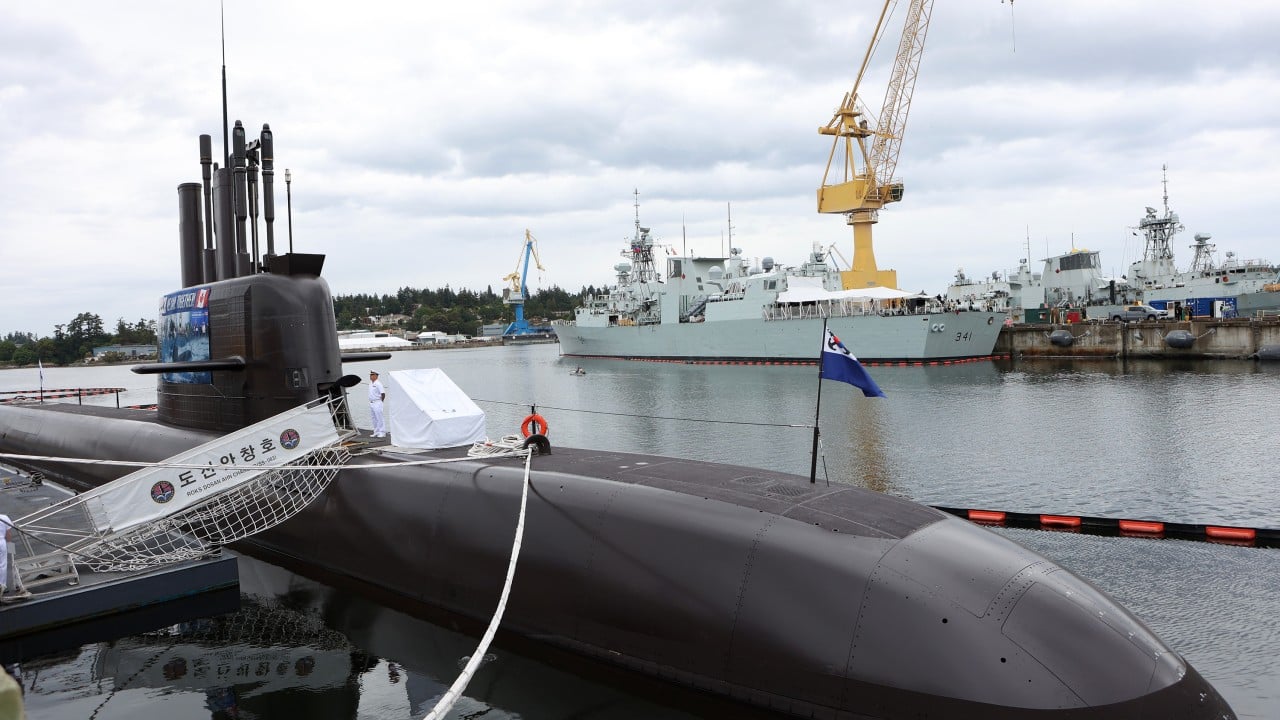
The critics claim conventional submarines are too slow and lack the endurance to track North Korean nuclear-armed submarines. This is an outdated view of modern SSK capabilities. South Korea's KSS-III (Dosan Ahn Chang-ho class) submarines are highly sophisticated. They feature advanced lithium-ion batteries and AIP systems that allow them to stay submerged for weeks at a time.
More importantly, they are incredibly quiet. When running on batteries, an SSK is virtually silent—far quieter than a nuclear submarine, which must constantly run coolant pumps. In the acoustic environments of the East and West seas, a silent, patient KSS-III waiting in ambush is far more lethal than an SSN hunting at high speed.
Wouldn't an SSN better protect South Korea from China?
No. If conflict breaks out in the Western Pacific, a solitary South Korean nuclear submarine would be a high-value target for China’s vast anti-submarine warfare (ASW) network, which includes Y-8 and Y-9 patrol aircraft, Type 056A corvettes, and extensive underwater sensor nets. A massive, expensive hull is a concentrated point of failure. If you lose one, you lose 25% of your strategic capability in that domain.
The Counter-Intuitive Alternative: Asymmetric Saturation
If the goal is to neutralize the North Korean maritime threat and deter Chinese incursions, the answer is not to copy the American blue-water navy blueprint. The answer is to turn the waters around the Korean Peninsula into an algorithmic minefield.
Instead of investing tens of billions into a handful of vulnerable, crewed nuclear submarines that won't see the water until 2035 or 2040, South Korea should pivot immediately to a strategy of decentralized, asymmetric saturation.
1. Distributed Autonomous Swarms
The future of sub-surface denial belongs to uncrewed, long-endurance autonomous vehicles. High-capability extra-large uncrewed underwater vehicles (XLUUVs) can be mass-produced at a fraction of the cost of an SSN. They do not need life support, they do not care about radiation shielding, and their loss carries zero political cost.
A fleet of fifty XLUUVs, equipped with advanced AI processing for passive acoustic detection and armed with lightweight torpedoes, could maintain a permanent, overlapping picket line outside every major North Korean naval base, including Sinpo and Mayang-do. They can sit on the seabed for months, consuming zero power, waking up only when a target signature is detected.
2. The Seabed Sensor Matrix
South Korea needs to heavily invest in its own version of the US Navy’s integrated undersea surveillance system. By blanketing the seabed of the East Sea choke points with stationary, fiber-optic acoustic sensor arrays and active/passive sonobuoys, Seoul can create a real-time, high-definition picture of every underwater movement.
When a target is identified by the static network, the data is relayed via satellite or drone to land-based maritime patrol aircraft or small, fast surface vessels armed with anti-submarine rockets. You do not need a nuclear submarine to kill an enemy submarine when you can strike it from the air using data gathered by the seabed.
3. Exploiting the KSS-III Platform
The KSS-III program is already a success. These boats are equipped with vertical launch cells capable of firing submarine-launched ballistic missiles (SLBMs) and cruise missiles. Rather than abandoning or slowing this program to redirect funds toward a speculative nuclear design, South Korea should maximize the KSS-III production line, integrating newer lithium-ion cell technologies to extend underwater endurance even further.
The Brutal Reality of the Trade-off
Every choice has a cost. Adopting this contrarian approach means giving up the prestige of owning an SSN fleet. It means accepting that South Korean naval officers won't get to participate in the exclusive "nuclear navy" club. It means acknowledging that a decentralized network of underwater drones lacks the cinematic gravitas of a 4,000-ton nuclear-powered hunter-killer.
But it works.
If South Korea persists on its current trajectory, it will spend the next fifteen years locked in bitter, exhausting diplomatic negotiations with Washington over enrichment percentages and safeguards. It will bleed trillions of won developing complex naval reactors that will inevitably face delays, cost overruns, and design flaws. And by the time the first South Korean nuclear submarine finally slides into the water in the late 2030s, it will enter an ocean completely dominated by autonomous sensor networks and loitering underwater munitions that can spot its reactor hum from miles away.
Stop building the navy your grandfathers wanted. The era of the large, crewed nuclear submarine as the sole arbiter of naval dominance in littoral waters is dead.
The defense establishment needs to wake up, cancel the nuclear sub vanity project, and start buying the autonomous swarm that will actually win the next war.