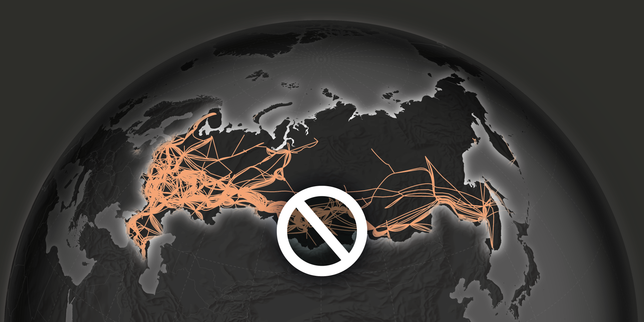
Western pundits love the "digital iron curtain" narrative because it’s easy. It’s a comfortable, Cold War-era trope that lets us believe the Kremlin is simply terrified of cat videos and democratic tweets. They look at Russia’s RuNet—the so-called sovereign internet—and see a "mise sous cloche," a bell jar designed to suffocate freedom. They are missing the point entirely.
This isn't about isolation for the sake of censorship. Censorship is a side effect, not the primary engineering goal. What the Kremlin is building is a high-availability failover system for a nation-state. While the West mocks the technical hurdles of the 2019 "Sovereign Internet Law," they ignore the reality that Russia is the first major power to treat the World Wide Web as what it actually is: a weaponized utility owned and operated by a foreign rival.
The Lazy Consensus of the Bell Jar
The standard argument suggests Putin wants to "cut Russia off" from the world. This is a fundamental misunderstanding of how modern economies function. You don’t cut yourself off from the global financial system or the technical infrastructure of the 21st century if you want to survive. You do, however, build a basement bunker if you think the house is going to burn down.
For years, the "Splinternet" has been framed as a tool for dictators to keep their citizens in the dark. But look at the technical architecture. Russia has spent billions moving its Domestic Domain Name System (DNS) onto local servers. They have forced ISPs to install Deep Packet Inspection (DPI) hardware. If the goal was just to block Instagram, you don't need a total architectural overhaul. You need that overhaul because you are preparing for the day the West decides to flip the "off" switch on the global routing tables.
The Weaponization of ICANN and the Root Servers
We have been told for decades that the internet is a borderless, neutral territory. That is a lie. The backbone of the internet—the IP address allocations, the root zone management, the certificate authorities—is overwhelmingly controlled by entities subject to US jurisdiction.
In 2022, Ukraine explicitly asked ICANN (the Internet Corporation for Assigned Names and Numbers) to revoke Russia’s top-level domains like .ru and .su. ICANN refused, citing neutrality. But the Kremlin isn't stupid. They saw how quickly the SWIFT banking system was weaponized. They saw how "neutral" tech giants like Apple and Google pulled services overnight.
Building a sovereign internet isn't about "cutting off" the world; it’s about de-risking dependencies. If your entire national economy runs on a stack you don't own, you aren't a sovereign nation; you’re a tenant. And the landlord just started an eviction proceeding.
Why Your "VPN Solution" is a Fantasy
Digital activists often claim that VPNs and Tor will always stay one step ahead of the state. I’ve watched engineers in Moscow and St. Petersburg grapple with this, and the reality is far grimmer for the optimists. When the state controls the "TSPU" (Technical Means of Countering Threats) at the ISP level, they aren't just blocking IPs. They are using AI-driven pattern recognition to identify VPN protocols in real-time.
They don't have to block every single user. They just have to make the friction so high that the average person gives up. This is the Friction Doctrine. You don't need to build a perfect wall; you just need to make the gate so heavy that only the most dedicated 1% will push it open.
The Myth of the Unplugged Nation
The competitor article claims Russia wants to "disconnect." Wrong. They want to be disconnect-proof.
Imagine a scenario where the US Treasury Department mandates that all US-based Certificate Authorities (CAs) revoke SSL certificates for Russian government websites. Suddenly, every browser in the world—Chrome, Safari, Firefox—shows a "Connection Not Private" warning for every Russian bank and utility. The domestic economy grinds to a halt because nobody can log in to pay their electricity bill.
Russia’s solution? Their own national Certificate Authority. They are forcing citizens to download state-issued root certificates. To a Western observer, this looks like a Man-in-the-Middle attack (which it is). To a Russian state engineer, it’s a life-raft. Without it, they are at the mercy of DigiCert or Let’s Encrypt.
The Cost of Autarky
Let’s be clear: this strategy has a massive downside that the Kremlin rarely admits. You cannot build a world-class tech ecosystem in a walled garden. Innovation thrives on the messy, unregulated flow of global ideas. By forcing the RuNet into a silo, Russia is sentencing its tech sector to a slow, agonizing provincialism.
They are trading innovation for resilience.
They are betting that in the coming decade, being able to keep the lights on and the banks running during a total cyber-war is more important than having the next big social media startup. It’s a grim, utilitarian calculation. It’s the "Prepper" mentality applied to a nation-state of 140 million people.
The New Digital Non-Alignment
We are moving toward a world where the "Global Internet" is a relic of the unipolar moment. China did it first with the Great Firewall, but China’s goal was market protectionism and social control. Russia’s approach is more desperate. It’s a "Sovereign Internet" born out of the realization that they are digitally outgunned.
The West views the internet as a playground for commerce and expression. Russia views it as a theater of war where they are currently losing. Every server moved to Moscow, every local DNS record cached, and every domestic encryption standard implemented is a sandbag against a rising tide of Western sanctions.
The Brutal Reality of Technical Sovereignty
If you want to understand the future of the internet, stop reading political science papers and start reading BGP (Border Gateway Protocol) routing logs. The internet is fragmenting because the trust that held it together has evaporated.
Russia’s "bell jar" isn't a prison for its people; it’s a fortress for its state. It will be slower, uglier, and more restrictive than the internet we know. But it will be theirs. In a world where digital interdependence has been weaponized, the Kremlin decided that being a hermit is safer than being a hostage.
The era of the global web is over. The era of the digital bunker has begun. Choose your side, but don't pretend the walls are only there to keep people in. They are built to keep the rest of us out.