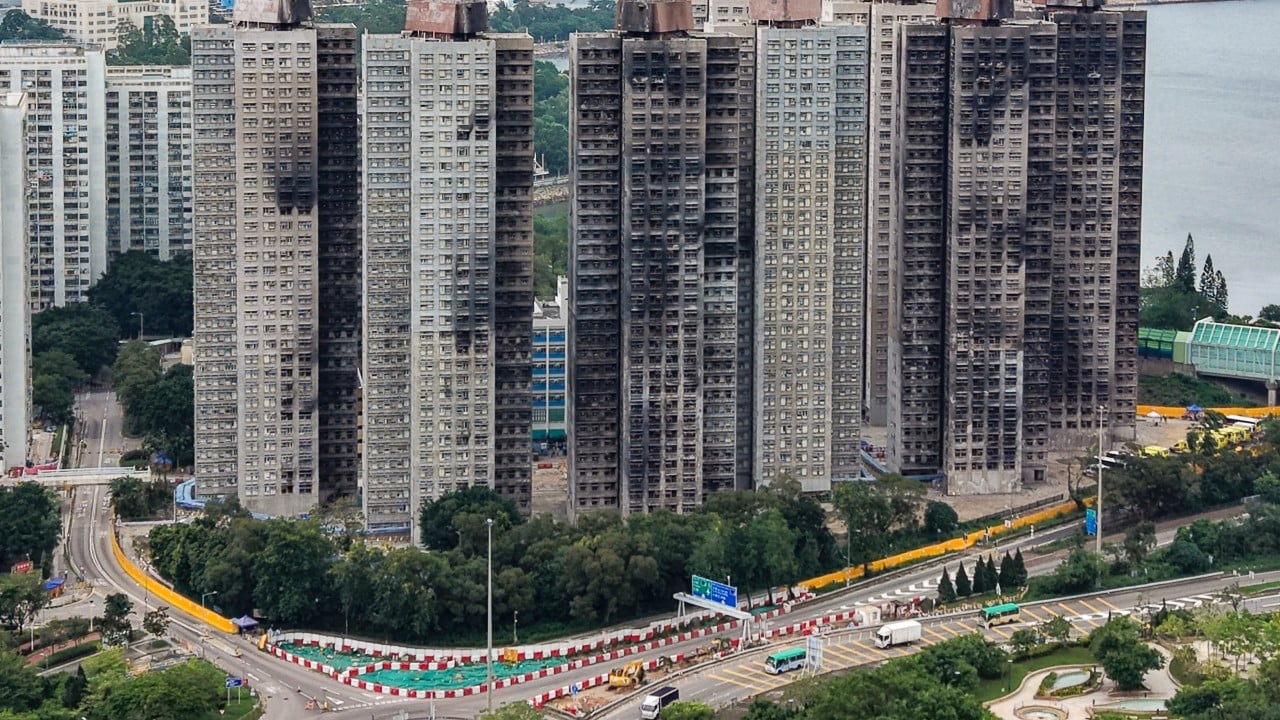
The narrative surrounding Hong Kong’s fire safety is broken. Every time a tragic blaze rips through a subdivided flat in Sham Shui Po or an aging commercial building in Jordan, the chorus of regulators, pundits, and media outlets sings the exact same tune. They claim Hong Kong needs a "mindset change." They argue that landlords, residents, and businesses simply need to care more, respect the law, and embrace a culture of compliance.
This is lazy, dangerous thinking.
The idea that preaching awareness will fix a structural crisis is a fantasy. Hong Kong does not have a mindset problem; it has an economic and regulatory architecture problem. People in high-density urban areas do not ignore fire hazards because they lack awareness. They ignore them because the current regulatory framework makes compliance financially impossible or logistically absurd for the city's most vulnerable structures.
If you want to stop buildings from burning, you have to stop treating fire safety as a moral crusade and start treating it as a hard engineering and economic equation.
The Myth of the Careless Landlord
The standard argument goes like this: greedy landlords slice up older apartments into coffin homes, ignore the Fire Services Department (FSD) notices, and pocket the rent while risking human lives.
Let’s dismantle this premise. While bad actors exist, the vast majority of non-compliance in the city's 10,000-plus pre-1987 buildings stems from structural and financial gridlock, not a lack of morals.
Under the Fire Safety (Buildings) Ordinance (Cap. 572), owners of old buildings are required to upgrade their properties to modern standards. This sounds reasonable on paper. In practice, it is a logistical nightmare.
I have walked through these decades-old "three-nil" buildings—structures with no owners' corporation, no residents' organization, and no property management company. To install a modern fire installation system, a building needs a rooftop water tank.
Now look at the engineering reality:
- Many older buildings lack the structural integrity to support the weight of a multi-ton concrete water tank on the roof.
- Installing the necessary piping requires tearing through privately owned units, sparking endless legal disputes among co-owners.
- The cost of these retrofits routinely exceeds hundreds of thousands of Hong Kong dollars per household.
For an elderly retiree living on a fixed income in an old tenement building, a HK$150,000 fire safety order levy is not an invitation to change their mindset. It is an eviction notice by proxy. When the government issues directions that are physically and financially impossible to fulfill, non-compliance is the only rational outcome.
Why Awareness Campaigns Are A Waste Of Capital
Every year, millions of dollars are poured into public fire safety campaigns, neighborhood drills, and colorful brochures. It makes bureaucrats feel productive. It does absolutely nothing to lower the risk of a catastrophic electrical fire in a subdivided unit.
The real threat in Hong Kong's old building stock is not that residents do not know fires are dangerous. The threat comes from overloaded electrical grids.
Built in the 1960s or 1970s, these buildings were designed for an era when an apartment ran a few lightbulbs and a radio. Today, that same apartment is carved into six subdivided units, each running an individual air conditioner, an electric water heater, and a microwave simultaneously. The building's original electrical mains are pushed far past their engineered capacity.
No amount of mindfulness or education prevents an overloaded, unmaintained electrical wire behind a plasterboard wall from sparking. Expecting impoverished tenants to solve this by "being more careful" is an abdication of governance.
The Subdivided Flat Paradox
Here is the uncomfortable truth that policymakers refuse to say out loud: subdivided flats are an essential organ of Hong Kong’s economy.
There are over 100,000 subdivided units housing more than 220,000 people. If the government strictly enforced every single fire safety regulation on the books tomorrow, half of these units would close overnight.
Where do those 110,000 people go? The public housing waitlist is already years long. Street sleeping numbers would skyrocket.
The enforcement agencies know this. Consequently, they operate in a state of perpetual compromise. They issue warnings, grant extensions, and look the other way because the alternative is a humanitarian crisis of homelessness. This creates a predictable cycle of tragedy, public outrage, temporary crackdowns, and eventual return to the status quo.
Stop Funding Awareness, Start Funding Infrastructure
If we want to actually solve this, we must abandon the moralizing and deploy aggressive, unconventional interventions.
1. The Block-by-Block Micro-Grid Overhaul
Instead of demanding that fragmented, low-income owners upgrade individual building infrastructure, the government must step in as the master engineer. Power companies like CLP and HK Electric should be subsidized to completely overhaul the external electrical risers of entire blocks of old buildings, bypassing the internal gridlock. If you cannot fix the building's internal wiring easily, you must provide a safe, heavy-duty external power supply directly to the floors.
2. Pragmatic, Lowered Engineering Thresholds
The FSD must stop demanding perfection at the expense of safety. If a building cannot support a massive rooftop water tank, stop issuing fines for not having one. Instead, mandate and subsidize alternative localized suppression systems, such as high-pressure water mist systems or residential sprinkler systems connected directly to the city’s mains water supply, even if it requires changing municipal water bylaws. A system that is 70% effective but actually installed is infinitely better than a 100% effective system that remains on a blueprint because it is too heavy for the roof.
3. Government-Backed Receivership for Fire Retrofits
When a "three-nil" building fails to comply with Cap. 572, the government should not waste years trying to track down absentee owners or prosecuting 80-year-old residents. The Urban Renewal Authority should have the power to step in, execute the fire safety upgrades immediately under a statutory receivership model, and place a charge on the property titles to recover costs whenever the units are sold or inherited.
The Downside No One Wants To Face
Implementing these harsh, infrastructure-first policies will not be clean. It will require massive public expenditure. It will mean the government taking over private property rights in ways that will make free-market purists uncomfortable. It will mean acknowledging that some older buildings are simply beyond saving and must be aggressively resumed and demolished, forcing the relocation of residents.
But the alternative is what we have right now: a recurring tragedy where lives are lost, followed by a press conference where officials tell us that everyone just needs to think differently about fire safety.
Stop asking for a mindset change. Start changing the pipes, the wires, and the laws. Everything else is just noise.