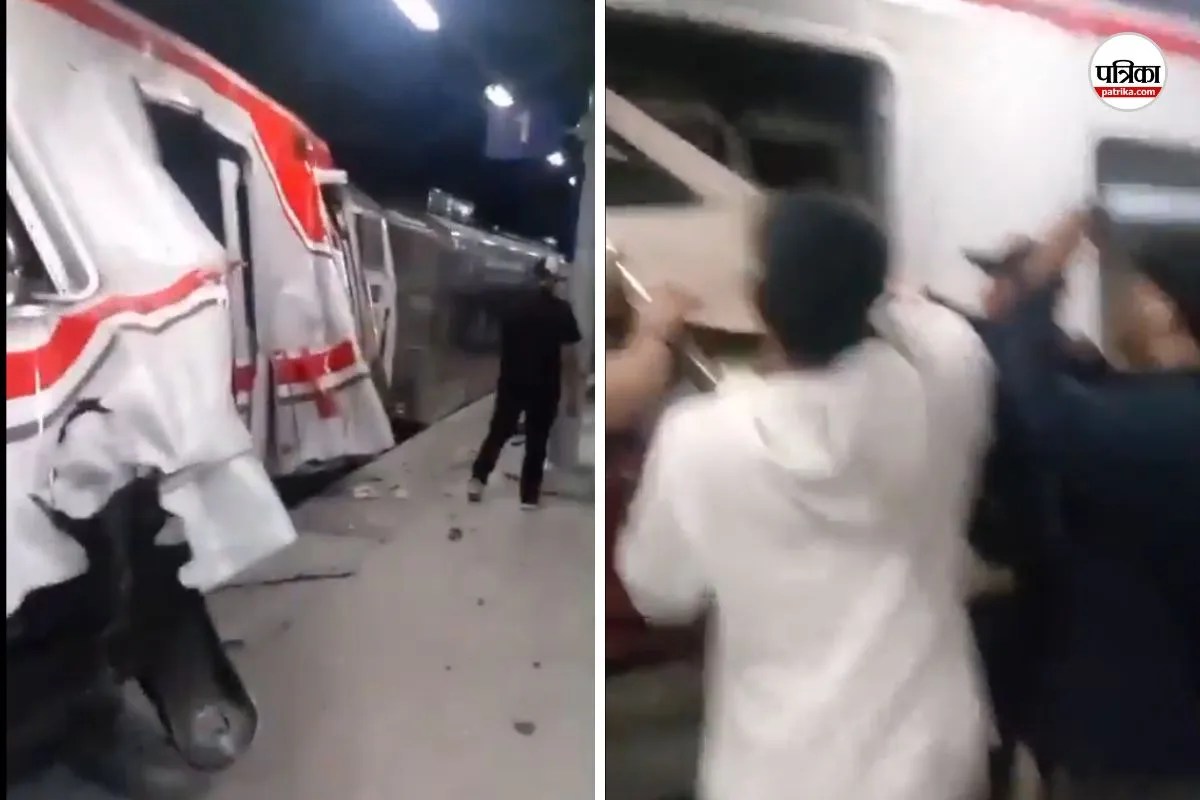
The headlines are bleeding again. Fourteen dead in Indonesia. Two trains mangled into a heap of scrap metal because they occupied the same space at the same time. The media cycle is predictable: tragedy, "thoughts and prayers," a vague promise of an investigation, and then silence until the next derailment.
But here is the cold truth that nobody wants to print: This wasn't an accident. It was an inevitability born from a global obsession with "modernization" that ignores the foundational grit of safety systems. We are enamored with the sleek aesthetics of high-speed rail and gleaming new stations, yet we treat signaling systems and human-error redundancies as "boring" overhead.
If you think a head-on collision in 2026 is a freak occurrence, you are fundamentally misreading how transport networks actually function.
The Death of Common Sense in the Digital Age
The "lazy consensus" surrounding the Indonesia crash is that it was likely a "technical glitch" or "human error." This is a coward's explanation. It suggests that if we just fix one sensor or fire one driver, the system becomes safe.
It won’t.
In reality, the failure is systemic. When two trains hit each other head-on, it means the fail-safes didn't just stumble; they were nonexistent or bypassed. We live in an era where we can track a $12 Uber across a city with meter-level precision, yet we manage multi-billion dollar rail networks using logic that hasn't evolved significantly since the mid-20th century.
Most developing nations—and quite a few developed ones—are trapped in a "Hardware First" trap. They buy the flashy locomotives. They lay the heavy track. They cut ribbons in front of cameras. But the invisible architecture—the Automatic Train Protection (ATP) systems—is often treated as an optional upgrade or is poorly integrated with legacy tracks.
I’ve spent years looking at infrastructure budgets where safety tech is the first thing to get "optimized" (read: slashed) to keep a project under a political deadline. When you see 14 bodies being pulled from a wreck, you aren't looking at a mechanical failure. You are looking at a budget spreadsheet where safety lost to optics.
The Myth of Human Error
Stop blaming the driver.
"Human error" is the most overused phrase in the industry. It is a convenient rug under which we sweep incompetent management and cheap equipment. A properly designed rail system should be "Human-Proof."
If a driver misses a signal, the train should stop. If a driver loses consciousness, the train should stop. If two trains are on a collision course, the network should be physically incapable of providing power to those tracks.
The fact that these trains were able to meet face-to-face proves that the "human" was the only safety layer present. That isn't a transportation system; it's a high-stakes game of chicken funded by taxpayers.
Consider the mechanics of a modern Positive Train Control (PTC) system. It uses GPS, wireless data, and onboard computers to monitor movements. If a train exceeds its authority, the brakes apply automatically. It is binary. It is certain. Indonesia, like many nations rushing to compete in the global market, has a patchwork of these technologies. Some lines have them; some don't. Some trains have the hardware, but the tracks lack the transponders.
This "interoperability gap" kills people.
The High-Speed Mirage
We are witnessing a dangerous trend: the High-Speed Mirage. Governments in Southeast Asia are sprinting toward bullet trains to signal "developed" status. They want the prestige of 300 km/h travel while the existing "low-speed" network—the one the actual working class uses—rots from neglect.
Imagine a scenario where a country spends $5 billion on a single high-speed line between two major hubs, while the rest of the national network relies on manual switching and radio-based signaling. You end up with a two-tier society where safety is a luxury good.
The Indonesia collision happened on the "boring" tracks. These are the arteries of the economy, yet they are treated like the appendix. We don't need more "state-of-the-art" flagship projects. We need a boring, relentless focus on the 95% of the network that hasn't been upgraded since the 1990s.
Why "Fixing" It Usually Fails
The typical response to a crash like this is a "Safety Audit."
In my experience, these audits are theater. Consultants come in, write a 200-page report that blames "culture," suggests "re-training," and recommends buying more sensors from the same companies that failed to provide a cohesive system in the first place.
The advice you’ll hear from the "experts" is to increase oversight. That’s wrong. More bureaucracy just creates more layers of people to sign off on mediocrity.
What actually works:
- De-politicize the Deadlines: Most crashes happen because maintenance windows are shortened to keep up with aggressive commercial schedules. If the track isn't ready, the train doesn't run. Period.
- Open-Source the Safety Data: If rail authorities had to publish real-time signaling health data to a public dashboard, the pressure to fix "minor" glitches would be immense. Sunlight is the best antiseptic for negligence.
- Mandatory Fail-Passive Systems: We need to move away from systems that require an active "Go" signal to stay safe. The default state of every track segment must be "Stop" unless a continuous, encrypted "Safe to Proceed" signal is being received.
The Cost of the Status Quo
Let’s talk about the money, because that’s the only language that moves the needle. A crash of this magnitude doesn't just cost lives; it costs hundreds of millions in litigation, equipment loss, and economic friction.
The irony? Installing a comprehensive, network-wide ATP system often costs less than the total economic fallout of two major collisions. But because the cost of the system is a line item today, and the cost of the crash is a "maybe" tomorrow, we choose the crash.
We are literally gambling with lives to save a percentage point on a quarterly infrastructure report.
If you are a traveler, a citizen, or an investor, you need to stop asking if the trains are "fast" or "new." Start asking if they are deterministically safe. Ask if the signaling system can override a tired driver. Ask why we are building 5G towers while our trains are still talking on 20th-century radio bands.
The Indonesia tragedy wasn't a failure of technology. It was a failure of will. It was a choice to prioritize the appearance of progress over the reality of physics.
Every time we call this an "accident," we give the people in charge a free pass. It was a predictable outcome of a system that values the ribbon-cutting ceremony more than the signal box.
If you want to stop the next head-on collision, stop looking at the wreckage. Start looking at the budget.