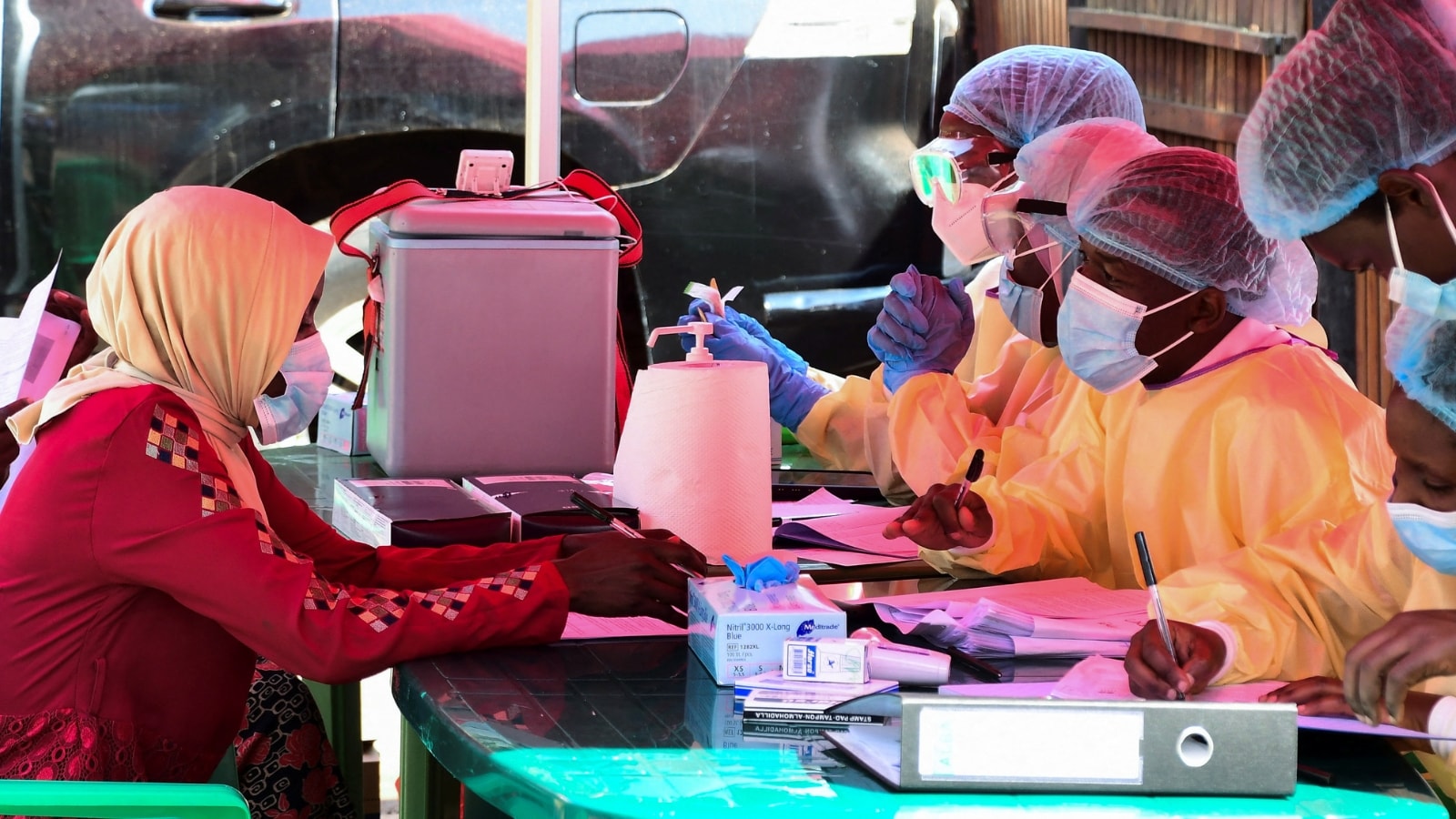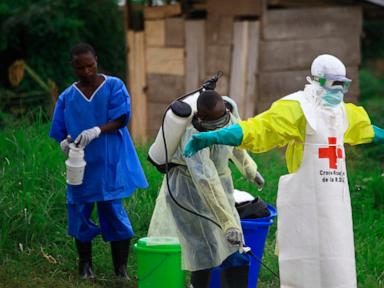
The international press is running its standard biosecurity panic script. Headlines are flashing across screens warning of a terrifying new Ebola outbreak in the Democratic Republic of the Congo. The panic merchants highlight the macabre numbers: 246 suspected cases and 65 deaths tearing through the remote Ituri province. The Africa Centres for Disease Control and Prevention calls an emergency meeting. Global health officials ring the alarm bells about the proximity to Uganda and South Sudan. The public reads between the lines and prepares for another global existential threat.
It is a completely flawed reading of the situation.
The mainstream narrative treats every Ebola flare-up like the start of a Hollywood contagion movie. They focus on the biological terror of the pathogen, obsessing over case fatality rates and the microscopic structure of the virus. But after analyzing viral outbreaks for over a decade, I can tell you that treating this as a purely virological emergency completely misses the mark.
The 65 deaths in Ituri are not a failure of medicine, nor are they proof of a hyper-resilient super-bug. They are the predictable, mathematical consequence of a broken containment playbook that refuses to account for human geopolitics and local economics. If you want to understand why Ebola keeps killing people in the eastern Congo, you need to look at the gold mines of Mongwalu and the local rebel groups, not the viral genetic code.
The Flawed Premise of the Border Panic
Mainstream reports focus heavily on geography. They point at the map, notice that Ituri sits near the borders of Uganda and South Sudan, and sound the alarm about international spread. This is a classic example of looking at the wrong data point.
Viruses do not care about Westphalian sovereignty or lines drawn on a map. They care about human behavior. The risk of transmission in eastern Congo is not driven by simple proximity; it is driven by the specific mechanics of mining-related mobility.
Mongwalu is an artisanal gold mining hub. It attracts a highly transient, young, and economically desperate workforce. These miners do not travel along conventional highways or pass through official border checkpoints where health screening occurs. They move through informal bush tracks, dictated by security dynamics and shifting territorial control between the Congolese military and various armed factions like the ISIS-linked Allied Democratic Forces (ADF) or CODECO.
When an outbreak hits a mining community, the traditional containment strategy of contact tracing completely collapses. Standard epidemiologists expect to sit down with a patient, list their family members, and trace their steps. Try doing that in an informal mining camp where workers use pseudonyms, move every forty-eight hours, and actively avoid anyone resembling an official authority figure due to tax evasion or fear of rebel activity.
The lazy consensus screams for tighter border control. But closing an official border post does absolutely nothing to stop an undocumented gold miner from walking across a porous jungle border into Uganda to sell a pouch of dust or visit family. The infrastructure is not just poor; it is non-existent.
The Illusion of Vaccine Salvation
Whenever Ebola emerges, the automatic response from global health bodies is to talk about deploying medical countermeasures. We hear about the Ervebo vaccine or monoclonal antibody treatments like Ebanga and Inmazeb. The underlying assumption is that if we can just fly in enough doses, the problem goes away.
This reliance on a biomedical silver bullet ignores the brutal reality on the ground in health zones like Rwampara and Mongwalu.
First, consider the cold chain logistics. The most effective Ebola vaccines require ultra-cold storage, often around $-80^\circ\text{C}$ to $-60^\circ\text{C}$. Ituri province is an infrastructure desert. Power grids are sporadic at best and entirely absent in the mining camps. Bringing sophisticated refrigeration equipment into an active conflict zone where armed groups regularly ambush supply convoys is an administrative nightmare.
Second, the current biological reality of this specific outbreak complicates things further. Early laboratory data from Africa CDC indicates the presence of a non-Zaire strain of the virus.
Why does this matter? Because our most deployed, stockpiled vaccine—Ervebo—is highly specific. It targets the Zaire ebolavirus glycoprotein. If genomic sequencing confirms that Ituri is dealing with a Sudan strain or a completely distinct variant, the existing vaccine stockpile becomes functionally useless.
We saw this exact problem play out during the 2022 Sudan ebolavirus outbreak in Uganda. Public health agencies spent weeks debating which candidate vaccines to deploy while the virus ran its course. Believing that a vaccine will save Ituri right now is a dangerous delusion. The defense must rely on old-fashioned, structural public health measures, not high-tech pharmaceuticals.
The Conflict Trap and Health Worker Toll
You cannot separate epidemiology from warfare in eastern Congo. The media treats the presence of the M23 rebel group or ADF militants as mere background noise—a secondary problem to be managed alongside the health crisis. In reality, the conflict is the primary amplifier of the disease.
When armed groups launch assaults, they cause mass population displacement. Thousands of people flee into overcrowded, unsanitary temporary camps or fade into the deep forest. This movement completely blinds surveillance teams.
Furthermore, the militarization of the region creates a deep, justifiable distrust of outsiders. When medical teams arrive in heavily armored SUVs, flanked by government soldiers, the local population does not see aid. They see the state apparatus that has failed to protect them from massacres for decades.
This distrust manifests as resistance. During the massive 2018–2020 eastern Congo outbreak, which claimed over 2,200 lives, treatment centers were repeatedly burned down and health workers were assassinated. The current outbreak has already claimed the lives of healthcare workers in laboratory-confirmed cases.
This is the most tragic, repetitive failure of the global response template. We keep sending medical personnel into complex security environments without changing how we engage the community. If you do not secure the trust of the local community leaders and the miners themselves, your sophisticated isolation tents will sit empty while people die in the bush.
Dismantling the Public Health Myths
Let us address the standard questions that fill the public health echo chamber during these events, using a dose of harsh realism.
- Is this the start of a global pandemic? No. Ebola is horrific, but its transmission dynamics make it a poor candidate for a rapid global sweep. It requires direct contact with bodily fluids. It does not hang in the air like influenza or SARS-CoV-2. The danger is acute, localized, and devastating to the immediate region, but the fear of it shutting down international airports is an exaggeration used to loosen Western purse strings.
- Why can't the government just isolate the health zones? Because the Congolese state does not possess a monopoly on violence or movement in Ituri. Quarantining an area requires a disciplined, trusted security force. Using a poorly paid, abusive military to enforce a medical cordon leads to bribery, human rights violations, and a complete breakdown of public cooperation. People will simply pay a soldier to let them pass through a checkpoint, rendering the quarantine useless.
- What actually works to stop the spread? Giving local communities agency and resources directly. Instead of shipping international experts to set up massive, centralized Ebola Treatment Units (ETUs) that terrify locals, funds should be diverted to training local community health workers who already live in the mining camps. Decentralized, smaller isolation structures managed by familiar faces face far less violent resistance and catch cases much faster.
The Real Cost of Institutional Inertia
The global health establishment suffers from a profound lack of imagination. They are comfortable dealing with viruses under microscopes because that involves clear variables. They are completely out of their depth when forced to deal with the messy realities of artisanal gold supply chains and multi-faction guerrilla warfare.
I have watched international organizations waste millions of dollars on high-level coordination meetings in luxury hotels in Kinshasa or Geneva while field teams on the ground lack basic personal protective equipment (PPE) and clean water. They write beautiful strategy documents filled with corporate jargon about cross-border cooperation, completely ignoring that the border guards haven't been paid a living wage in months and have every incentive to accept bribes from traveling miners.
The downside to moving away from this top-down, centralized model is that it requires ceding control. It means trusting local actors with funding and decision-making power. It means admitting that international agencies cannot manage an outbreak via remote control from a thousand kilometers away. It requires accepting that an outbreak response in a conflict zone must look more like a grassroots diplomatic mission and less like a military occupation.
Until the playbook changes, the cycle will repeat. The virus will spill over from an animal reservoir, it will find its way into a vulnerable, highly mobile population segment, and it will exploit the structural violence of the region. The international community will express shock, send a wave of emergency funding, and wait for the outbreak to burn itself out through sheer attrition before declaring victory.
The 65 dead in Ituri are not a warning sign of a changing virus. They are a monument to our refusal to learn from the sixteen outbreaks that came before it. Stop looking at the viral genome for answers. The pathology that matters is institutional.