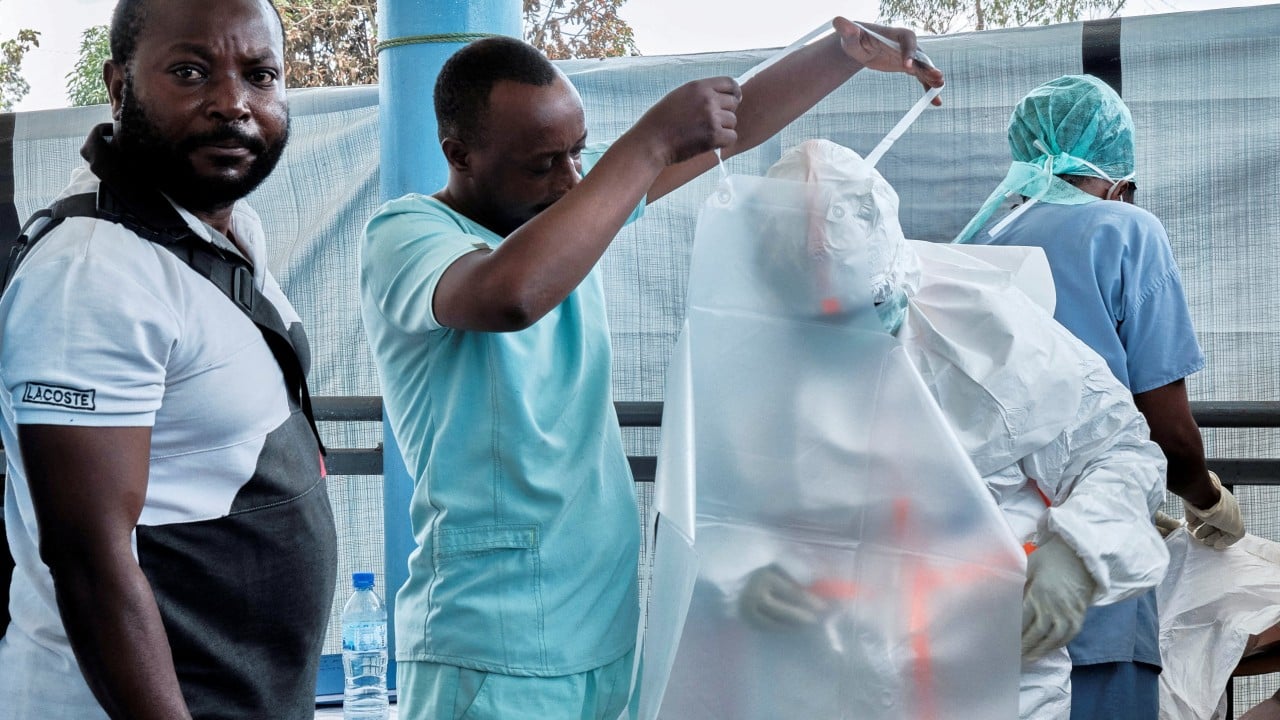
The global biosecurity apparatus is currently undergoing a process of rapid de-investment, transitioning from a state of emergency mobilization to a state of systemic neglect. This cycle—characterized by "panic and neglect"—is not merely a failure of political will but a failure of structural risk modeling. Governments are treating pandemic prevention as a discretionary line item rather than a fundamental infrastructure requirement. By dismantling the surveillance networks and manufacturing capacities established during the COVID-19 era, the state is effectively subsidizing the cost of the next biological catastrophe through future economic paralysis.
The Three Pillars of Preventative Decay
The erosion of pandemic readiness occurs across three distinct vectors: surveillance granularity, industrial elasticity, and the institutional memory of public health departments.
1. The Erosion of Pathogen Surveillance
Effective prevention relies on high-resolution data. During the peak of the recent pandemic, genomic sequencing reached unprecedented levels of scale. Today, that data pipeline is collapsing. When a government reduces funding for wastewater surveillance and clinical sequencing, it increases the "detection lag"—the time between the first spillover event and the moment of realization.
A delayed response is exponentially more expensive than an immediate one. If the detection lag increases from 14 days to 45 days, the required intervention shifts from localized containment to a national shutdown. The current reduction in testing infrastructure represents a tactical blind spot where we no longer possess the tools to differentiate between seasonal influenza, emerging avian flu variants, or novel synthetic pathogens.
2. The Loss of Industrial Elasticity
A primary lesson of the 2020 supply chain crisis was that "Just-in-Time" manufacturing is incompatible with biological emergencies. Pandemic prevention requires "Warm-Base" manufacturing—facilities that remain operational at low capacity during inter-pandemic periods but can scale to mass production within weeks.
By allowing specialized manufacturing lines for Personal Protective Equipment (PPE), ventilators, and mRNA precursors to go dormant, the state guarantees a return to global bidding wars and logistics bottlenecks. The cost of maintaining these facilities in a standby state is a fraction of the cost of rebuilding them during a period of peak demand and hyper-inflation.
3. The Institutional Brain Drain
The most critical component of biosecurity is human capital. Public health officials, epidemiologists, and lab technicians are exiting the public sector due to burnout and political hostility. This creates a bottleneck of expertise. When the next crisis hits, the lack of experienced personnel to manage distribution logistics and data interpretation will lead to operational friction, regardless of how much capital is eventually injected into the system.
The Cost Function of Reactive Governance
To understand the fiscal irresponsibility of defunding prevention, one must examine the cost function of a pandemic. The financial burden is not limited to healthcare expenditures; it encompasses labor force contraction, supply chain volatility, and the long-term devaluation of human capital.
$C_{total} = C_{h} + C_{e} + C_{o}$
In this model, $C_{h}$ represents direct healthcare costs, $C_{e}$ represents economic loss from decreased productivity, and $C_{o}$ represents the opportunity cost of redirected resources. When prevention ($C_{p}$) is funded adequately, it acts as a hedging mechanism that reduces the probability of $C_{total}$ reaching catastrophic levels.
Currently, governments are optimizing for the short-term fiscal year by setting $C_{p}$ near zero. This creates a "tail risk" where the potential loss is several orders of magnitude higher than the saved prevention costs. This is not fiscal conservatism; it is a high-stakes gamble against biological probability.
The Mechanistic Failure of the Public-Private Partnership
The reliance on private markets to solve biosecurity challenges is fundamentally flawed due to the misalignment of incentives. The pharmaceutical industry operates on a profit-driven model that prioritizes chronic conditions over acute, unpredictable threats.
- Market Failure in Vaccine R&D: Private firms have little incentive to develop vaccines for "Pathogen X" until a market exists. By the time the market exists, the virus has already achieved community spread.
- The Procurement Trap: Governments often enter into contracts that lack long-term stability. Without a guaranteed purchase agreement that spans decades, private manufacturers cannot justify the capital expenditure required for high-volume bioproduction.
- Data Siloing: Competitive pressures lead to the hoarding of genomic data, which prevents the global scientific community from identifying trends early.
Advanced Biosurveillance as Critical Infrastructure
A transition is required from a "detect and respond" mindset to a "predict and prevent" architecture. This requires treating biosurveillance with the same level of permanence as the electrical grid or the national defense system.
Wastewater Intelligence
Wastewater monitoring is the most cost-effective, non-invasive method for tracking community-level viral loads. It provides a lead time of several days over clinical testing. The current dismantling of these programs is an active choice to ignore early warning signals.
Metagenomic Sequencing at Scale
Instead of testing for specific known viruses, the next generation of biosecurity should focus on "agnostic" sequencing. By sequencing everything in a sample, researchers can identify novel agents before they are officially named or categorized. This requires high-performance computing clusters and standardized bioinformatics pipelines that do not currently exist in a unified format.
The Border as a Biological Filter
National security is traditionally defined by kinetic threats. However, the movement of pathogens through international travel hubs is a more consistent threat to sovereignty. Integrating rapid, low-friction sequencing at major ports of entry would create a filter that slows the transmission of novel variants without necessitating a total cessation of trade.
The Structural Bottleneck of Regulatory Lag
Technical capabilities are often years ahead of regulatory frameworks. During a crisis, the inability of regulatory bodies to process Emergency Use Authorizations (EUAs) for diagnostic tests or treatments becomes a primary cause of mortality.
The current system requires a complete rebuild for every new pathogen. A more resilient strategy involves "Platform Clearances," where a manufacturing process or a diagnostic technology is pre-approved for a specific class of pathogens. If a new respiratory virus emerges, the platform is already cleared; only the specific genetic sequence needs validation. This reduces the time-to-market from months to days.
The Geo-Political Risk of Biological Asymmetry
Biosecurity is increasingly becoming a theater of geopolitical competition. Nations that maintain a high degree of biological resilience will possess a significant economic advantage over those that do not. If a competitor nation can control an outbreak while another's economy remains paralyzed, the global balance of power shifts.
The disinvestment in pandemic prevention by Western governments creates a vacuum. It signals to both natural and adversarial threats that the systems are fragile and the response will be disorganized. This fragility is a liability that extends far beyond the realm of public health.
Strategic Realignment and the Sovereign Bio-Shield
The path forward requires a shift from sporadic grants to a "Sovereign Bio-Shield" model. This model treats biosecurity as a permanent national security priority with a multi-decade horizon.
- Direct State Investment in Generic Bioproduction: The government must own or heavily subsidize the infrastructure for precursor chemicals and lipid nanoparticle (LNP) production to bypass global supply chain chokepoints.
- Permanent Epidemiological Corps: Creation of a professionalized, well-compensated cadre of responders whose sole job is to monitor, model, and simulate outbreak scenarios.
- Global Data Reciprocity: Establishing international treaties that mandate the immediate sharing of genomic sequences for any pathogen with pandemic potential, enforced through trade or aid mechanisms.
The assumption that the next pandemic is a "black swan" event is factually incorrect. In a globalized world with increasing zoonotic spillover points, another pandemic is a statistical certainty. Continuing to defund the systems designed to mitigate this risk is a conscious decision to accept catastrophic economic and human loss. The current strategy of dismantling defenses during a period of relative calm is the most expensive mistake a government can make.
The priority must immediately shift toward the permanent funding of agnostic sequencing, the maintenance of warm-base manufacturing, and the integration of biosecurity data into national security protocols. Anything less is a managed retreat in the face of an inevitable biological challenge.