The wind in western Ukraine carries a chill that seems to seep directly from the soil. If you stand in the quiet clearings of the Volhynia region, the silence is heavy. It is a beauty scarred by ghosts. Decades ago, these same forests witnessed horrors that words struggle to contain. Today, those same forests are the backdrop for a modern war of survival. But history has a cruel way of bleeding into the present, turning symbols of pride into weapons of profound hurt.
A single decree signed in Kyiv has sent a tremor through the fragile bedrock of European alliances.
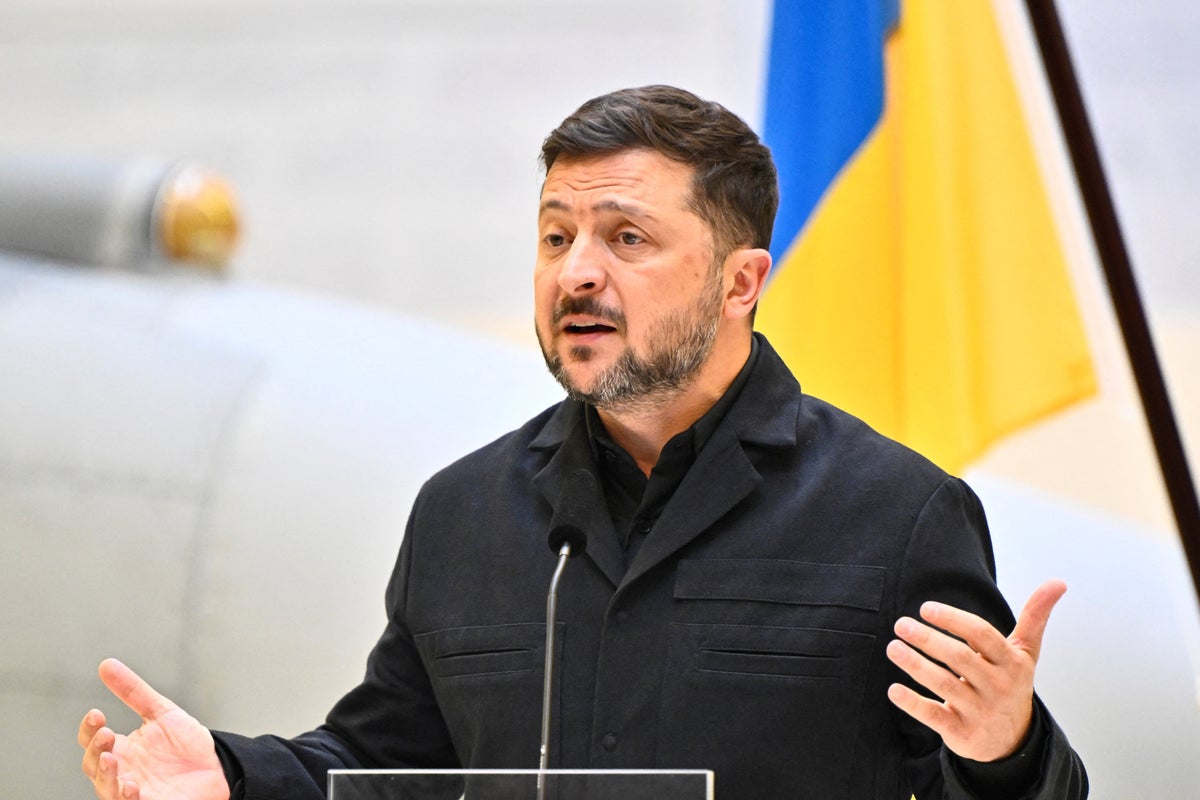
Ukrainian President Volodymyr Zelensky officially bestowed an honorary name upon the 10th Separate Mountain Assault Brigade. They are now to be known as the "Edelweiss" brigade. To a casual observer, the name evokes a resilient mountain flower, a symbol of endurance under harsh conditions. But history is rarely casual. The choice has ignited a firestorm of outrage, particularly across the border in Poland, a nation that has served as Ukraine’s staunchest ally in its current existential struggle against Russian aggression.
The friction does not stem from the flower itself, but from the shadow of the men who previously marched under its banner.
During the Second World War, the original Edelweiss division was a notorious German mountain unit. Worse still, the designation triggers the raw, unhealed trauma of the Volhynia massacres. Between 1943 and 1945, the Ukrainian Insurgent Army, known as the UPA, systematically slaughtered an estimated 100,000 Poles across these borderlands. The methods were brutal. Entire villages vanished in flames. Families were hacked to death in their homes. It was an ethnic cleansing campaign of unimaginable ferocity, and the memory of it remains an open wound for millions of Polish families.
The Friction of Memory
Consider the grandfather who still wakes up sweating in Warsaw, remembering the night his village went dark. To him, the rehabilitation of symbols tied to that era is not a matter of distant geopolitics. It is a direct assault on his grief.
Now shift your gaze to a young Ukrainian soldier digging a trench in the frozen mud of the Donbas. He does not see the ghosts of 1943. He sees the drone hovering overhead. He sees the comrades he lost last week in Bakhmut. For him, the "Edelweiss" name is about the unforgiving terrain of modern warfare, about the grit required to hold a mountain ridge against overwhelming odds. He needs myths to survive the winter. He needs a lineage of toughness.
This is the tragic disconnect at the heart of the controversy. One nation is fighting for its future, searching desperately for symbols of fierce resistance. Another nation is guarding its past, ensuring that the victims of an ancient atrocity are never forgotten.
The geopolitical timing could not be more precarious. Since the 2022 invasion, Poland has opened its arms and its borders to millions of Ukrainian refugees. It has functioned as the primary logistical highway for Western weapons flowing to the front lines. The Polish government has consistently shamed wealthier Western European nations into providing heavier armor and more robust support for Kyiv.
Yet, beneath this profound display of solidarity lies a complex, agonizing historical ledger. The relationship between Warsaw and Kyiv has long been haunted by the blood spilled in Volhynia. For years, historians and politicians from both sides have tiptoed around the issue, trying to build a modern partnership on top of a minefield of historical trauma.
The Weight of a Name
When Kyiv announced the honorary title, the reaction from Polish society was swift and visceral. Social media erupted. Commentators expressed a deep sense of betrayal. The underlying sentiment was clear: How can we give you our tanks while you honor the legacy of those who slaughtered our ancestors?
It is easy to underestimate the power of nomenclature from the safety of a distant boardroom or a bureaucratic office. But names carry weight. They are vessels for identity. When Zelensky elevated the Edelweiss title, the intent was undoubtedly to foster esprits de corps among troops enduring a relentless war of attrition. The brigade had earned the distinction through fierce defensive actions.
But symbols cannot be tightly controlled by executive decrees. They escape into the wild, gathering meaning from everyone who beholds them.
The tragedy deepened as Kremlin propagandists immediately seized upon the announcement. For months, Moscow has spun a false narrative that its invasion is a mission to "denazify" Ukraine. By adopting a name heavily associated with wartime German units and an era of brutal ethnic conflict, Kyiv inadvertently handed its enemy a potent public relations gift. It allowed Russian state television to point a finger and claim validation for their distorted crusade.
This is the invisible tax of historical blindness. In the rush to motivate troops on the battlefield, the broader strategic theater was temporarily forgotten.
Walking the Borderlands
To understand the depth of this pain, one must look at how history is taught and felt in this part of the world. In the West, World War II is often viewed through a lens of grand strategy, maps with sweeping arrows, and the ultimate triumph of democracy. In Eastern Europe, the war was intimate. It was fought village by village, neighbor against neighbor, in the very forests where people gathered firewood.
Imagine a hypothetical meeting between two modern citizens of these borderlands. Let us call them Jan and Bohdan.
Jan is a Polish schoolteacher whose family roots lie in the lost villages of Volhynia. He grew up on stories whispered by his grandmother—stories of hiding in cornfields while the sky turned red. For Jan, the preservation of this memory is a sacred duty. It is the only monument his slaughtered relatives will ever have.
Bhdan is a Ukrainian volunteer coordinator in Lviv. His days are consumed by a frantic rush to source night-vision goggles, medical kits, and warm boots for the front. He looks at Jan’s concerns with a mixture of exhaustion and bewilderment. "We are dying right now," Bohdan might say. "The Russians are trying to erase our country from the map today. Why are we arguing about names from eighty years ago?"
Both men are speaking from a position of profound truth. Both men are trapped in their own urgent realities.
The real danger is that this emotional friction threatens to erode the practical unity required to defeat a common adversary. The alliance between Poland and Ukraine is not merely sentimental; it is a vital shield against imperial expansion. If public opinion in Poland shifts, if the average citizen begins to feel that their generosity is being met with historical disrespect, the political pressure on Warsaw to temper its support could grow.
The Search for a Shared Past
Navigating this minefield requires an extraordinary degree of cultural maturity. It demands that leaders recognize that two things can be true at the same time. Ukraine can be a heroic victim of modern aggression deserving of total support, and Ukraine can also make short-sighted historical choices that cause deep pain to its closest neighbors.
True statecraft involves acknowledging the wounds of the past without allowing them to dictate the failures of the future.
In recent years, there have been moments of profound grace between the two nations. Joint commemorations have been held. Leaders have knelt together at burial sites. There have been halting, difficult conversations aimed at reconciliation. But a single thoughtless gesture can undo years of patient diplomatic weaving.
The mountain flower remains pinned to the uniforms of the 10th Separate Mountain Assault Brigade. The soldiers wearing it will continue to fight, defending their towns from artillery barrages and infantry assaults. They will see the emblem as a badge of honor earned in the mud of the Donbas.
But across the border, through the lens of a shared and bloody history, that same flower looks entirely different. It looks like a refusal to remember. It looks like an old ghost being invited back into the house.
The challenge for Ukraine moving forward is to realize that true sovereignty is not just about defending territory with weapons. It is about understanding the immense responsibility of memory. It is about knowing that the symbols chosen today will shape the alliances of tomorrow. Until both sides can look into the dark forest of Volhynia and see the same tragedy, the echoes of the past will continue to haunt the battlefields of the present.
The snow will melt in Volhynia, and the real edelweiss will bloom on distant peaks, indifferent to the names humans give to their wars. But the soil remembers every drop of blood, and it demands a reverence that goes far beyond the politics of the day.