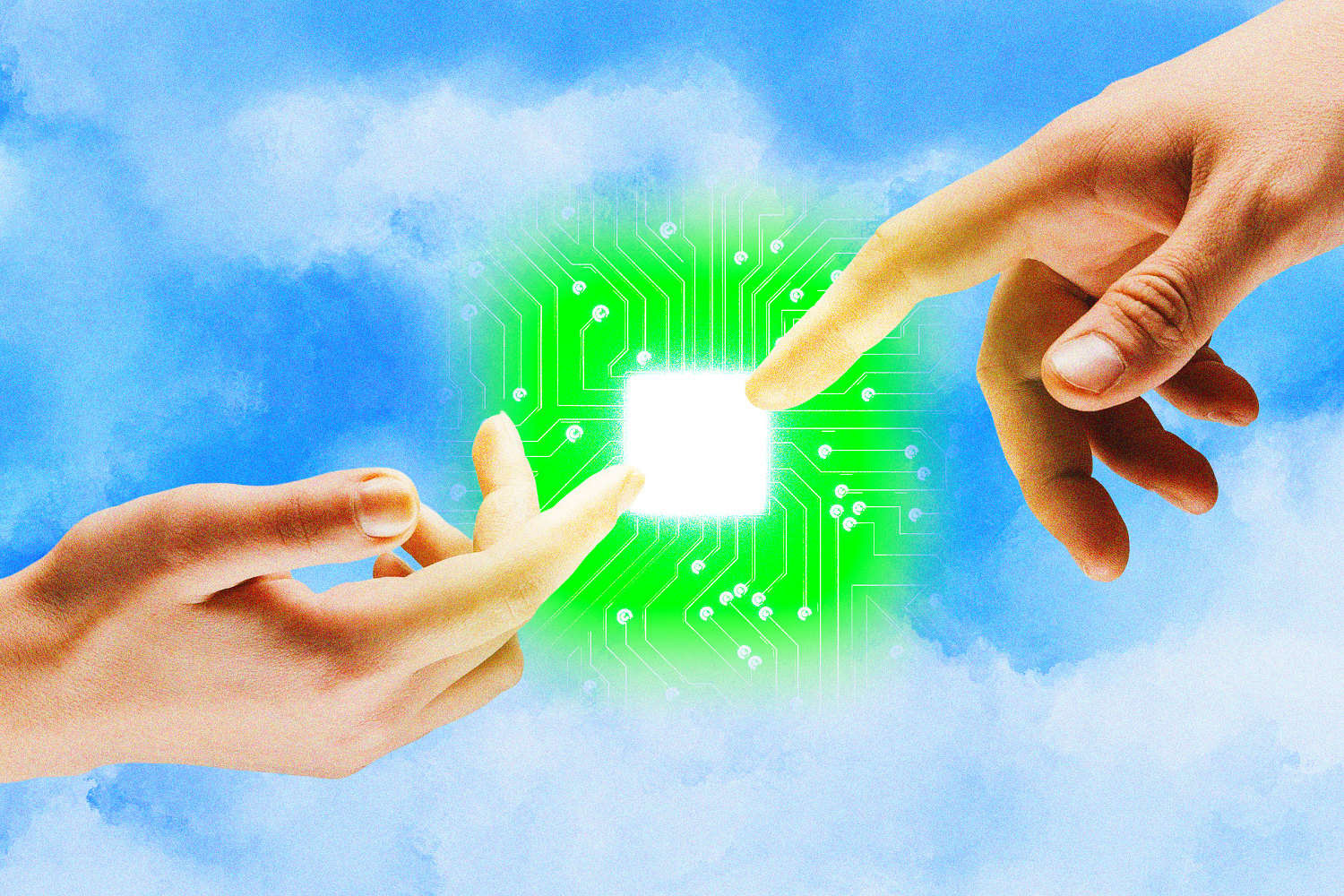
Pope Leo is teaming up with an Anthropic co-founder to tackle the ethical implications of artificial intelligence. The tech press is swooning. They are painting a picture of a grand, historic meeting of minds—ancient moral wisdom fusing with Silicon Valley’s brightest minds to save humanity from its own algorithms.
It is a beautiful narrative. It is also completely misguided.
The current consensus treats AI ethics as a high-level philosophical debate that can be managed by committee, declarations, and papal audiences. This assumes the primary risk of AI is a sudden, sentient lapse in morality. Having spent fifteen years auditing software deployments and watching enterprises burn millions on superficial compliance frameworks, I can tell you the real danger is far more mundane and far more destructive.
The Vatican and Silicon Valley are building a church of "AI Safety" while the foundation of actual software accountability is crumbling underneath them.
The Illusion of Corporate Alignment
When a tech giant or a high-profile startup participates in an ethical summit, it isn’t a breakthrough in corporate responsibility. It is a calculated regulatory defense strategy.
Anthropic built its brand on the concept of "Constitutional AI"—the idea that you can train a model to adhere to a specific set of principles, effectively giving it a conscience. Bringing that methodology to the Holy See looks like a natural fit. But let us look at the structural mechanics of how these models actually operate.
AI models do not understand doctrine. They do not comprehend grace, sin, or human dignity. They are statistical engines optimizing for mathematical loss functions. When we overlay a "constitution" or a set of ethical guidelines onto a massive neural network, we are not teaching it to be good. We are simply adding a layer of sophisticated filters to hide the messy, unpredictable realities of statistical prediction.
[Raw Training Data] ➔ [Statistical Weights] ➔ [Ethical Filtering Layer] ➔ [Sanitized Output]
This architecture creates a false sense of security. I have watched engineering teams deploy models that passed every internal ethical benchmark with flying colors, only to fail catastrophically when introduced to real-world edge cases. Why? Because an ethical filter is just a patch. It does not change the underlying nature of the probability matrix.
By focusing on high-level moral alignment, the Vatican is validating a marketing narrative that elevates software to the status of a moral agent. Software is a tool, not a soul. Treating it like an entity capable of ethical reformation abdicates human responsibility.
Dismantling the Pure Safety Myth
The tech industry loves to frame the AI debate around existential risk because it distracts from immediate, material liabilities. If we are constantly worrying about whether a superintelligence will respect human rights in fifty years, we aren't looking at who owns the data infrastructure right now.
Consider the "People Also Ask" consensus that dominates online tech forums: How do we ensure AI systems respect universal human values?
The question itself is flawed. There is no singular, universal dataset of human values. What the Vatican considers a moral imperative may clash directly with secular, utilitarian, or regional cultural norms. When a handful of West Coast engineers and a committee of theologians attempt to codify a global ethical standard into software, they aren't protecting humanity. They are centralizing moral authority into an opaque piece of proprietary code.
The contrarian truth is that heavily guarded, "safe" AI systems often become less useful and more biased in subtle, unvetted ways. When you overly restrict a model's output parameters to avoid controversy, you compress its utility. It stops providing accurate representations of human thought and starts spitting out sanitized, corporate-approved platitudes. We are replacing genuine human deliberation with algorithmic public relations.
The Real Scars of Implementation
If you want to know what AI harm actually looks like, look away from the Vatican's marble halls and look at the logistics sector, the insurance industry, and municipal courtrooms.
- Automated hiring systems quietly filtering out candidates based on proxy variables for socioeconomic status.
- Risk-assessment algorithms denying medical claims because a statistical curve prioritized cost-containment over patient outcomes.
- Content moderation pipelines outsourcing psychological trauma to underpaid contractors in developing nations to keep Western feeds clean.
These are not philosophical dilemmas that can be solved by a new encyclical. These are structural, economic incentives. An AI model does what its owners incentivize it to do. If a company's primary objective is to maximize efficiency and minimize labor costs, its AI deployment will reflect that reality, regardless of whatever ethical charter its founders signed in Rome.
I once worked with a financial institution that spent six months drafting an internal AI Ethics Manifesto. It was full of lofty language about fairness, transparency, and community impact. A year later, they deployed a credit-scoring model that systematically penalized applicants from specific zip codes. The model didn’t use race or income data directly—it used consumer shopping patterns that correlated with them. The ethical manifesto didn't stop the deployment because the model met the company's risk-adjusted revenue targets. The manifesto was a shield, not a compass.
Shifting from Ethics to Pure Mechanics
Stop trying to baptize the algorithms. Start auditing the balance sheets.
If we want to mitigate the risks of automation, we need to abandon the language of abstract ethics and adopt the language of rigorous engineering accountability and strict liability.
| Old Paradigm: AI Ethics | New Paradigm: Algorithmic Liability |
|---|---|
| High-level moral charters | Strict, legally binding data provenance |
| Voluntary compliance summits | Independent, third-party algorithmic audits |
| Philosophical alignment research | Real-time monitoring of systemic output drift |
| Treating software as a moral agent | Holding executives criminally liable for software failures |
If an automated system causes financial ruin, denies a citizen their basic rights, or hallucinates medical advice that leads to harm, the liability must rest entirely on the executives who deployed it and the engineers who built it. No excuses about "unforeseen model behavior." If you do not understand how your model reaches its conclusions, you have no business putting it into production.
The danger of the Vatican-Anthropic alliance is that it lends a veneer of supreme moral authority to an industry that desperately needs strict regulation, not spiritual guidance. It elevates tech executives to the status of high priests of a new technological order, suggesting that they possess the unique wisdom required to govern the tools they created.
They do not. They are market actors responding to market pressures. Expecting them to self-regulate through philosophical partnerships is an act of blind faith that history has repeatedly shown to be disastrous.
The path forward requires less theology and far more skepticism. We must dismantle the myth of the benevolent, aligned AI before we find ourselves living in a world where software dictates human rights, and the creators wash their hands of the consequences by pointing to a certificate of ethical compliance signed by the Pope.
Stop asking how we make AI moral. Start demanding who goes to jail when the software breaks.