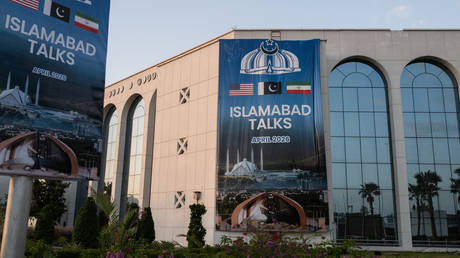
The White House is signaling optimism about a second round of negotiations with Iran, yet the reality on the ground remains volatile. As the current two-week ceasefire approaches its expiration on April 21, 2026, the diplomatic machinery is spinning in Islamabad, while a U.S. naval blockade tightens its grip on Iranian ports. The core of this friction is not just about the Strait of Hormuz or regional proxy conflicts; it is a fundamental clash between a Washington administration demanding unconditional compliance and a Tehran leadership that views concessions as an existential surrender.
Behind the carefully curated messaging from White House Press Secretary Karoline Leavitt—who recently stated the administration feels good about the prospects of a deal—lies a chaotic reality. The first round of talks led by Vice President JD Vance ended without a breakthrough, largely because the chasm between the two sides on the nuclear program and security guarantees remains profound.
The Anatomy of the Stalemate
The diplomatic posturing is deceptive. While officials talk of peace, the U.S. has simultaneously implemented a naval blockade of Iranian ports, a move designed to squeeze the regime’s economy into submission. Tehran has responded by threatening to choke off the Strait of Hormuz entirely, effectively holding global energy supplies hostage. This is not traditional diplomacy. It is high-stakes economic and military coercion masquerading as a negotiation process.
The U.S. demand, articulated frequently by President Donald Trump, is stark. He seeks an unconditional end to Iran’s pursuit of nuclear capabilities and a permanent reopening of the strait. Tehran, however, views these terms through the lens of history. To Iranian negotiators, this is a repeat of past experiences where U.S. agreements evaporated with shifting political tides. They are not merely bargaining for sanctions relief; they are bargaining for regime security and internal stability.
Why Mediation is Fragile
Pakistan, acting as the primary mediator, faces an uphill battle. The recent arrival of the Pakistani army chief in Tehran signals that Islamabad is attempting to salvage the framework, but the constraints are obvious. The U.S. has been clear that it will not tolerate delays. Simultaneously, Israel’s ongoing operations in Lebanon create a secondary layer of complexity that keeps Iranian leadership hesitant to commit to any deal that could be perceived as weakening their regional influence.
Consider a hypothetical scenario to understand the deadlock. If Iran were to agree to immediate nuclear transparency, the internal pressure from their own hardline factions would likely result in an immediate leadership crisis. Conversely, if the U.S. offers significant sanctions relief without tangible, verified nuclear dismantling, the domestic political cost in Washington would be untenable. This is the zero-sum trap that currently defines the conflict.
The Financial Pressure Cooker
The administration is moving beyond conventional diplomatic pressure. Treasury Secretary Scott Bessent has signaled a willingness to apply secondary sanctions on any nation or entity continuing to trade with or hold funds for Iran. This strategy is intended to be the financial equivalent of the military strikes already deployed. The goal is to force a choice upon the international community: abandon Iranian trade or risk exclusion from the U.S. financial system.
Markets have reacted with nervous optimism, fueled by the hope that a deal will stabilize energy prices. Yet, the underlying instability persists. The blockade itself has already led to the redirection of vessels, signaling that even if a diplomatic breakthrough occurs, the supply chain disruption will have lasting consequences. Global shipping entities are not waiting for a signature; they are already pricing in the risk of a prolonged blockade.
The Reality of Escalation
The rhetoric coming from both capitals remains inflammatory. President Trump’s statements regarding the destruction of Iran’s military infrastructure serve to keep the threat of further military action front and center. For Iran, the threat is an incentive to continue its nuclear research as a defensive measure—a feedback loop that is difficult to break.
The upcoming round of talks, likely to take place in Islamabad, will be the true test of this diplomatic strategy. If both sides continue to prioritize domestic political survival over a workable compromise, the window for a peaceful resolution will close rapidly. The alternative is not a return to the status quo, but a definitive escalation that could reshape the entire region for a generation.
The ceasefire is a fragile mechanism, holding back a tide of kinetic conflict. It is a reprieve, not a solution. Whether this leads to a durable framework or a return to active hostilities depends on whether Washington or Tehran is willing to define victory as something other than the total defeat of the other. As it stands, both are playing a game of chicken where the stakes are regional security and global stability, and neither side is showing a willingness to blink.