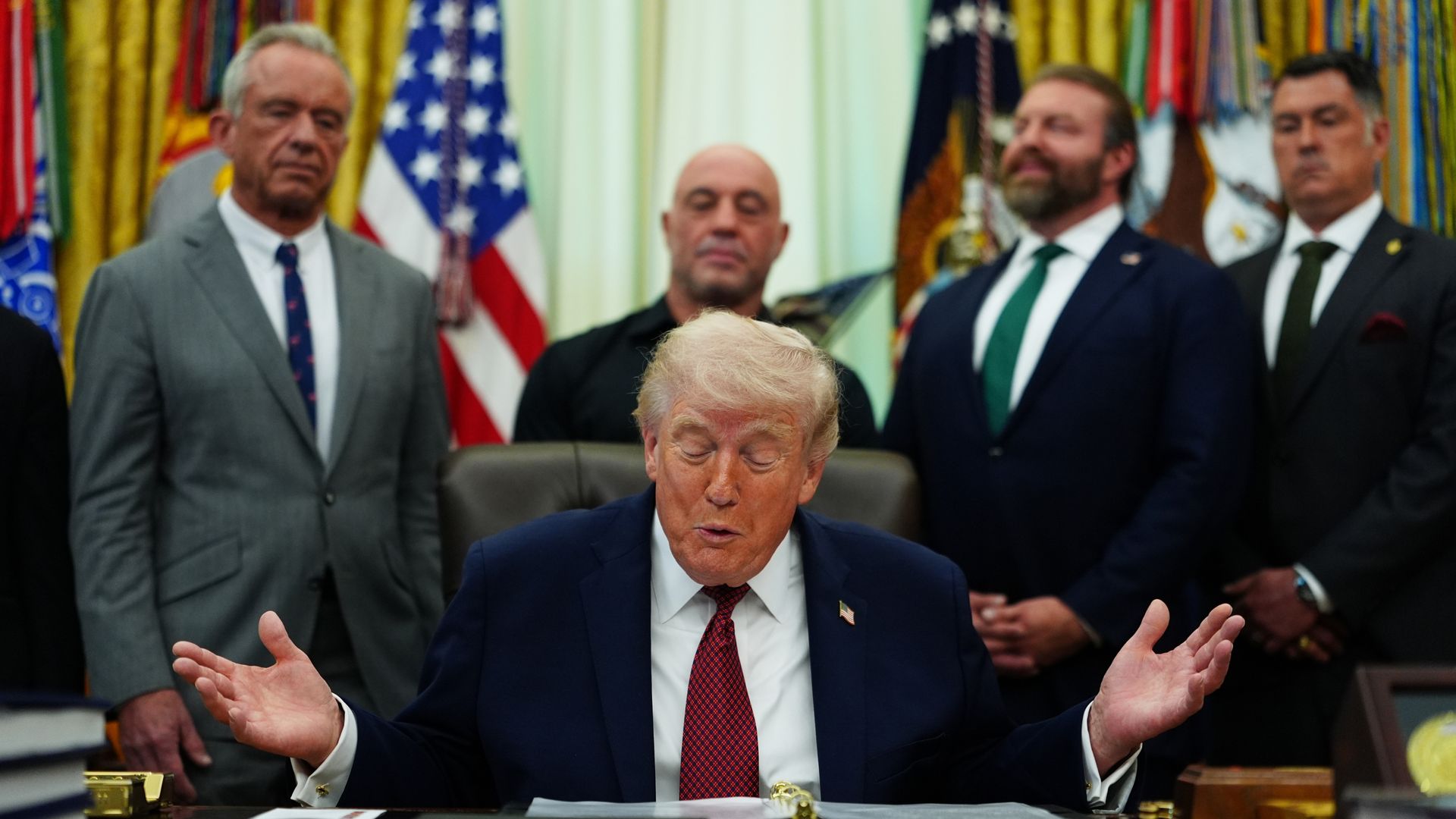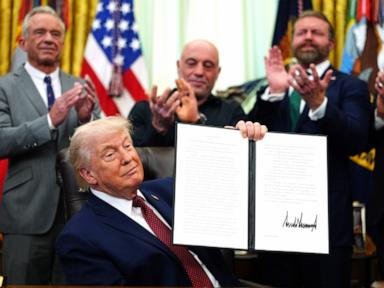
Donald Trump has signed an executive order designed to fast-track research into psychedelic therapies, a move that effectively forces federal agencies to treat substances like psilocybin and MDMA as legitimate medical frontiers rather than strictly controlled contraband. By directing the Department of Health and Human Services and the Department of Defense to prioritize clinical trials for veterans and first responders, the administration is bypassing decades of bureaucratic inertia. This isn't just about medicine; it is an aggressive realignment of federal drug policy that pits the urgent needs of mental health against the rigid traditionalism of the War on Drugs.
For years, the medical community has operated in a state of quiet agitation. Researchers at institutions like Johns Hopkins and NYU have sat on mounting data suggesting that "breakthrough" therapies—using compounds once associated exclusively with 1960s counterculture—could resolve treatment-resistant depression and PTSD in a fraction of the time required by standard SSRIs. Until now, the hurdle wasn't the science. It was the paperwork. The new executive order aims to dismantle those regulatory walls by demanding a streamlined pathway for FDA approval and potentially reclassifying these substances under the Controlled Substances Act once their medical utility is proven in federally funded trials.
The Veteran Suicide Crisis as a Political Engine
Washington rarely moves this fast without a massive, politically untouchable catalyst. That catalyst is the veteran suicide rate. With roughly 17 veterans dying by suicide every day, the Department of Veterans Affairs (VA) has faced relentless pressure to move beyond talk therapy and daily pills that often carry numbing side effects.
The executive order specifically targets the "healing gap" for soldiers returning from combat. By framing psychedelics as a tool for national security and veteran welfare, the administration has successfully neutralized much of the conservative opposition that would typically stonewall drug reform. It is much harder for a hardline "law and order" politician to vote against a therapy that a decorated Special Forces veteran claims saved his life. This shift in optics has turned a fringe medical movement into a central pillar of the new GOP health platform.
Money and the Patent Gold Rush
Behind the humanitarian headlines lies a more cynical reality. The moment the federal government signals a loosening of restrictions, the private sector responds with predatory speed. We are seeing a massive influx of venture capital into "psych-tech" startups. These companies aren't just looking to help people; they are looking to own the molecules.
The struggle here is that substances like psilocybin—the active ingredient in "magic mushrooms"—occur in nature. You cannot patent a mushroom. To circumvent this, pharmaceutical companies are developing "analog" compounds—synthetic versions that are slightly different from the natural molecule but produce the same effect. These synthetics can be patented, branded, and sold for thousands of dollars per dose.
The executive order accelerates research, but it also fires the starting gun for a corporate land grab. If the government doesn't establish strict guidelines on "patent evergreening," we could see a scenario where the most effective mental health treatments in a generation are locked behind paywalls that even insurance companies won't touch.
The Mechanism of Action
To understand why the White House is willing to take this gamble, you have to look at what these drugs actually do to the brain. Standard antidepressants work like a slow-drip faucet, gradually altering chemical balances over months. Psychedelics work like a controlled demolition.
During a guided session, compounds like MDMA or psilocybin suppress the Default Mode Network (DMN). The DMN is the part of the brain associated with self-reflection and the "ego." In patients with PTSD or chronic depression, the DMN is often overactive, keeping the individual trapped in a loop of negative thought patterns and trauma responses. By temporarily "offlining" this network, psychedelics allow the brain to form new neural connections.
This process is known as neuroplasticity.
Think of the brain as a hill covered in snow. Every time you have a thought, it’s like a sled going down that hill. Over time, deep grooves form, and it becomes impossible to steer the sled anywhere else. Psychedelics act as a fresh snowfall, filling in the old grooves and allowing the patient to choose a new path. This isn't a "trip" in the recreational sense; in a clinical setting, it is an intensive, supervised rewiring of the patient’s cognitive architecture.
The Regulatory Catch-22
Even with an executive order, the DEA remains the elephant in the room. Currently, most psychedelics are listed as Schedule I substances, defined as having "no currently accepted medical use and a high potential for abuse." This classification makes it nearly impossible for local pharmacies or even hospitals to handle the drugs without specialized, highly restrictive licenses.
The executive order instructs the Attorney General to review these classifications, but the DEA has a long history of institutional resistance. They argue that widespread medicalization could lead to "leakage" into the black market. There is also the matter of the "therapy" half of psychedelic-assisted therapy. These aren't take-home pills. They require hours of supervision by trained clinicians. The current healthcare infrastructure simply isn't built for a model where a single treatment takes eight hours and requires two therapists in the room.
We are looking at a massive shortage of qualified providers. If the research is accelerated but the workforce isn't trained, the entire movement could collapse under the weight of its own success. A single high-profile "bad trip" in a poorly supervised clinical trial could give the prohibitionists all the ammunition they need to shut the program down for another forty years.
Comparing the Approaches
| Feature | Traditional Antidepressants (SSRIs) | Psychedelic-Assisted Therapy |
|---|---|---|
| Administration | Daily pill | 1-3 supervised sessions |
| Onset of Relief | 4-6 weeks | Immediate to 24 hours |
| Side Effects | Weight gain, libido loss, emotional blunting | Transient anxiety, nausea, blood pressure spikes |
| Primary Goal | Symptom management | Root cause resolution/Neuroplasticity |
| Current Legal Status | Fully Legal | Schedule I (Highly Restricted) |
The Shadow of the 1960s
The biggest threat to this initiative isn't the science; it's the ghosts of the past. The veteran journalists who covered the original "psychedelic revolution" remember how it ended. It didn't end because the drugs didn't work. It ended because the movement became associated with radical politics and social upheaval.
The Trump administration is attempting to decouple the chemistry from the culture. By focusing on "warriors" and "patriots," they are trying to create a version of psychedelic use that looks more like a surgical procedure than a spiritual quest. However, the nature of these substances is inherently unpredictable. They often induce profound shifts in a person's worldview. Whether a conservative administration is truly prepared for the psychological fallout of a "tuned-in" veteran population is a question that no one in the West Wing seems to be asking.
Global Competition in the Brain Race
America is not the only player here. Australia has already down-scheduled MDMA and psilocybin for medical use. Switzerland and Canada are expanding their "expanded access" programs. If the U.S. doesn't move quickly, it risks losing its lead in a pharmaceutical sector that is projected to be worth billions by the end of the decade.
The executive order is, in part, a protectionist measure. It ensures that American pharmaceutical companies and American research hospitals are the ones setting the standards for how these drugs are used. It’s an attempt to ensure that the "Intel Inside" for the next generation of mental health treatments is American-made.
Implementation Hurdles
The order creates a task force, but task forces are where good ideas often go to die. For this to result in actual medicine in actual pharmacies, the FDA needs to move from "interested" to "active." We are currently waiting on the results of several Phase 3 trials for MDMA-assisted therapy for PTSD. If those results hold up under federal scrutiny, the pressure on the DEA to reschedule will become an unstoppable force.
The real test will be the funding. An executive order can direct "priority," but it cannot conjure money out of thin air without Congressional approval. If the next budget cycle doesn't include significant line items for psychedelic research infrastructure, this order will remain a symbolic gesture—a way to court the veteran vote without actually building the clinics.
The medical establishment is cautious. They have seen "miracle cures" come and go. But the data for psychedelics is different. It is more robust, more consistent, and more dramatic than anything seen in psychiatry since the invention of Thorazine.
We are moving toward a world where a person with severe trauma can go into a clinic, undergo a deeply intense, supervised experience, and come out the other side with a fundamentally different relationship with their past. That is no longer science fiction. It is a matter of federal policy.
The White House has placed its bet. Now we see if the bureaucracy has the stomach to follow through on a treatment that requires us to reconsider everything we thought we knew about the human mind. The risk of doing nothing—the continued loss of nearly twenty veterans a day—is finally viewed as higher than the risk of the drugs themselves.