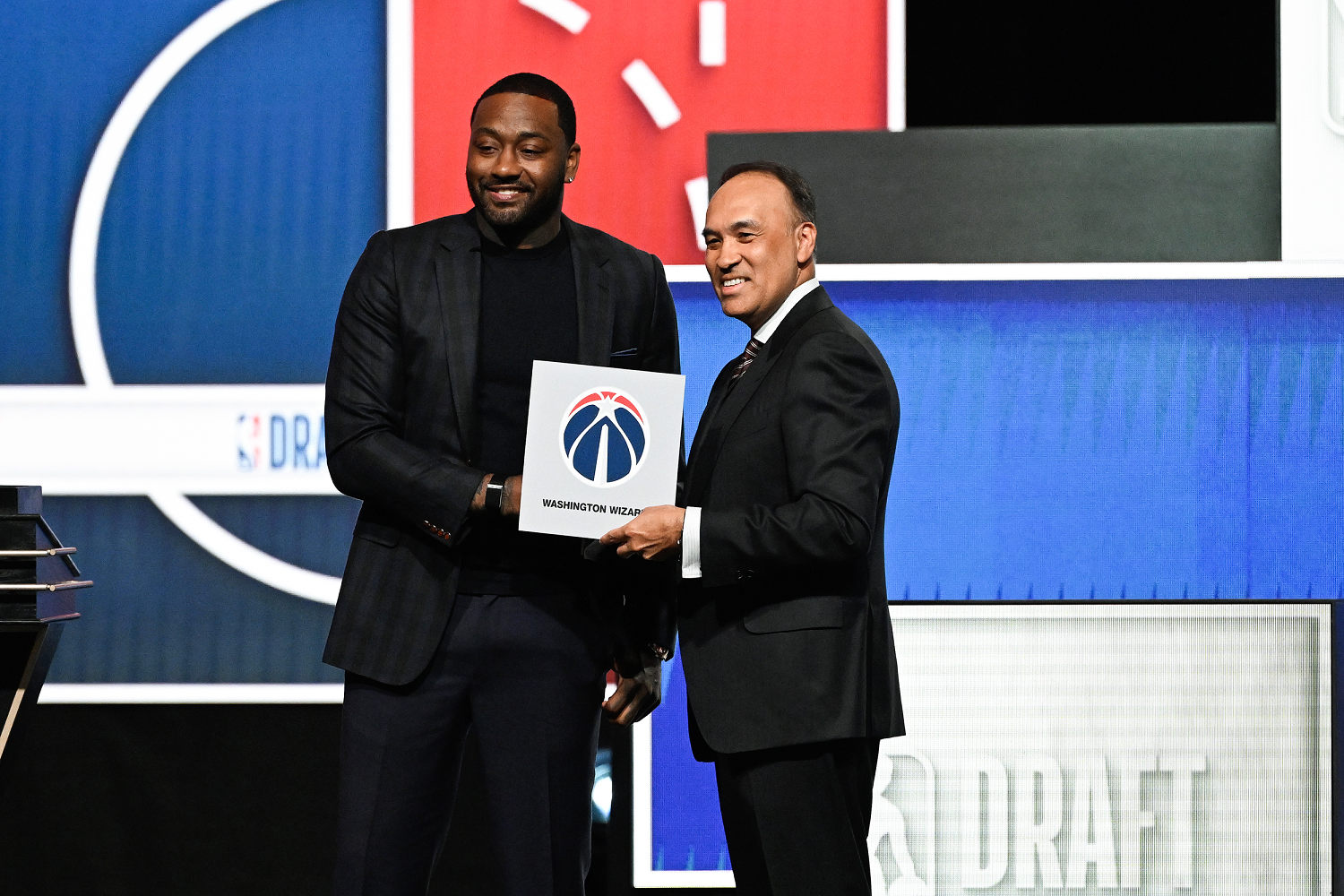
The ping-pong balls finally bounced in favor of the District. On Sunday, the Washington Wizards defied the odds—or rather, held firm to their 14 percent probability—to secure the first overall pick in the 2026 NBA Draft. It is a moment of pure, unadulterated hope for a fan base that has spent decades wandering the desert of mediocrity. But beneath the surface of the celebration lies a complex, high-stakes puzzle that could just as easily lead to a championship parade or another decade of rebuilding.
Washington now holds the keys to a draft class widely regarded by scouts as the deepest and most talented in a generation. With names like AJ Dybantsa, Cameron Boozer, and Darryn Peterson on the board, the Wizards aren't just picking a player; they are choosing a definitive path for a franchise that has recently attempted to ride two horses at once.
The Trae Young and Anthony Davis Paradox
Most teams winning the lottery are coming off a season of scorched-earth tanking. Washington is different. This past season, the front office made a series of aggressive, "win-now" moves that signaled a departure from the typical slow-burn rebuild. By acquiring veteran All-Stars Trae Young and Anthony Davis, the Wizards attempted to force their way into the Eastern Conference playoff picture.
It was a bold, expensive gamble. The team’s projected salary for the upcoming season sits at a staggering $186 million, and while the talent is undeniable, the results on the court remained inconsistent. Now, holding the number one pick creates a fascinating tension. Do you draft a 19-year-old phenom who needs three years to reach his prime while your veteran stars are in theirs? Or do you leverage the most valuable asset in basketball to find the final piece of a championship roster?
Dybantsa vs Boozer and the Scouting Dilemma
If Washington keeps the pick, the debate begins and ends with AJ Dybantsa. The BYU freshman is a physical marvel, standing 6-foot-9 with a wingspan that seemingly allows him to contest shots in two different zip codes. Dybantsa led the nation in scoring this past year, averaging 25.5 points per game. He isn't just a scorer; he is a prototype. He possesses the fluidity of a guard and the size of a modern NBA wing, drawing comparisons to Tracy McGrady for his effortless shot-making.
However, NBA front offices are increasingly wary of "high-upside" wings who lack elite defensive discipline. That is where Cameron Boozer enters the conversation. Boozer, the Duke powerhouse, is the "safe" pick in name only. He is a polished, hyper-efficient forward who averaged a double-double (22.0 PPG, 10.3 RPG) while shooting nearly 40 percent from deep. If Dybantsa is the lightning, Boozer is the foundation. He plays with a maturity that suggests he could start for a contender tomorrow morning.
For a Wizards team that already has Trae Young running the point and Anthony Davis anchoring the paint, Boozer’s ability to operate in the high post and facilitate as a secondary playmaker might actually be the better fit. Dybantsa requires the ball. Boozer improves the ball's movement.
The Trade Market Reality
We have to discuss the possibility that the Wizards don't use this pick at all. Around the league, rival GMs are already smelling blood. The 2026 class is so top-heavy that the value of the number one overall selection is at an all-time high.
Washington has $24 million in "apron space" before hitting the most restrictive salary cap penalties. They are in a position where they could theoretically package the pick with a contract like Jordan Poole’s to land a third established superstar. It is a dangerous game. Historically, teams that trade the top pick for veteran help often regret it when that veteran hits the age curve and the draft prospect becomes an All-NBA mainstay elsewhere.
The Utah Jazz and the Grizzlies Lurking
The draft lottery wasn't just a win for Washington. The Utah Jazz secured the number two pick, putting them in the driver's seat for whichever star the Wizards pass on. Utah has been linked to Dybantsa for eighteen months; if Washington goes with the reliability of Boozer, the Jazz will likely sprint to the podium to claim the BYU star.
The Memphis Grizzlies at number three and the Chicago Bulls at four round out a "Big Four" in this draft that scouts believe are essentially interchangeable in terms of star potential. Caleb Wilson and Darryn Peterson are the prizes waiting there. Peterson, despite a hamstring injury that slowed his college season at Kansas, remains the premier backcourt creator in this class.
Washington’s Identity Crisis
The Wizards’ front office has spent years trying to convince the league they are a serious destination. Winning the lottery provides the ultimate shortcut, but only if they have the discipline to use it correctly. The "win-now" trades for Young and Davis were designed to raise the floor. The number one pick is designed to raise the ceiling.
The danger is trying to do both and succeeding at neither. If the Wizards draft a project and expect him to contribute to a deep playoff run immediately, they risk stunting his development. If they trade the pick for a 30-year-old veteran, they risk being left with an empty cupboard in three years when the Davis-Young window closes.
This is the most critical offseason in Washington basketball history. The ping-pong balls gave them a gift. Now, they have to decide if they want to build a dynasty or just win a first-round series. The clock starts today.